John Paul II, Poland 1979 and the Unity of Leaders and People
In June 1979, Pope John Paul II visits his homeland, Poland. Millions come to his Masses, and the country sees for itself that church and people are one, while the communist leadership of the state stands on the sidelines. A little over a year later, the trade union Solidarity is born.
A golden arc glides on a stream of many teal dots, all flowing in the same direction. When the arc turns against the current, the dots are thrown into mist-blue eddies; only when a golden dot moves from the arc into the stream and the direction is realigned does everything glide calmly again.
Principle #47
Unity of Leaders and People: When leaders and their people want the same thing and trust one another, a strength emerges that neither orders nor money can replace.
4 min read5 sectionsSituationLink to the principle
Contents
In the first chapter of “The Art of War,” the Chinese strategist Sun Tzu puts one question at the start of every assessment of the situation: which ruler has the Dao? What he means is an accord between leaders and people so deep that the people follow their leader without fear. Poland in 1979 poses this question, the question of the Unity of Leaders and People, in an unusual way. The state had police, an army and the media. The church had the people’s trust.
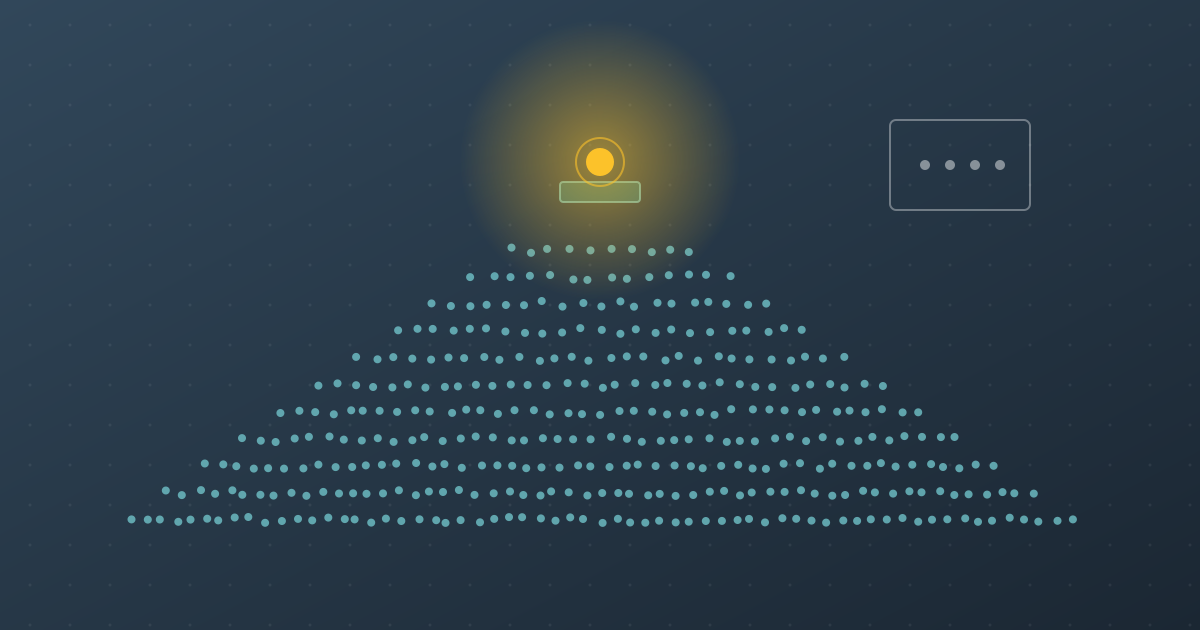
A huge crowd turns toward a golden dot, while a small frame with four dots stands off to the side – like John Paul II in Poland in 1979.
01
A Pole becomes pope
Situation
On October 16, 1978, the cardinals elect the Archbishop of Kraków, Karol Wojtyła, as pope. He is the first non-Italian in the office in more than 450 years. In Moscow and Warsaw, the election causes concern. The Polish government agrees to a visit only reluctantly, because it can hardly prevent it.
Link to the principle
The government had the instruments of power but not the hearts of the people. It knew this, and that is precisely why it feared the visit of a man without troops.
02
The Mass in Victory Square
Situation
On June 2, 1979, the eve of Pentecost, John Paul II celebrates Mass in Victory Square in Warsaw. Estimates of the crowd range from several hundred thousand to a million people. In his homily, he says that neither the human being nor the history of Poland can be understood without Christ. He remembers the Unknown Soldier and all those who contributed to the country’s history through work, suffering and martyrdom, explicitly including the hundreds of thousands who died behind the walls of the Warsaw Ghetto. At the end, he prays that the Spirit may descend and renew the face of the earth, the face of this land.
Link to the principle
The pope does not talk about politics but about identity. He tells people who they are. The Unity of Leaders and People arises when a leader puts into words what people already believe but have long been unable to say out loud.
03
A people sees itself
Situation
The journey lasts nine days and takes him to places including Gniezno, Częstochowa, Auschwitz-Birkenau, Wadowice and Kraków. According to the Warsaw historian Paweł Skibiński, about 11 million people see the pope in person, out of a population of about 36 million at the time. The rest follow the visit on television and radio.
Link to the principle
Many Poles experienced for the first time how many of them there were. If you are alone, you are afraid. If you see hundreds of thousands beside you who believe the same thing, you gain courage. Sun Tzu’s Dao is exactly this experience: leaders and people carrying one another.
04
From the square to the shipyard
Situation
In August 1980, the workers of the Lenin Shipyard in Gdańsk go on strike. Pictures of the pope and of the Black Madonna of Częstochowa hang on the shipyard gates. On August 31, Lech Wałęsa signs the agreement that permits independent trade unions, using a pen bearing the pope’s picture. Solidarity soon has about 10 million members.
Link to the principle
The unity that became visible in 1979 became an organization in 1980. A movement needs a sense of shared belonging before it takes shape.
05
What historians say and what remains open
Situation
The American historian John Lewis Gaddis sees the visit as the beginning of a process that ended communism in Poland. Others put more emphasis on the economic crisis, the experience of the strikes of 1970 and 1976 and the work of opposition groups.
Link to the principle
The Unity of Leaders and People is rarely the only cause. But it decides whether other causes can develop their force. Without the trust of 1979, the strikes of 1980 might never have come together as one movement.
Key takeaways
Key lessons
01
Don’t just ask who has power; ask whom people trust.
02
Put into words what your people believe but don’t dare to say themselves.
03
Let people see for themselves that they are many.
04
Sooner or later, unity needs a structure, or it evaporates.
05
Don’t overrate a single cause, even if it is the visible one.
Summary
In June 1979, John Paul II traveled through Poland. About 11 million people saw him in person, and the country experienced how closely church and people were bound together, while the state remained on the outside. A little over a year later, Solidarity was born. The example shows what Sun Tzu meant by the Dao: the deepest source of strength belongs to whoever has the people on their side, not to whoever holds the most instruments of power.
Sources
Sun Tzu: The Art of War, Chapter 1. Lionel Giles (trans.): Sun Tzu on the Art of War. London: Luzac & Co. 1910.
Holy See (vatican.va): Homily of John Paul II in Victory Square, Warsaw, June 2, 1979
EWTN: Homily of John Paul II in Victory Square, June 2, 1979
Trenton Monitor: JPII’s first visit to Poland led to Iron Curtain’s fall, historians say
National Catholic Register: John Paul II and the End of the Cold War
Back to the basics
Read what lies behind the Unity of Leaders and People: with explanation, animation, video and research.