For decades Toyota is seen as the epitome of quality. In 2009 and 2010 the group has to recall about nine million vehicles worldwide. In February 2010 President Akio Toyoda tells the U.S. Congress that the company may have grown too fast.
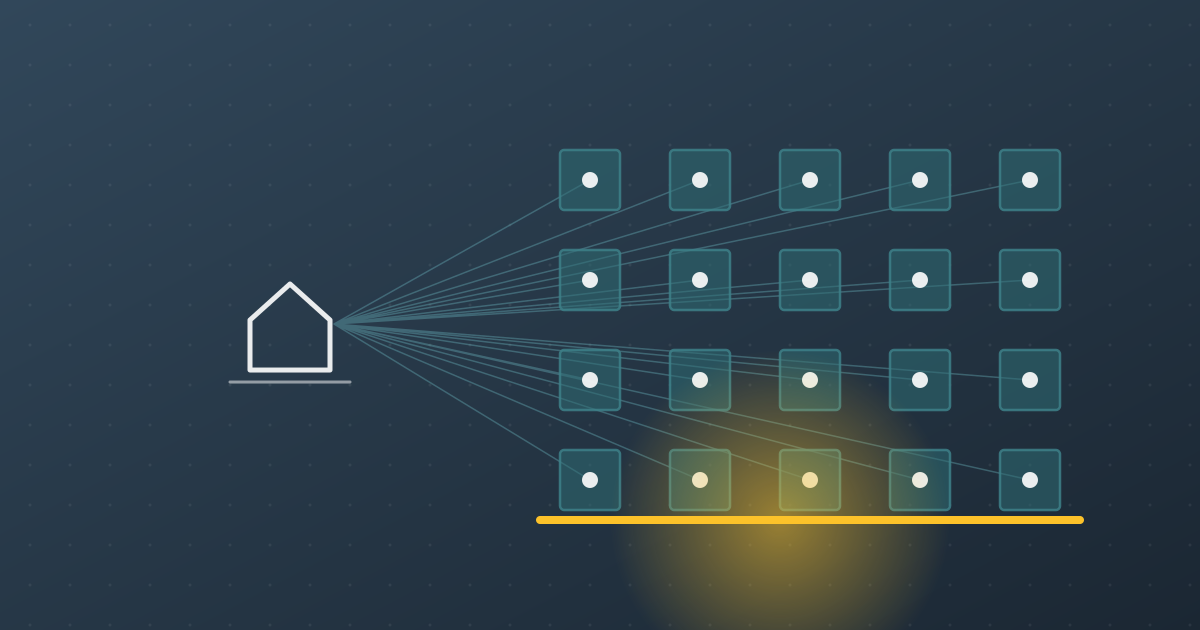
A golden circle is surrounded by a thick teal frame lined with small dots packed close together; with every expansion the frame grows larger and thinner, the dots move apart, and below them a steep line and a flat line diverge. A small mist-blue push makes the frame tear at its thinnest point; afterward it pulls back to a tighter line, grows thick again, and both lines run level.
Principle #14
Overstretch: If you let your commitments grow faster than the means to sustain them, you will end up losing even what you could have held safely.
3 min read5 sectionsSituationLink to the principle
Contents
This is a counterexample. It does not show how someone avoids Overstretch but what happens when it sets in. And it is unusual because the person responsible makes the diagnosis himself. Akio Toyoda, grandson of the company’s founder, described before a committee of the U.S. House of Representatives what Paul Kennedy describes for great powers: commitments had grown faster than the ability to sustain them.
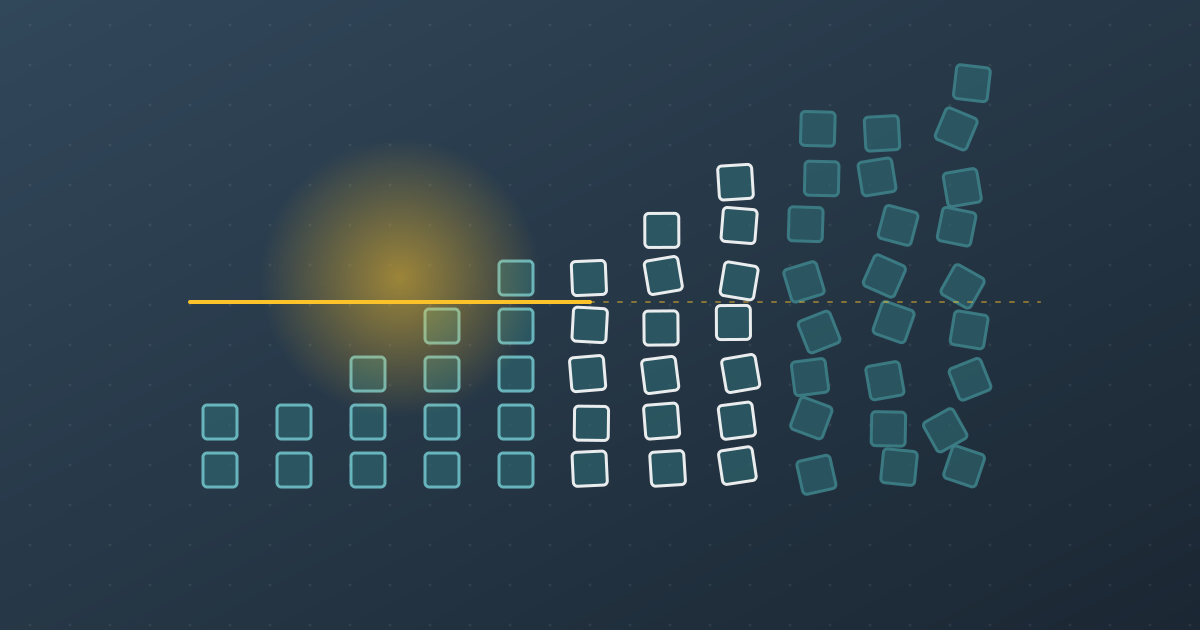
A grid of squares grows ever higher toward the right and loses its order as it does; a golden line shows the height it can bear – as at Toyota.
01
A reputation for quality
Situation
Toyota built its rise on quality. The company itself names three priorities in a fixed order: first safety, second quality, third volume. In the 2000s Toyota grows quickly and becomes one of the largest carmakers in the world.
Link to the principle
A fixed order of priorities is a safeguard against overstretch. It says what has to give when there is not enough strength for everything. The danger begins when the third priority quietly moves up to first place.
02
The San Diego crash
Situation
On August 28, 2009, a Lexus ES 350, a loaner car, crashes in San Diego. Four people die. An investigation by the U.S. National Highway Traffic Safety Administration (NHTSA) finds that the car was fitted with unsecured floor mats meant for a different model. After the crash, the accelerator pedal was still stuck on the mat.
Link to the principle
The crash makes publicly visible what had long been a problem internally. Overstretch rarely shows up first on the balance sheet. It shows up where small mistakes are no longer caught in time.
03
The recalls
Situation
Between late 2009 and early 2010, Toyota recalls about nine million vehicles worldwide. In the United States alone, by the end of January 2010 the floor mat recall covers about 5.2 million vehicles and the recall for sticking accelerator pedals about 2.3 million. About 1.7 million vehicles fall under both. In February 2010 a recall of 436,000 hybrid vehicles for brake problems follows.
Link to the principle
The size of the recalls shows that this is not about a single model. It is about a system that has not kept pace with its own size.
04
The testimony before Congress
Situation
On February 24, 2010, Akio Toyoda testifies before the House Committee on Oversight and Government Reform. He says he fears that the pace of growth was too fast. Priorities had become confused, and the company had listened less to its customers. Toyota, he says, had pursued growth faster than it could develop its people and its organization. He takes full responsibility and apologizes for the accidents.
Link to the principle
This is an almost literal description of overstretch: the commitments, in this case sales and production, grow faster than the means, in this case people and organization. At the same time, Toyoda announces countermeasures: an additional review step in recall decisions, an outside advisory panel on quality and a new position responsible for product safety.
05
What it was not
Situation
In February 2011, after a 10-month investigation, NHTSA and NASA presented their report. They found no defects in the vehicle electronics. The problems were mechanical.
Link to the principle
This matters for a fair account. Toyota did not have a mysterious malfunction but quite ordinary defects that a healthy system would have detected earlier. That is exactly where the lesson lies.
Key takeaways
Key lessons
01
Decide which priority has to give when not everything is possible at once.
02
Don’t grow faster than you can develop your people and processes.
03
Watch for small mistakes that are no longer caught in time.
04
If you are overstretched, say so openly.
05
Combine the insight with concrete measures, not just an apology.
Summary
Toyota was famous for its quality and grew rapidly in the 2000s. In 2009 and 2010 the group had to recall about nine million vehicles. In February 2010 Akio Toyoda told the U.S. Congress that growth had been too fast and had outpaced people and organization. The case shows overstretch as a counterexample: when volume outpaces safety, in the end it costs more than the growth brought in.