The world’s most advanced computer chips can in practice be patterned only with machines from a single manufacturer: ASML of the Netherlands. The company shows what a resource looks like that meets all four of Jay B. Barney’s criteria, and why in 2019 it even became a matter of world politics.
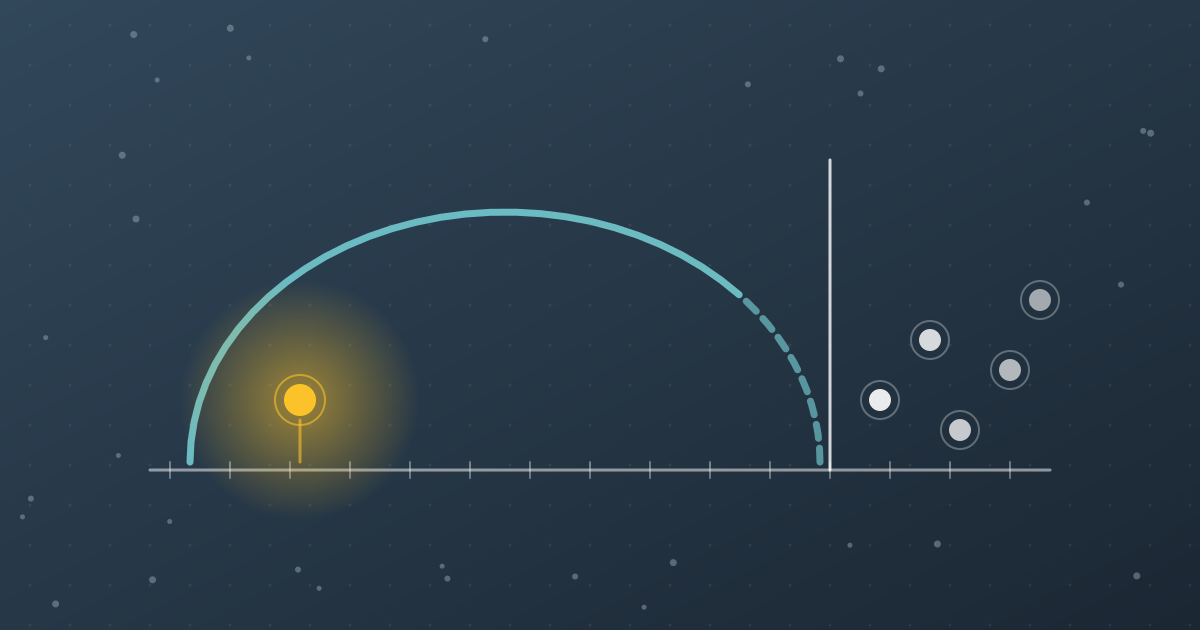
Four gates made of teal lines stand one behind the other; many mist-blue dots move toward them, and at each gate more of them stop. At the turning point, a single dot makes it through the fourth gate, turns gold and stands alone on a short line as a pedestal; in the final image, its glow slowly fades, and next to it a new dot begins to fill with gold.
Principle #74
Valuable, Rare Resources: A lead lasts only if it rests on resources that are valuable, rare, hard to imitate and non-substitutable.
4 min read5 sectionsSituationLink to the principle
Contents
In 1991, the strategy researcher Jay B. Barney formulated four questions you can use to test whether a resource sustains a lasting lead. Is it valuable? Is it rare? Is it hard to imitate? Is there no equivalent substitute? Few companies pass all four tests as clearly as a machine builder from Veldhoven whose name was long hardly known outside the industry – a prime example of Valuable, Rare Resources.
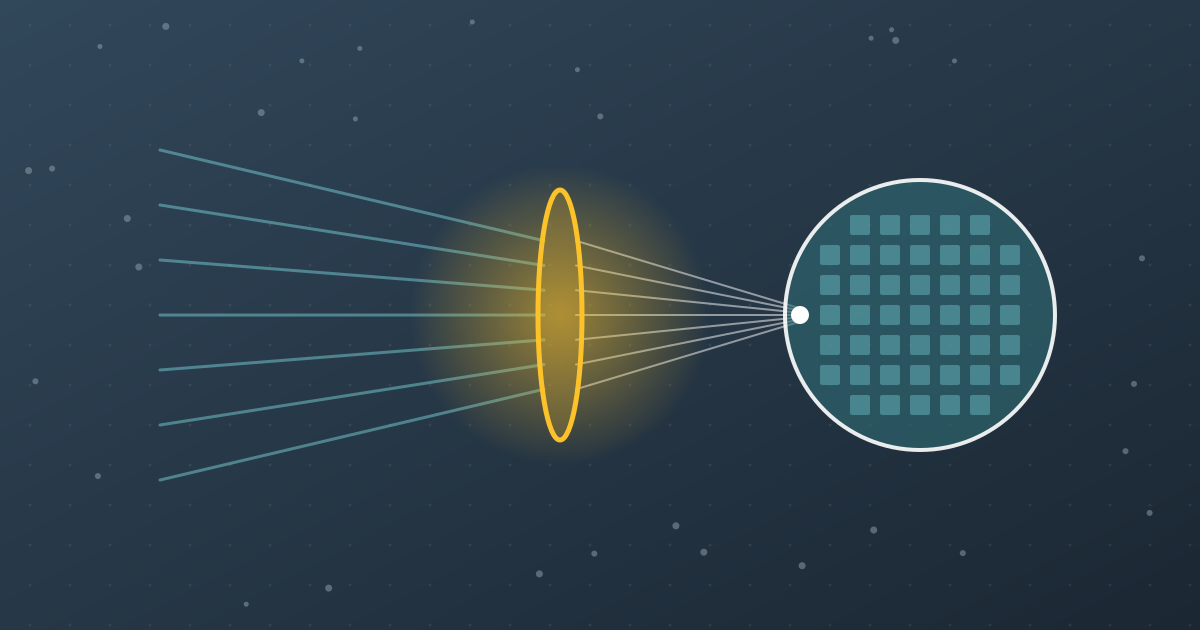
A broad beam of light has to pass through a single gold lens before it reaches the wafer full of chips – as at ASML.
01
A joint venture from 1984
Situation
ASML is founded in 1984 as a joint venture between the electronics group Philips and the company ASM International. It builds lithography machines. These systems use light to project circuit patterns onto silicon wafers. In 1995, it becomes a fully independent company. For a long time, it competes with other manufacturers in machines that work with deep ultraviolet light.
Link to the principle
At the beginning, ASML is one of several suppliers. Its resources are valuable but not rare. According to Barney, that is enough for competitive parity, not for a lead. The lead arises only when ASML builds something no one else has.
02
Light at 13.5 nanometers
Situation
The smaller the structures on a chip, the shorter the wavelength of the light has to be. ASML bets on extreme ultraviolet light (EUV) at 13.5 nanometers. To produce it, a powerful laser is fired at tiny droplets of liquid tin. This creates a plasma that emits the light. Mirrors from the German optics manufacturer Carl Zeiss direct it onto the silicon wafer. Such a machine is about the size of a bus and, depending on the model, costs well over $100 million.
Link to the principle
The technology is valuable because the most advanced chips cannot be made without it. It is rare because ASML is practically the only manufacturer of such machines (as of 2026). That answers the first two tests.
03
Decades, partners and capital
Situation
In 1999, ASML joins a research consortium with the chipmaker Intel and other U.S. companies, and works with Zeiss on the mirrors. In 2012, ASML announces the acquisition of Cymer, a maker of light sources. In the same year, Intel invests $4.1 billion for a 15% stake to speed up development. The chipmakers TSMC and Samsung also take stakes. Today, ASML relies on almost 5,000 direct suppliers.
Link to the principle
This is where the third test comes in. Barney names three reasons why resources are hard to imitate: a unique history, unclear causes of success and social complexity. All three apply. The technology has grown over decades, its success depends on countless details, and it rests on a well-established network of partners. A competitor would have to copy not a machine but an entire history.
04
2019: value revealed at the border
Situation
In April 2019, the Chinese chipmaker SMIC orders an EUV machine. Delivery is planned for the end of 2019. EUV systems may be exported only with an export license. In November 2019, it becomes known that the machine will not be delivered for the time being because the license has expired and no new one has been issued. Media reports link the delay to pressure from the United States. ASML denies this and points to the licensing procedure.
Link to the principle
When a resource is valuable, rare and hard to imitate, it becomes a question of power. States do not fight over things that can be bought anywhere. The dispute over a single machine shows how great the value of this resource is.
05
Is there a substitute?
Situation
Using older machines that work with deep ultraviolet light, chipmakers can also achieve very fine structures through multiple exposures. But this is more complex and slower, and it runs up against limits. Since September 2023, the Dutch government has also required an export license for advanced older systems.
Link to the principle
Barney’s fourth question asks whether there is an equivalent substitute. For the most advanced chips, there has so far been only a limited one (as of 2026). That is exactly why ASML is such a clear example. At the same time, it shows a limit: part of the resource lies with partners such as Zeiss. If you build on rare resources, you often depend on others yourself.
Key takeaways
Key lessons
01
Test your strengths with four questions: valuable, rare, hard to imitate, without substitute.
02
What many have merely makes you as good as others, not better.
03
The best protection is a history that others cannot catch up on.
04
The rarer your resource, the more it becomes a point of contention.
05
Clarify what your own resource depends on.
Summary
ASML is practically the only manufacturer of EUV lithography machines, without which the most advanced chips cannot be made. The technology is valuable and rare, has grown over decades with partners and can hardly be replaced. It thus meets all four of Jay B. Barney’s criteria. The dispute over a delivery to China in 2019 shows how valuable such a resource is.