Dagen H, Sweden’s Switch to Right-Hand Traffic and Focal Points
On September 3, 1967, Sweden switches from driving on the left to driving on the right nationwide, with every vehicle changing at the same minute. The state replaces an old habit with a new, unmistakable reference point. A single day with its own name and logo makes the switch possible for everyone at once.
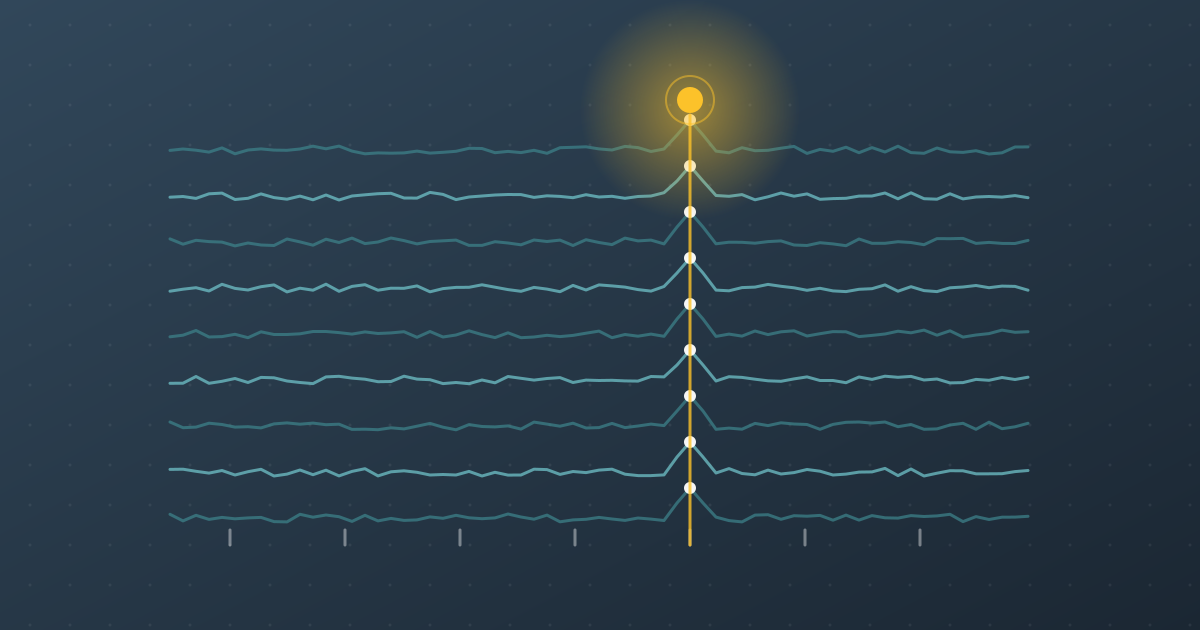
Two dots at opposite edges, between them a flickering web of dashed lines and many pale circles. At the turning point a single circle lights up in gold, both dots draw their line there and meet; finally, a new gold circle lights up somewhere else, and the lines bend toward it.
Principle #65
Focal Points: When people have to coordinate without communicating, they choose the answer everyone considers obvious, and if you set that reference point, you steer the outcome.
4 min read5 sectionsSituationLink to the principle
Contents
Which side of the road people drive on is a pure coordination problem. Left or right is equally good, as long as everyone does the same. Thomas C. Schelling studied coordination problems like this. Applied to the road, it means: the side everyone expects becomes the focal point. But what if a country wants to move that point? Then it has to create a new reference point so clear that nobody can miss it. In 1967, Sweden showed how it is done – a lesson in Focal Points.
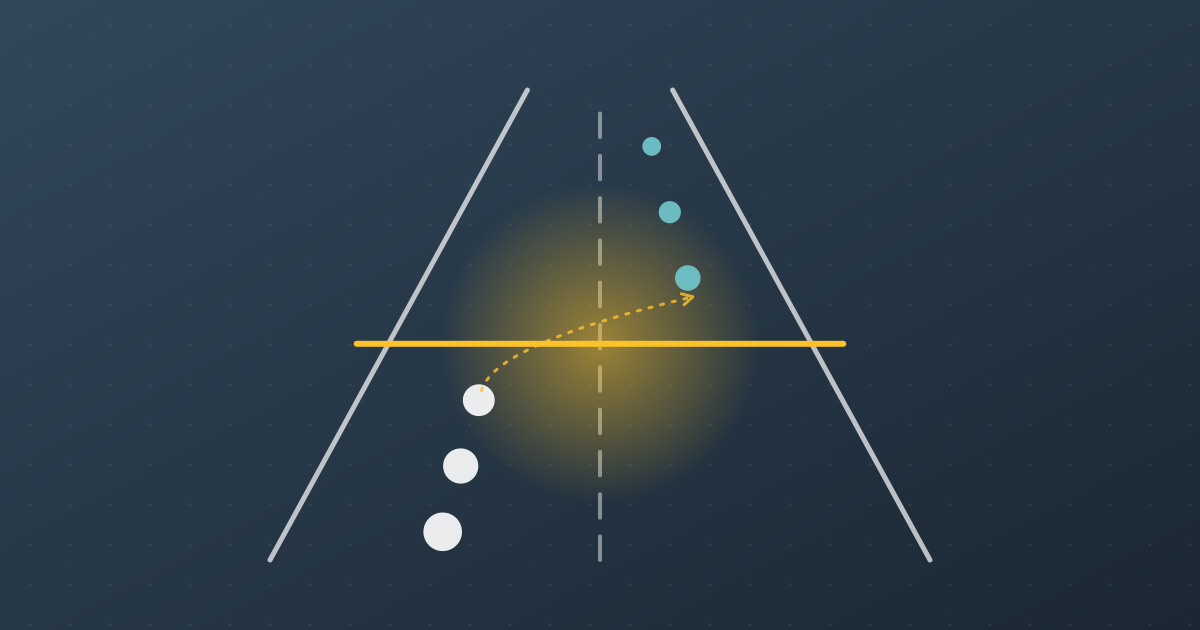
On a road, the dots drive on the left up to a gold crossline, then all at once on the right – as on Dagen H in Sweden.
01
A country driving on the wrong side
Situation
Until 1967, Sweden drives on the left, even though its neighbors drive on the right. Some five million vehicles cross the Nordic borders every year. The number of cars has risen from 500,000 to 1.5 million, and 2.8 million are expected by 1975. But the population does not want to switch: in a 1955 referendum, about 83% vote to keep driving on the left.
Link to the principle
An existing focal point is tenacious. Everyone drives on the left because everyone drives on the left. Even if the switch makes sense, nobody can make it alone. Anyone who drives on the right on their own causes an accident. The switch has to come from everyone at the same time.
02
Politics decides
Situation
On May 10, 1963, despite the referendum, the Riksdag, Sweden’s parliament, approves Prime Minister Tage Erlander’s proposal to switch to right-hand traffic starting in 1967. A dedicated commission, the Statens högertrafikkommission, plans the switch and runs a four-year public information campaign.
Link to the principle
Changing a focal point requires someone to set the new one and make it binding. When it comes to the side of the road, only the state can do that. The decision to go against public opinion is controversial. But it shows that coordination problems sometimes need a central authority, because they cannot be solved from the bottom up.
03
A day with its own name
Situation
The deadline gets a name: Dagen H, H-Day, H for högertrafik, right-hand traffic. A dedicated logo appears on milk cartons and even on underwear. Some 350,000 signs have to be replaced. Well before the day, extra traffic lights go up at every intersection, wrapped in black plastic. New white road markings are painted and covered with black tape. More than 1,000 new buses with doors on the right are bought, and about 8,000 older ones are converted.
Link to the principle
A focal point has to stand out. The name, the logo and months of advertising make sure nobody can miss the day. Everyone knows when the time will come, and everyone knows that everyone else knows it too. The wrapped traffic lights and taped-over lines are waiting to become visible at the same moment.
04
The minute of the switch
Situation
On Sunday, September 3, 1967, all nonessential traffic is suspended from 1 a.m. to 6 a.m. At 4:50 a.m., every vehicle has to stop, carefully change sides and stop again. At 5 a.m., traffic resumes, now on the right. In Stockholm and Malmö, a longer driving ban applies, from 10 a.m. on Saturday until 3 p.m. on Sunday.
Link to the principle
The choice of timing is no accident. An early Sunday morning with little traffic and one exact minute for everyone make the switch manageable. The new focal point consists not only of the side but also of the moment. Without a shared moment, the switch would have turned into chaos.
05
What happened next
Situation
On the day of the switch, 157 minor accidents are reported, 32 of them involving injuries, few of them serious. On the following Monday there are 125 accidents, compared with 130 to 198 on earlier Mondays. Insurance claims fall by 40%. The effect does not last: after about six weeks, claims are back to normal, and by 1969 so are accident numbers. Iceland follows on May 26, 1968.
Link to the principle
The switch succeeds because everyone has the same reference point. In the first weeks, people drive especially carefully. Then the new side becomes a habit, and the new focal point is as much taken for granted as the old one.
Key takeaways
Key lessons
01
An established reference point can be changed only collectively, not individually.
02
Give a switch a clear day and a clear minute.
03
Make the new reference point unmistakable, with a name, symbols and repetition.
04
Prepare everything so that at the decisive moment all that remains is to flip the switch.
05
Be prepared for the initial caution to fade once the new way becomes a habit.
Summary
Until 1967, Sweden drove on the left, even though its neighbors drove on the right and the population rejected the switch. With Dagen H, the state set a new reference point: a day with a name and a logo, an exact minute, signs and traffic lights prepared in advance. On September 3, 1967, the whole country changed sides at the same time. The example shows that a focal point can be moved if the new one is clear enough.