Contents
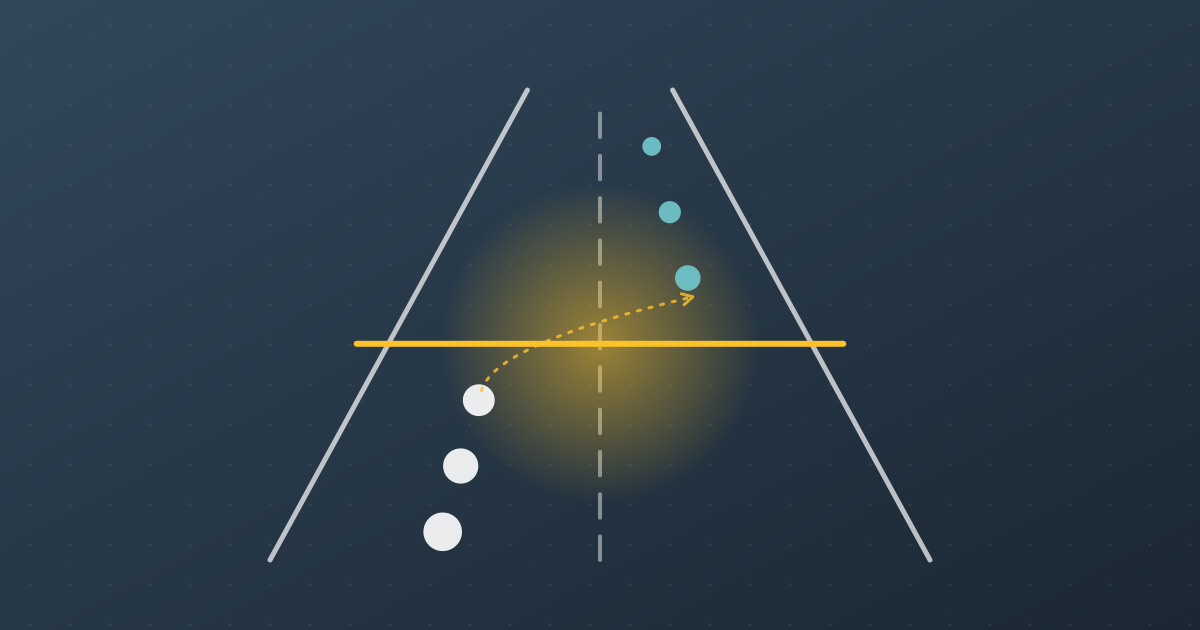
Most focal points arise not by decision but by habit. A fixed, unchanging time becomes a point that many orient themselves by, because they know the others do too. The Tagesschau is a textbook German example of Focal Points. It shows how a broadcast time can become a shared rhythm for an entire country.
A start with three broadcasts a week
Situation
On December 26, 1952, Nordwestdeutscher Rundfunk, the public broadcaster for northwest Germany, airs the first Tagesschau. At first there are three editions a week, and there is not yet an anchor on screen. Starting on March 2, 1959, the program has a face: Karl-Heinz Köpcke, who remains chief newsreader until 1987 and becomes an icon of television news.
Link to the principle
A focal point needs something that stands out and stays the same. With the Tagesschau, it is the fixed time, the familiar faces and the format that never changes. The longer something stays unchanged, the more it is taken for granted as a reference point.
A country sets its evening by it
Situation
In earlier decades, the Tagesschau draws well over half of all television households to the screen. For a long time, it is considered rude to phone during the quarter hour starting at 8 p.m. Georg Mascolo, later editor-in-chief of Der Spiegel, remembers that as a child he had to go to bed either before or after the Tagesschau.
Link to the principle
Nobody decided this. Yet for decades everyone knows: you don’t call at 8 p.m. That is a focal point in Thomas C. Schelling’s sense. Everyone expects the others to respect the 8 p.m. slot, and so they respect it themselves. The coordination happens without words, through shared knowledge.
Others take their cue from it
Situation
Even the television schedule itself takes its cue from the Tagesschau. On many German channels, prime time traditionally begins at 8:15 p.m., right after the news. In the late 1990s, the private broadcasters Sat.1 and ProSieben try to start their evening programming at 8 p.m. Both return to 8:15 p.m. after a few months.
Link to the principle
This shows the power of whoever sets the focal point. With its news program, the public broadcaster ARD set a rhythm that even its competitors orient themselves by. If you plan against an established focal point, you are fighting the habits of millions. If you align with it, you put them to use.
Why the time slot doesn’t move
Situation
The 8 p.m. edition has held its ground for decades, even though there are now several editions a day and many people read the news online. For its 60th anniversary in 2012, a Forsa poll for the magazine Hörzu finds that two-thirds of Germans still consider the 8 p.m. edition their most important source of news.
Link to the principle
A focal point is a valuable asset. If you move it, you destroy something that has grown over years. The strength of the 8 p.m. slot lies precisely in the fact that it was never up for debate. Here, constancy is not inertia but strategy.
The limits of setting the rhythm
Situation
The days when the whole country sat in front of the television at 8 p.m. are over. Streaming, online video libraries and news on smartphones make the fixed time less important. Phoning during the Tagesschau has long ceased to be considered rude.
Link to the principle
Focal points depend on shared habits. When those habits dissolve, the focal point loses its strength, too. What connected generations can become meaningless for the next one. If you want to use a focal point, you have to check whether it still holds.
Key takeaways
Key lessons
- A fixed, unchanging time can set the rhythm for many.
- Hold on to a good reference point instead of constantly moving it.
- Plan your offerings so that they connect to existing focal points.
- Whoever sets the rhythm shapes the behavior of competitors, too.
- Check regularly whether the habit your focal point rests on is still alive.
Summary
The Tagesschau has aired at 8 p.m. for decades. Without any agreement, this time became a reference point for millions: for dinner, phone calls and bedtimes, even for other channels’ schedules. This shows the strength of a focal point that arises from constancy. With new media habits, it is losing its strength, and that, too, is part of the principle.
Sources
- Thomas C. Schelling: The Strategy of Conflict. Cambridge (Mass.): Harvard University Press 1960.