Estonia’s Singing Revolution and Victory without Fighting
In 1988, hundreds of thousands of Estonians gather in Tallinn and sing banned and new patriotic songs. Three years later, Estonia is independent without having fought a war against the Soviet Union.
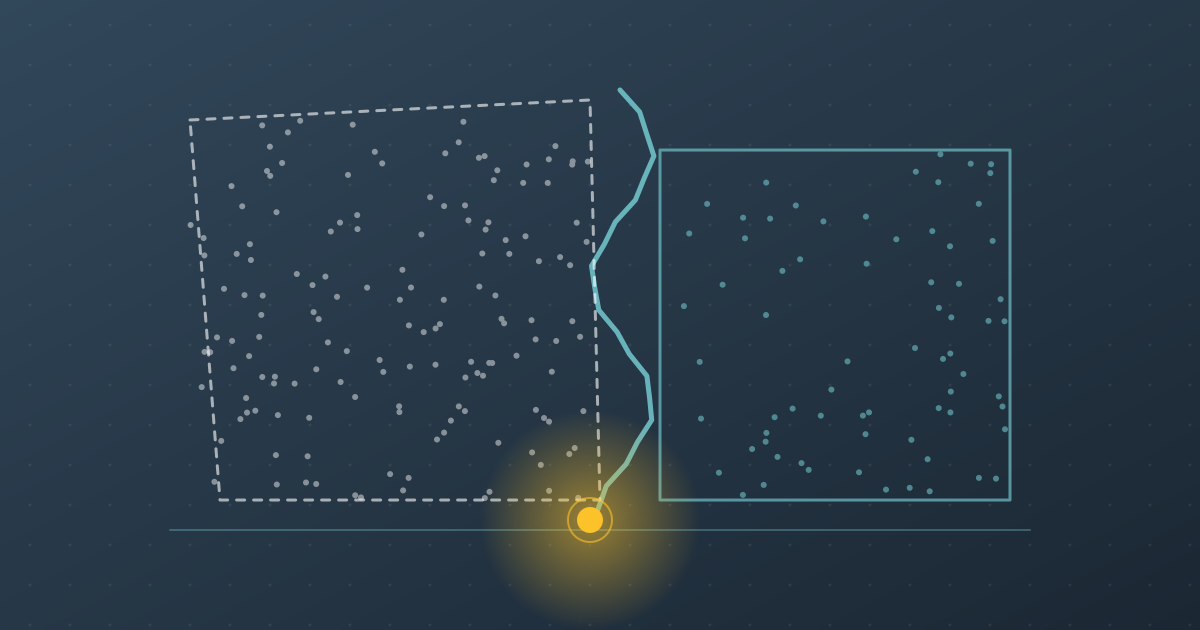
Two rows of dots face each other; behind the right-hand row, three fine teal lines run to a frame, to two small circles and to a dot in the middle. Instead of the rows colliding, the lines come loose one after another, the right-hand row loosens, and a golden gate opens between the two sides.
Principle #27
Victory without Fighting: The best victory is the one you don’t have to fight for, because you have changed your opponent’s plans, allies or will beforehand.
4 min read5 sectionsSituationLink to the principle
Contents
In 1988, Estonia had about 1.5 million inhabitants. The Soviet Union was a nuclear superpower. An armed uprising would have ended in a bloodbath. The Estonians chose a different path. They sang. The Singing Revolution shows how the weak can win against an overwhelming opponent by letting the opponent’s strength come to nothing – Victory without Fighting.
Beneath a golden stage arch, rows of dots sing, and in front of them a huge field of dots spreads out – like Estonia’s Singing Revolution.
01
A small country against a superpower
Situation
Estonia had been annexed by the Soviet Union in 1940, after Hitler and Stalin had divided up the region in 1939 in the secret protocol to their pact. In the late 1980s, Mikhail Gorbachev’s glasnost creates some room for open criticism. In the Baltic states, demands for greater self-determination grow.
Link to the principle
The balance of power rules out a military victory. If you are that inferior, you must not play the game on the field where the opponent is strong. You have to choose a field where tanks are of no use.
02
A tradition no one can ban
Situation
Estonia has a long tradition of great song festivals; the first was held in Tartu in 1869. At such festivals, tens of thousands sing at the Tallinn Song Festival Grounds. The festivals were allowed to continue even under Soviet rule, though with mandatory songs praising the party. In May 1988, at the pop music festival in Tartu, the singer Ivo Linna performs five patriotic songs by Alo Mattiisen for the first time. They become the emotional core of the movement.
Link to the principle
Singing offers the opponent hardly any target. It is not violence; it is culture, and it is a form the regime itself has permitted. If you beat up people who are singing, you lose every justification. Victory without Fighting uses forms that the opponent cannot fight without harming itself.
03
Nights at the Song Festival Grounds
Situation
On June 10 and 11, 1988, spontaneous nighttime singing demonstrations take place at the Song Festival Grounds. A week later, in a newspaper article, the artist and activist Heinz Valk coins the term “Singing Revolution.” On September 11, 1988, an estimated 300,000 people come to the concert “Eestimaa laul” (Song of Estonia); the exact number is disputed. There, Valk calls out that one day, no matter what, they will win.
Link to the principle
When about a fifth of a nation sings together, it is a demonstration of power without weapons. It shows the opponent how united the will is. Sun Tzu considers thwarting the opponent’s plans the supreme art. Here, the plan of holding the country through fear and isolation becomes ineffective.
04
A chain across three countries
Situation
On August 23, 1989, about two million people in Estonia, Latvia and Lithuania form a human chain from Tallinn through Riga to Vilnius. The Baltic Way marks the 50th anniversary of the Hitler–Stalin Pact.
Link to the principle
The chain attacks the legitimacy of Soviet rule. It reminds the world that the annexation rested on a secret agreement between two dictators. If you call your opponent’s legitimacy into question, you weaken them without firing a shot.
05
Independence without war
Situation
In January 1991, Soviet troops use force in the Baltic states. In Vilnius, 14 people die defending the television tower and the parliament. Late in the evening of August 20, 1991, during the attempted coup in Moscow, Estonia declares the restoration of its independence. It is recognized in September, and on September 17, 1991, Estonia becomes a member of the United Nations.
Link to the principle
Victory without Fighting takes patience and the right moment. The Estonians had made their will visible for years and acted when the opponent was preoccupied with itself. At the same time, the case shows the limit: without the weakness of the Soviet Union, singing alone would not have been enough, and in Lithuania the path cost human lives.
Key takeaways
Key lessons
01
Don’t play on the field where the other side is strongest.
02
Choose forms that the opponent cannot attack without harming itself.
03
Make your will visible, together and peacefully.
04
Call the opponent’s legitimacy into question, not just their power.
05
Stay patient, and act when the window opens.
Summary
Between 1988 and 1991, the Singing Revolution led Estonia to independence without a war against an overwhelmingly powerful Soviet Union. The Estonians used a tradition the regime could not ban, showed their united will and, with the Baltic Way, called the legitimacy of the annexation into question. When the Soviet Union began to totter in August 1991, Estonia was ready. That is Victory without Fighting: offsetting your own weakness on a field where the opponent’s strength counts for nothing.
Sources
Estonian World: Estonia – how the Singing Revolution sparked independence
Wikipedia: Singing Revolution
Wikipedia: Estonian Song Festival
The Singing Revolution. Documentary by James Tusty and Maureen Castle Tusty. U.S. 2006.
Sun Tzu: The Art of War, Chapter 3. China, c. 5th century BC.
Back to the basics
Read what lies behind Victory without Fighting: with explanation, animation, video and research.