In the winter of 1939–40, the Soviet Union attacks little Finland with vastly superior forces. The Finns hold out for more than three months and preserve their independence, because will, cohesion and knowledge of the terrain make up for some of the tanks and guns they lack.
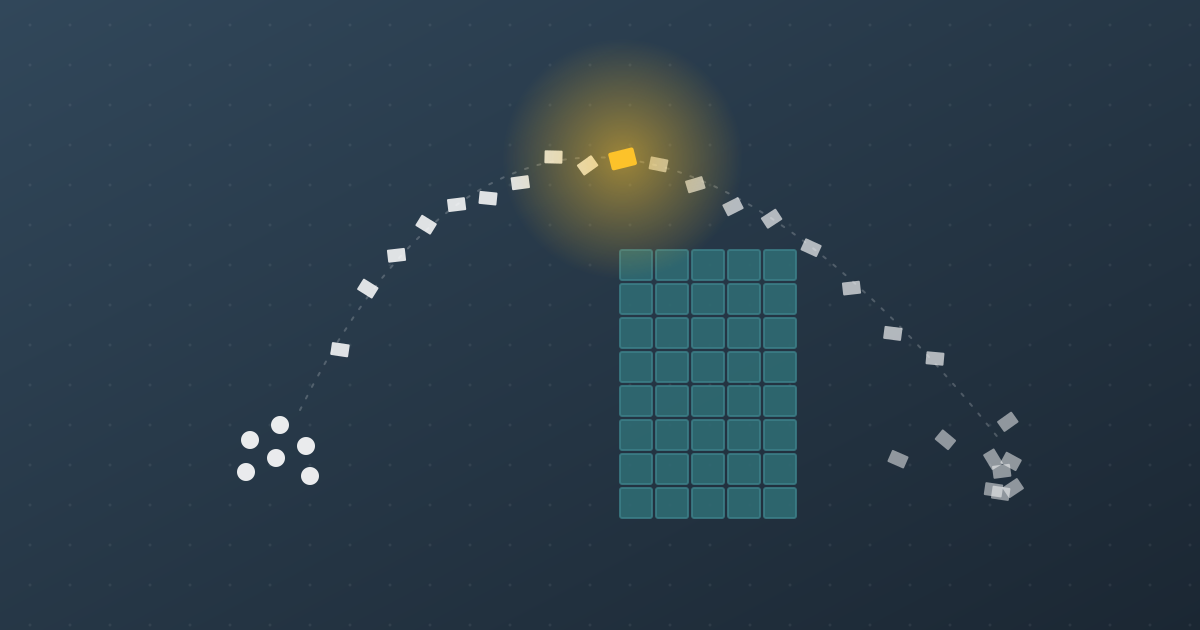
A scale made of fine lines: on the left, one pan sinks under many teal dots; on the right, a pan floats with a few mist-blue circles in which golden cores light up one after another, until the right pan sinks into balance. At the end, a golden line and a teal bar join into one shape: only the two together hold.
Principle #46
Moral Forces: The will, courage and cohesion of those involved often matter more than numbers and equipment, because they determine what becomes of the available means.
4 min read5 sectionsSituationLink to the principle
Contents
In the third book of “On War,” Carl von Clausewitz wrote a chapter on moral factors. In it, he says: “One might say that the physical seem little more than the wooden hilt, while the moral factors are the precious metal, the real weapon, the finely-honed blade.” So if you count only soldiers, tanks and guns, you see only the hilt. Hardly any war of the 20th century shows Moral Forces at work as clearly as the Winter War between the Soviet Union and Finland.
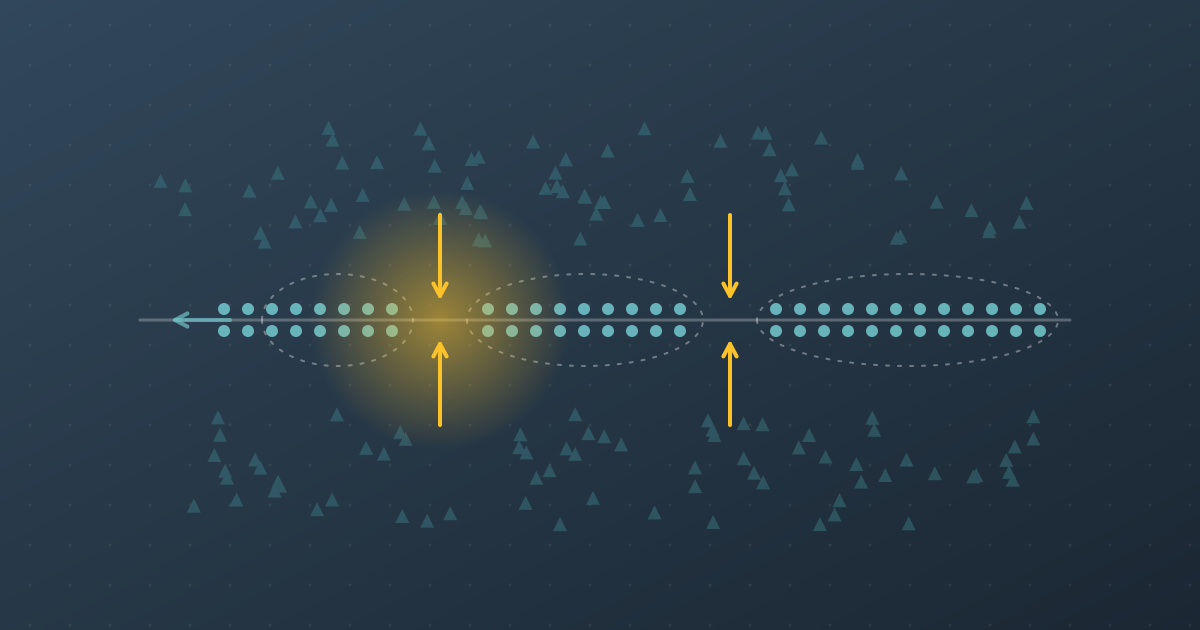
A long column of dots on a forest road is cut into separate pockets by golden thrusts – as in the Finnish Winter War.
01
An unequal fight
Situation
In the fall of 1939, the Soviet Union demands territory and bases from Finland. Finland refuses and mobilizes. After a staged border incident, the Red Army attacks on November 30, 1939. Finland has around 250,000 soldiers, many of them poorly armed. According to common estimates, the Soviet side is superior by about three to one in soldiers, about five to one in artillery and many times over in tanks.
Link to the principle
Going by the material numbers, the outcome was clear. Moscow expected a short campaign. This calculation left out what Clausewitz considers the real core: how determined the people are who use the resources.
02
A country still divided in 1918
Situation
In 1918, Finland had gone through a bloody civil war between “Reds” and “Whites.” Twenty years later, the rifts had not disappeared. At the start of the war, the Soviet Union installed a rival government in Terijoki under the communist Otto Wille Kuusinen. But the population stood largely united behind its own government. In Finland, people still speak today of the “spirit of the Winter War.” Many see it as the moment when the wounds of 1918 began to heal.
Link to the principle
Clausewitz counts national spirit, alongside the talent of the commander and the military virtue of the army, among the three principal moral elements. The attack hit a country that felt attacked and therefore closed ranks. The rival government achieved the opposite of what it was meant to.
03
Skis, cold and encircled columns
Situation
The winter was harsh; temperatures fell to minus 35 degrees Celsius (minus 31 degrees Fahrenheit) and lower. Small Finnish units on skis moved through the forests, while the Soviet columns were tied to the few roads. The Finns cut them into sections and encircled them. These pockets were called “motti.” At Suomussalmi, two Soviet divisions were destroyed this way. Against tanks, the Finns used improvised incendiary bottles, which they named “Molotov cocktails” after the Soviet foreign minister.
Link to the principle
Morale is not a feeling that runs alongside the fighting. It shows up as initiative, endurance and inventiveness. If you want to fight, you look for ways to make up for your own weakness.
04
Where will reaches its limits
Situation
Starting in January 1940, the Red Army reorganized its command, equipment and tactics. In February, it broke through the Finnish positions on the Karelian Isthmus. No major help came from outside. Marshal Carl Gustaf Emil Mannerheim urged the government to make peace. In the Moscow Peace Treaty, signed on the evening of March 12, 1940, Finland ceded about a tenth of its territory, including the entire Karelian Isthmus. Some 420,000 people left their homes.
Link to the principle
Moral forces do not replace material ones in the long run. Clausewitz does not say that courage alone wins; he says that courage and resources belong together. The Finns’ will shifted the calculation; it did not cancel it.
05
What the resistance won
Situation
Finland lost land, but not its independence. The losses were unequally distributed: according to current research, around 26,600 soldiers died on the Finnish side. Soviet losses were many times higher. Estimates vary widely; more recent Russian figures put the number at around 127,000 dead and missing. On December 14, 1939, the Soviet Union was expelled from the League of Nations.
Link to the principle
The attacker paid a high price, and Finland remained an independent state. That is the real effect of moral forces: they change what victory costs the opponent.
Key takeaways
Key lessons
01
Don’t just count resources; ask how determined the people who use them are.
02
An attack from outside can unite a divided community.
03
Morale shows in action: initiative, endurance, inventiveness.
04
Will does not replace resources in the long run, but it changes the price.
05
Check whether the other side is underestimating your people’s morale, and whether you are underestimating theirs.
Summary
In the Winter War of 1939–40, the Soviet Union was far superior to Finland in material terms. Even so, the Finns held out for more than three months. The attack united a country that had still been divided in 1918, and small units made use of the forest, the cold and their own initiative. In the end, Finland lost territory but preserved its independence. This shows what Carl von Clausewitz meant: the moral forces are the blade, the material ones the hilt, and only the two together decide the outcome.
Sources
Carl von Clausewitz: Vom Kriege (in German). Berlin: Ferdinand Dümmler 1832–1834, Book III, Chapters 3–5.
Imperial War Museums: A Short History of the Winter War
Wikipedia: Winterkrieg (in German)
Wikipedia: Moscow Peace Treaty
Back to the basics
Read what lies behind Moral Forces: with explanation, animation, video and research.