The principle in detail
Three steps through the principle: grasp it, place it, put it to work. Open each topic on its own.
The core messageCore statement and 3 clarifications
Resources take effect only through the people who use them. Will, courage and cohesion decide how much of them becomes effective.
- It does not say
- That enthusiasm replaces missing resources. Morale multiplies what is there; it cannot make something out of nothing.
- It does not say
- That morale is a good mood. It holds precisely when the mood is bad.
- It also says
- Morale is often cohesion on a small scale. It grows in the immediate group more than through big words.
The explanationIf you underestimate morale, you plan only with numbers.
There are mistakes in both directions.
- If you underestimate morale, you plan only with numbers.
- If you overestimate it, you believe enthusiasm can replace training and preparation.
- And if you confuse morale with a good mood, you will be caught off guard when the mood turns.
What becomes of your resources when things get hard, and what are you doing so that your people still want to go on then?
The signs3 signs when you heed it · 3 when you overlook it
- In every plan, you ask how your team is doing in terms of strength and cohesion.
- After a setback, you talk to the people first, then about the numbers.
- Small teams stick together and take the initiative themselves.
- Your plans count only budget and headcount.
- You fire people up with slogans where equipment or training is missing.
- After the first setback, everyone waits for instructions.
The backgroundFrom Carl von Clausewitz’s work “On War” (1832–1834), Book III, Chapters 3 to 5. · T1 Classical Theory of War
- 1832–1834OriginCarl von Clausewitz
On War
- 1948SupplementedEdward A. Shils and Morris Janowitz
Cohesion and Disintegration in the Wehrmacht in World War II
- Tradition T1TraditionClassical Theory of War
Carl von Clausewitz, Antoine-Henri Jomini, Helmuth von Moltke the Elder, Frederick William Lanchester
See the tradition on the Origin page
Read more: the full background
From Carl von Clausewitz’s work “On War” (1832–1834), Book III, Chapters 3 to 5. Supplemented by the study by Edward A. Shils and Morris Janowitz (1948) on cohesion in small groups.
The research2 sources: 1 classic, 1 primary study · 1832–1948 · with limitations of the research
- weak
- moderate
- strong
Carl von Clausewitz grounds the principle in military history, and Edward A. Shils and Morris Janowitz support the part about cohesion empirically; nobody measures the comparison with numbers and equipment.
- 1948Edward A. Shils and Morris Janowitz
“Cohesion and Disintegration in the Wehrmacht in World War II”: the soldiers’ fighting power depended above all on the cohesion of their immediate group and only slightly on National Socialist conviction.
- Moral forces work only together with material ones.
- In the long run, enthusiasm does not replace missing resources, and where leaders preach morale as a substitute for equipment, training or planning, the principle becomes dangerous.
- After the fact, morale is easy to cite as the explanation for any victory, which makes it hard to test.
- In 1996, Stephen G. Fritz qualified the finding of Edward A. Shils and Morris Janowitz for the Eastern Front: there, ideology played a stronger part, intertwined with comradeship.
Read more: what research shows
Carl von Clausewitz devotes separate chapters to moral forces in “On War.” He counts them among the most important subjects in war and compares the physical forces to the wooden hilt of a weapon and the moral ones to its precious metal. As the principal moral elements, he names the talents of the commander, the military virtue of the army and its national spirit. He could not measure any of this; he relies on military history. In 1948, Edward A. Shils and Morris Janowitz studied the German armed forces of the Second World War, the Wehrmacht, and concluded that the soldiers fought less out of political conviction than out of attachment to their immediate group. There, morale appears as cohesion on a small scale. Neither source offers measured proof that morale often matters more than numbers and equipment.
The related principles37 Strength of the Defense · 47 Unity of Leaders and People · 56 Asymmetry · 85 Death Ground
To go deeper, see 47 Unity of Leaders and People (morale grows strongest where leaders and people want the same thing) and 37 Strength of the Defense (those who defend what is their own often fight more resolutely)
56 Asymmetry shows why the materially weaker side needs moral strength
85 Death Ground shows what forces people mobilize when there is no way out
Read more: the full text
To go deeper, see 47 Unity of Leaders and People (morale grows strongest where leaders and people want the same thing) and 37 Strength of the Defense (those who defend what is their own often fight more resolutely). 56 Asymmetry shows why the materially weaker side needs moral strength, and 85 Death Ground shows what forces people mobilize when there is no way out.
The action steps5 things you can actually do
- Include your people’s morale in every assessment of the situation: what do they believe in, what keeps them going, what wears them down?
- Protect the small groups in which cohesion develops. Don’t break up well-established teams without good reason.
- Say honestly how hard the task is, and at the same time show a way forward. The same facts can paralyze or encourage.
- Make room for initiative. People who are allowed to think along hold out longer when the plan no longer fits.
- Don’t promise miracles from enthusiasm. Make sure that resources, training and preparation are right, so that morale has something to work on.
The reflection questions3 questions: When did you last ask in a planning session how your people are doing in terms of strength?
- When did you last ask in a planning session how your people are doing in terms of strength?
- What do you spread when the situation gets difficult: confidence with a way forward, or worry without one?
- Where are you expecting enthusiasm to do what resources, training or time should actually achieve?
Take your time with one question. Write down your answer – or talk it over with someone you trust.
The picture to rememberThe animation once more, with an explanation
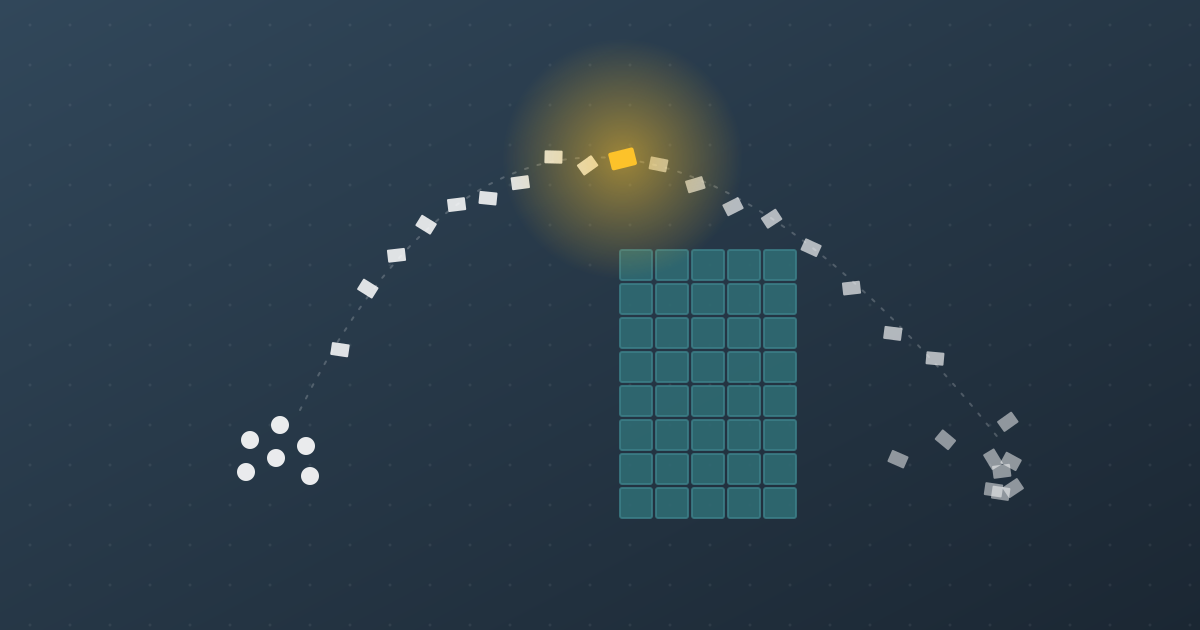
- A scale made of fine lines: on the left, one pan sinks under many teal dots
- On the right, a pan floats with a few mist-blue circles in which golden cores light up one after another, until the right pan sinks into balance
- At the end, a golden line and a teal bar join into one shape: only the two together hold
How the principle shows up in practice
Finland in the Winter War
In 1939–40, little Finland holds out against the superior Soviet forces for more than three months and preserves its independence, because cohesion and initiative partly make up for missing resources.
The White Rose
In 1942–43, a handful of Munich students stand up to the Nazi regime with leaflets. The group is crushed, but its attitude outlasts the regime.
Herb Brooks and the Miracle on Ice
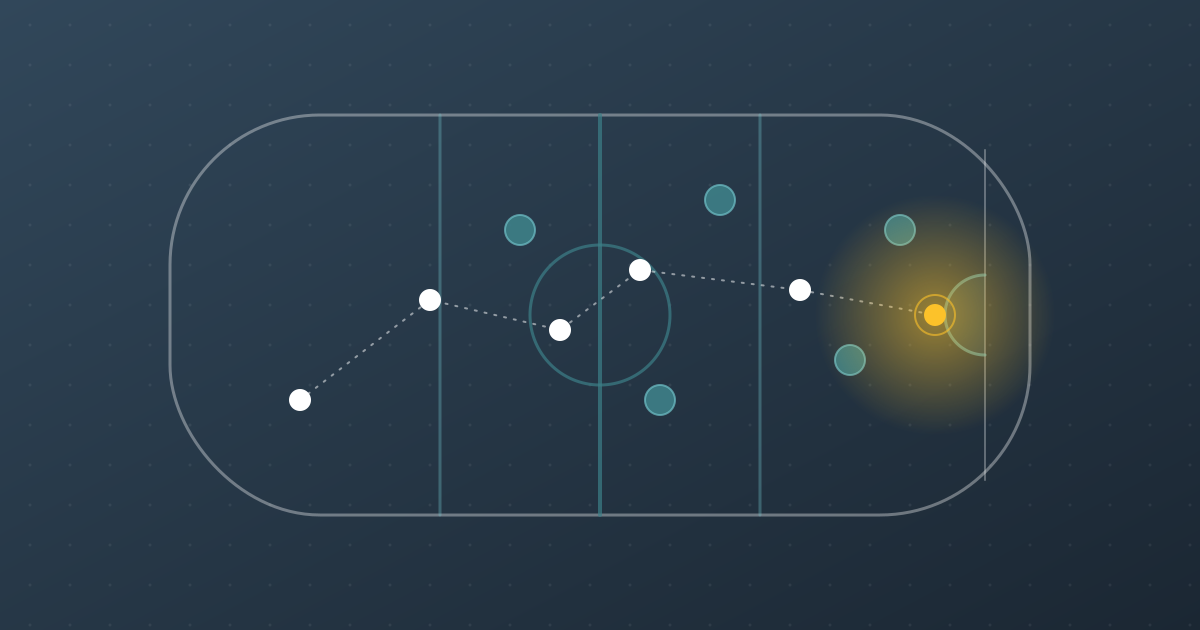
In 1980, a young U.S. college team beats the Soviet national hockey team, because cohesion and strong nerves bring existing ability to bear.
What keeps your team going when things get hard?
Get your profile across all 12 groups in about 10 to 15 minutes.
Start the Strategy CheckGroup 7: People, Morale and Power
Guiding question: What moves people to go along or to resist?
Stage 4 of 5: Act with others
- Anchor principle of the group
Will, courage and cohesion are the reason this group exists; the other principles show how people are won over, led and persuaded – or why they resist.
The other 10 principles in the group build on it.
- TraditionClassical Theory of War
Carl von Clausewitz, Antoine-Henri Jomini, Helmuth von Moltke the Elder, Frederick William Lanchester
- Related principles
Where the 92 principles come from: eight traditions of strategy, from classical war theory to dealing with uncertainty.
More about the originBackground: WEGVISOR’s own selection from the strategy literature · More about the origin