The principle in detail
Three steps through the principle: grasp it, place it, put it to work. Open each topic on its own.
The core messageCore statement and 3 clarifications
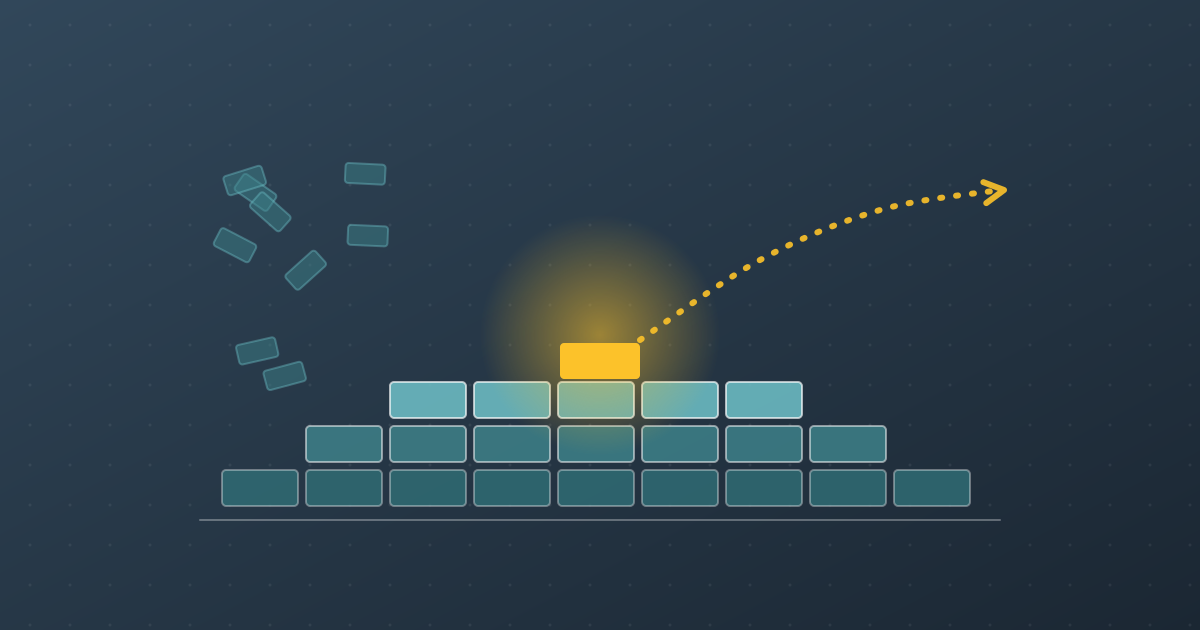
Time, terrain and preparation work for whoever holds. The attacker uses up strength; the defender can conserve it.
- It does not say
- That you should always defend. Defense serves to preserve; if you want to win, you have to attack at some point.
- It does not say
- That every position holds. A position the opponent simply goes around is of little use.
- It also says
- You plan the counterattack from the start, not only once the situation has turned.
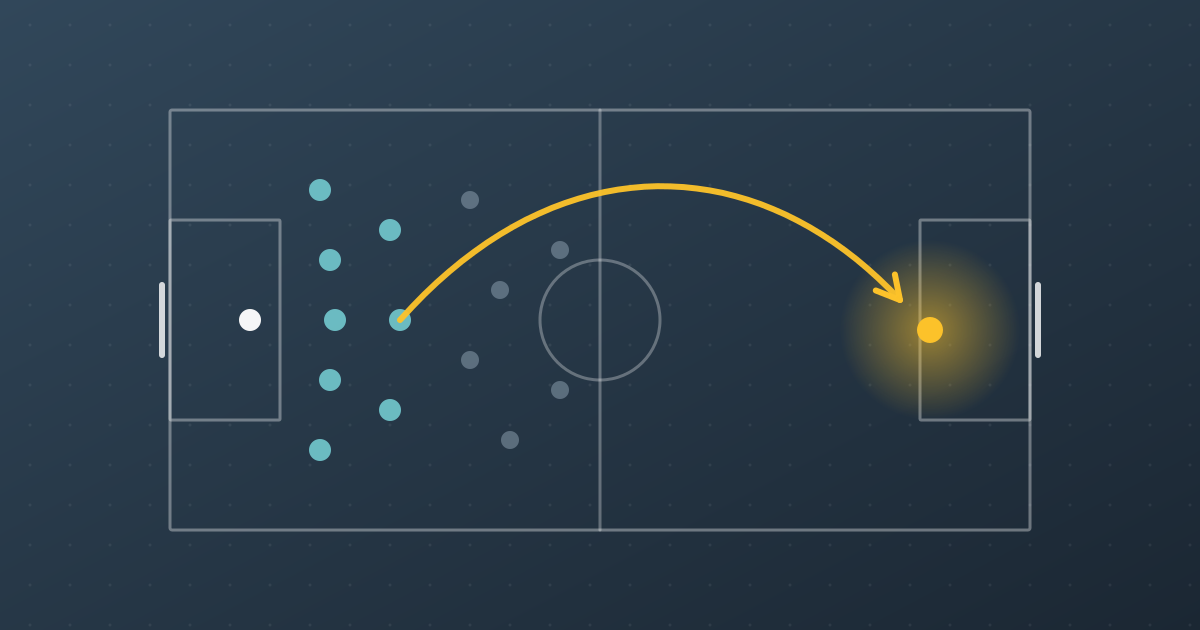
The explanationThe art lies in the combination: hold until the other side has exhausted itself, and then strike back.
The art lies in the combination: hold until the other side has exhausted itself, and then strike back.
Where are you defending right now, and when is your moment for the counterattack?
The signs3 signs when you heed it · 3 when you overlook it
- You prepare for attacks before they come.
- You don’t let yourself be pushed into attacking at the wrong time.
- You have a plan for the moment the other side tires, and you carry it out.
- You charge ahead just because attacking looks stronger, and you run up against prepared positions.
- Or you wall yourself in and hope for a turn of events that you do nothing to bring about.
- You guard a front where nobody is attacking.
The backgroundFrom Carl von Clausewitz’s work “On War” (1832–1834), Book VI. · T1 Classical Theory of War
- 1832–1834OriginCarl von Clausewitz
On War
- Tradition T1TraditionClassical Theory of War
Carl von Clausewitz, Antoine-Henri Jomini, Helmuth von Moltke the Elder, Frederick William Lanchester
See the tradition on the Origin page
Read more: the full background
From Carl von Clausewitz’s work “On War” (1832–1834), Book VI. Supplemented by the debate in security studies about the relationship between attack and defense.
The research5 sources: 2 classics, 2 theories, 1 case study · 1832–1989 · with limitations of the research
- weak
- moderate
- strong
The classic has been checked against the original text, and the debate in security studies confirms the defender’s advantage; how large that advantage is depends on technology and terrain.
- 1978Robert Jervis
“Cooperation under the Security Dilemma”: whether offense or defense has the advantage depends on technology and geography.
- 1984Stephen Van Evera
“The Cult of the Offensive and the Origins of the First World War”: before 1914, the military believed in the superiority of the attack, while technology was strengthening the defense.
- 1989John J. Mearsheimer
“Assessing the Conventional Balance: The 3:1 Rule and Its Critics”: defends the rule of thumb of threefold superiority at the point of attack against its critics.
- Defense can be bypassed, as France’s Maginot Line showed in 1940, and pure defense decides nothing.
- If you wall yourself in and plan no counterattack, you often lose anyway, only more slowly.
- The three-to-one rule is disputed; critics consider it too crude.
- None of the sources says in general terms when the right moment for the counterattack has come.
Read more: what research shows
Carl von Clausewitz devotes the entire sixth book of “On War” to defense. In the first chapter, he calls the defensive form intrinsically stronger than the offensive, because its purpose, preserving, is easier than conquering. In the fifth chapter, he calls the sudden, powerful transition to the attack the greatest moment for the defense. There is also a rule of thumb in the literature that an attacker needs roughly threefold superiority at the decisive point; in 1989, John J. Mearsheimer defended it against critics such as Joshua M. Epstein. In 1978, Robert Jervis described how the balance between offense and defense depends on technology and terrain. In 1984, Stephen Van Evera showed how Europe’s generals believed in the attack before 1914, even though machine guns and trenches had strengthened the defense.
The related principles13 Culminating Point · 39 First Make Yourself Invincible · 43 Initiative · 44 Annihilation and Exhaustion
To go deeper, see 39 First Make Yourself Invincible (first your own security, then the opportunity) and 13 Culminating Point (the defense wears the attacker down until it has passed its peak)
43 Initiative describes how the counterattack wins back the initiative
44 Annihilation and Exhaustion puts both parts in context: holding wears the opponent down, the counterattack decides
Read more: the full text
To go deeper, see 39 First Make Yourself Invincible (first your own security, then the opportunity) and 13 Culminating Point (the defense wears the attacker down until it has passed its peak); 43 Initiative describes how the counterattack wins back the initiative. 44 Annihilation and Exhaustion puts both parts in context: holding wears the opponent down, the counterattack decides.
The action steps5 action steps: Be clear about what you must preserve: customers, reputation, team, liquidity.
- Be clear about what you must preserve: customers, reputation, team, liquidity. Build your defense around it.
- Use the time before a confrontation: close gaps, prepare the facts, strengthen the people who will have to hold.
- Let the other side commit its strength first. In negotiations, listen before you show your position.
Decide in advance how you will recognize the moment for the counterattack and who will then do what.
- Check whether your defense can be bypassed. Also secure the routes by which nobody comes head-on.
The reflection questions3 questions: Where are you attacking right now, even though you could wait and prepare?
- Where are you attacking right now, even though you could wait and prepare?
- Where are you walling yourself in and hoping that the situation will turn on its own?
- How will you recognize that the moment for your counterattack has come?
Take your time with one question. Write down your answer – or talk it over with someone you trust.
The picture to rememberThe animation once more, with an explanation
- A small golden circle stands behind an arc of fine lines
- A large arrow of teal dots rolls in, crashes against it and loses dots with every impact, which fade to mist-blue
- When the arrow has hardly any dots left, the arc opens, the golden circle stretches into a line and thrusts forward
- In the final image, a second version shows an arrow going around the outside of the arc
How the principle shows up in practice
The relief of Vienna in 1683
Vienna holds out for about two months against an Ottoman army, then the relief army under John III Sobieski strikes at the Kahlenberg. Holding and counterattack together bring victory.
The Council of Trent
From 1545 to 1563, the Catholic Church secures its doctrine and its order, and from this consolidated position it begins the Counter-Reformation.
Helenio Herrera, Inter Milan
With a tight catenaccio and fast counterattacks, Inter wins the European Cup in 1964 and 1965. The 1967 defeat against Celtic shows what happens without the counterattack.
When is your moment for the counterattack?
Get your profile across all 12 groups in about 10 to 15 minutes.
Start the Strategy CheckGroup 5: Position and Space
Guiding question: Where do you stand, and how much room do you have to move?
Stage 2 of 5: Understand the situation
- TraditionClassical Theory of War
Carl von Clausewitz, Antoine-Henri Jomini, Helmuth von Moltke the Elder, Frederick William Lanchester
Where the 92 principles come from: eight traditions of strategy, from classical war theory to dealing with uncertainty.
More about the originBackground: WEGVISOR’s own selection from the strategy literature · More about the origin