The Relief of Vienna in 1683 and the Strength of the Defense
In the summer of 1683, an Ottoman army besieges Vienna. The city holds out for about two months, until a relief army under the Polish king John III Sobieski attacks at the Kahlenberg on September 12. Only the combination of tenacious defense and a determined counterattack brings victory.
A small golden circle stands behind an arc of fine lines; a large arrow of teal dots rolls in, crashes against it and loses dots with every impact, which fade to mist-blue. When the arrow has hardly any dots left, the arc opens, the golden circle stretches into a line and thrusts forward; in the final image, a second version shows an arrow going around the outside of the arc.
Principle #37
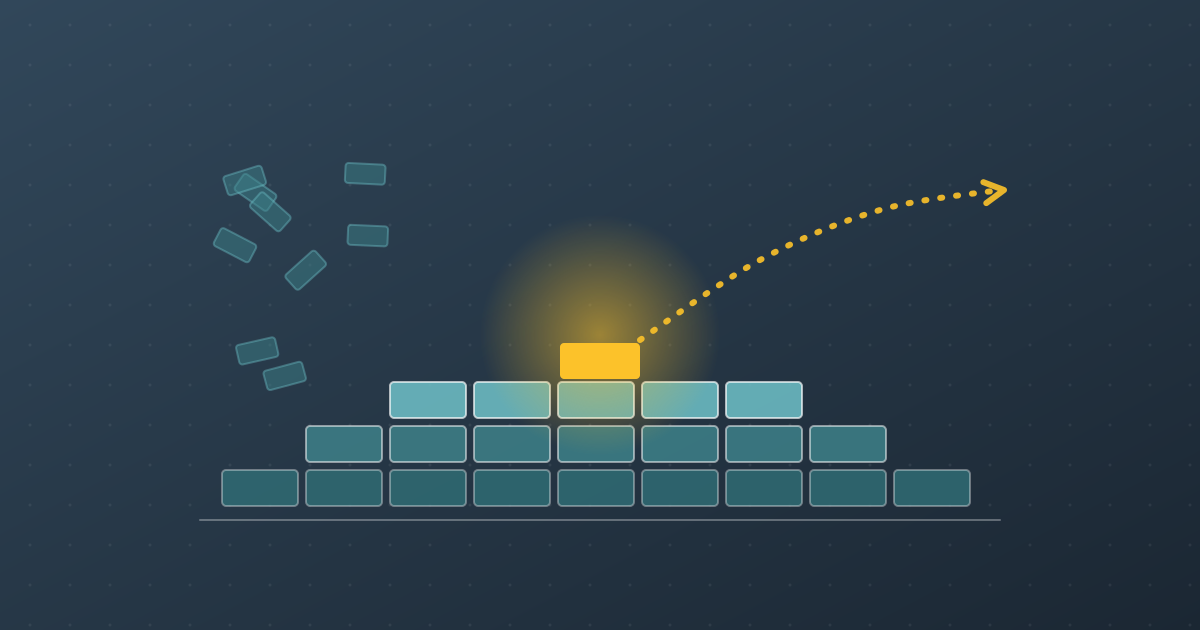
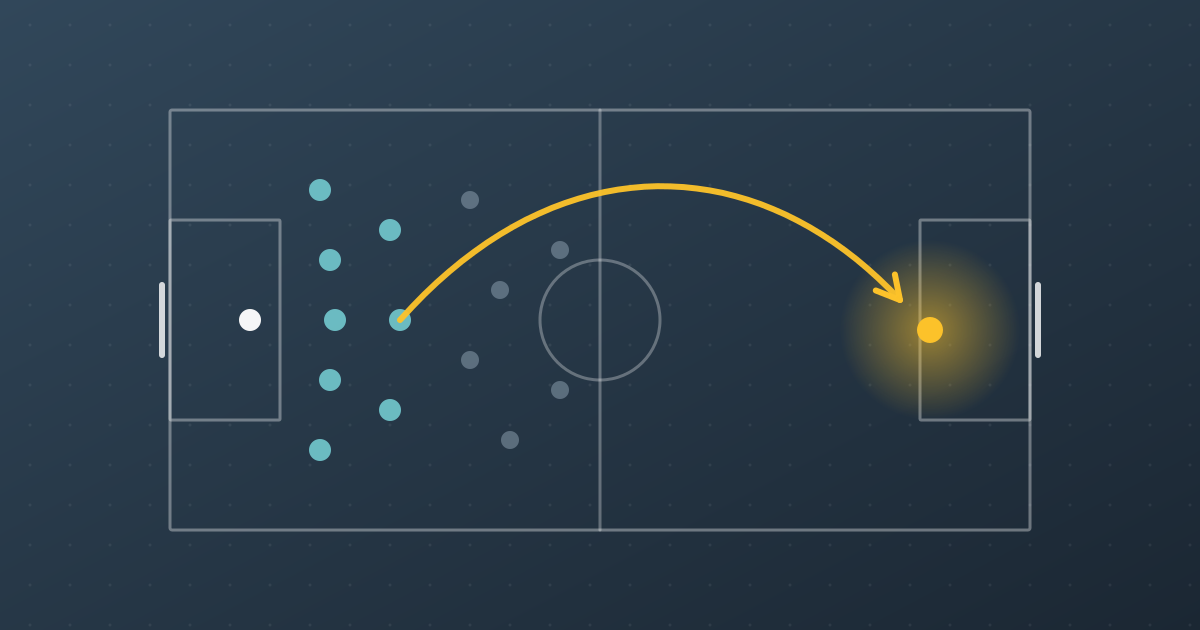
Strength of the Defense: Defense is the stronger form because time, terrain and preparation work for you; attack is the more effective one – so you hold firm first and then strike back at the right moment.
3 min read5 sectionsSituationLink to the principle
Contents
Carl von Clausewitz wrote that defense is the stronger form of war, but attack is the one with the positive purpose. The defender can wait, is prepared and has the ground on its side. But it can rarely win by that alone. The siege of Vienna in 1683 shows both sides of this idea in a single story – an example of the Strength of the Defense.
A ring of dots encloses the star-shaped fortress, and from the hill a golden arrow thrusts into the ring – like the relief of Vienna in 1683.
01
An army before the walls
Situation
On July 14, 1683, an Ottoman army under the grand vizier Kara Mustafa Pasha reaches Vienna; accounts put its strength at between 120,000 and 150,000 men. Emperor Leopold I leaves the city. The defense is led by Ernst Rüdiger von Starhemberg with a garrison of soldiers and townspeople that is far smaller than the besieging army.
Link to the principle
In open country, the garrison would have had no chance. But behind walls, bastions and ditches, a small force can hold up a large one. The defense uses what the attacker first has to overcome: prepared positions and time.
02
Two months underground and on the walls
Situation
The besiegers dig approach trenches and mines under the bastions and blow breaches in the walls. The defenders dig countermines, close the gaps and beat off assaults. Dysentery spreads in the city, and food runs short. The city holds out into September.
Link to the principle
Defense is not waiting with folded arms. It is hard work: countermines, repairs, sorties. Its strength is that every day helps the defender as long as it holds. And every day brings the relief army closer.
03
The relief army
Situation
Pope Innocent XI asks the Polish king John III Sobieski for help. Sobieski, Duke Charles of Lorraine, the Electors of Saxony and Bavaria and many princes of the Empire assemble an army that various accounts put at 60,000 to 80,000 men; according to German History in Documents and Images, some 27,000 of them are Poles. It marches through the Vienna Woods onto the Kahlenberg.
Link to the principle
Clausewitz stresses that you should use the defense only as long as you are too weak, and go over to the attack as soon as you are strong enough. Vienna itself could not drive off the besiegers. The defense bought the time the attack needed.
04
The Battle of the Kahlenberg
Situation
On September 12, 1683, the relief army attacks from the heights of the Vienna Woods. The Ottoman army is tied down on two fronts, at the city and at the edge of the forest. By the end of the day, it is beaten and the siege is lifted. The Viennese celebrate Sobieski as their liberator.
Link to the principle
Attack is the more effective form because only attack forces a decision. But it struck an opponent worn down by two months of siege. The Strength of the Defense had brought the attacker to its culminating point.
05
What came next
Situation
Kara Mustafa was executed in Belgrade on December 25, 1683, on the sultan’s orders. In the years that followed, Habsburg troops conquered large parts of Hungary. In the Treaty of Karlowitz in 1699, the Ottoman Empire had to cede Hungary and Transylvania, except for the Banat of Temesvár, to the Habsburgs.
Link to the principle
The position that had been held turned into a counteroffensive, and the counteroffensive into a long campaign. That is the sequence Clausewitz describes: hold first, then strike back at the right moment.
Key takeaways
Key lessons
01
If you are weaker, choose a prepared position over the open field.
02
Use time; it works for whoever holds.
03
Make your defense active work, not inactivity.
04
Plan the counterattack from the start.
05
Strike when the attacker is worn down, not before.
Summary
In 1683, Vienna held out for about two months against a far superior Ottoman army. Walls, countermines and endurance bought the time a relief army needed to assemble. On September 12, the relief army attacked from the Kahlenberg under John III Sobieski and defeated the exhausted besiegers. That is the principle of the Strength of the Defense: the defense holds and wears down, the attack decides. Only the two together bring victory.