The principle in detail
Three steps through the principle: grasp it, place it, put it to work. Open each topic on its own.
The core messageCore statement and 3 clarifications
Every advance drains your own strength. If you go beyond the point at which it is still enough to hold on, you will be thrown back, often to a point behind where you started.
- It does not say
- That you should cautiously stand still. If you stop too early, you give away what you could still have won and give the other side time to recover.
- It does not say
- That every advance grows weaker. Where success brings new means, such as new allies, an advance can grow stronger over time.
- It also says
- A fixed objective helps. If you know when you are done, you will find it easier to recognize the point.
The explanationRight up to the end, the advance feels like superiority.
- The danger is that you can hardly see the point from the inside.
- Right up to the end, the advance feels like superiority.
- That is why the riskiest moment often comes not before success but right after it.
Can you hold what you are winning right now?
The signs3 signs when you heed it · 3 when you overlook it
- Before a venture, you define when it has been achieved.
- After a success, you consolidate first before moving on.
- You take warnings from outside seriously, even when things are going well.
- Every interim success counts as proof that things will continue like this.
- Gains are immediately put back to work instead of being secured.
- The team is exhausted, but the next step has already been promised.
The backgroundTradition T1 Classical Theory of War
- 1832–1834OriginCarl von Clausewitz
On War
- Tradition T1TraditionClassical Theory of War
Carl von Clausewitz, Antoine-Henri Jomini, Helmuth von Moltke the Elder, Frederick William Lanchester
See the tradition on the Origin page
Read more: the full background
From Carl von Clausewitz’s “On War” (1832–1834), Book VII, Chapter 5, and the section on the culminating point of victory. It was shaped by the Russian campaign of 1812, which Carl von Clausewitz witnessed in Russian service.
The research3 sources: 3 classics · 1834 · with limitations of the research
- weak
- moderate
- strong
A classical theory drawn from the experience of war, without measurement; its transfer to companies and projects has not been studied.
- The culminating point is usually clear only in hindsight.
- If you assume it comes too early, you stop where you could still have won.
- Not every advance weakens the attacker: where success brings new means, an attack can grow stronger over time.
- Carl von Clausewitz writes about military campaigns; the idea that success reverses in the same way in companies, families or churches is an extrapolation.
Read more: what research shows
Carl von Clausewitz coined the term in the seventh book of “On War.” He describes how an attack lives on an existing superiority that usually diminishes. Among the causes he names are occupying the territory in the rear, losses, the growing distance from the sources of reinforcement and allies who drop away. Most attacks lead only to the point at which their forces are just sufficient for defense. Beyond it the reaction sets in, and it is usually more violent than the blow itself. According to Carl von Clausewitz, hitting that point takes judgment, because the balance of strength is hard to gauge. The source material cites no empirical studies that test the principle outside war.
The related principles12 Reserve · 14 Overstretch · 15 Logistics · 37 Strength of the Defense
The Culminating Point describes the single advance; 14 Overstretch describes the lasting burden that remains when you pass the culminating point
As 15 Logistics shows, supply usually determines where it lies, and it exists at all because, as 37 Strength of the Defense explains, the defender gains with time
If you hold back forces in line with 12 Reserve, you can absorb the reversal
Read more: the full text
The Culminating Point describes the single advance; 14 Overstretch describes the lasting burden that remains when you pass the culminating point. As 15 Logistics shows, supply usually determines where it lies, and it exists at all because, as 37 Strength of the Defense explains, the defender gains with time. If you hold back forces in line with 12 Reserve, you can absorb the reversal.
The action steps5 things you can actually do
At the start of a venture, define how you will know that you have reached your objective, and write it down.
- After every success, ask: can we hold what we have just gained? Do an honest calculation of strength, time and money.
- Watch for signs of dwindling strength: growing exhaustion, falling quality, longer distances.
- Ask someone from outside to review your next step before you commit to it. At the very least, listen to warnings from the other side.
- Plan the halt as a step in its own right: consolidate, resupply, regroup. Only then decide on the next advance.
The reflection questions3 questions: Which venture is going so well right now that you no longer ask whether you can hold it?
- Which venture is going so well right now that you no longer ask whether you can hold it?
- How would you notice that your team is at the end of its strength before it is too late?
- Which warning did you last ignore because it came from outside?
Take your time with one question. Write down your answer – or talk it over with someone you trust.
The picture to rememberThe animation once more, with an explanation
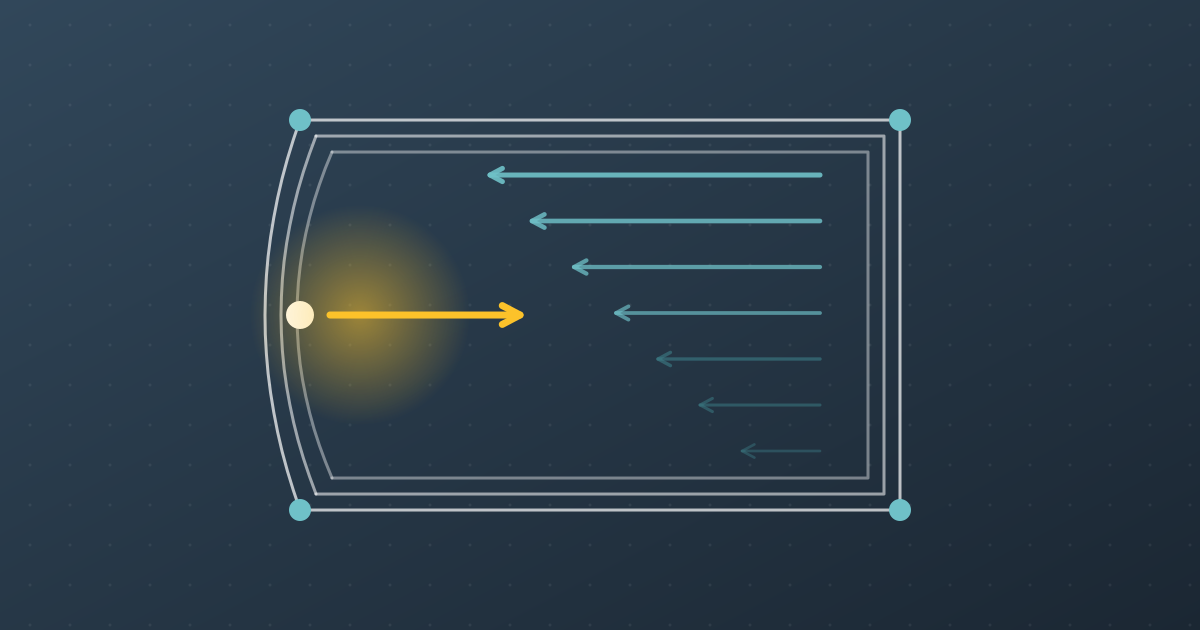
- A golden line pushes to the right, leaving teal dots behind as garrisons, while its strength bar gets shorter with every dot and a mist-blue circle grows opposite it
- Where both are equally strong, a golden dot lights up
- If the line goes beyond it, it thins out and is pushed back by the circle behind its starting point, and in the final image it stands beside it at the golden dot as a firm frame
How the principle shows up in practice
Muhammad Ali, George Foreman
In Kinshasa in 1974, Ali lets the stronger Foreman charge at him on the ropes until his attack has no strength left, and wins in the eighth round.
Otto von Bismarck at Nikolsburg
After Königgrätz in 1866, Bismarck stops against the will of the king and the generals and concludes a lenient peace that later makes an alliance possible.
Porsche, Volkswagen
Starting in 2005, Porsche goes after the much larger VW, wins a majority but not the means to hold it, and in the end is taken over itself.
Can you hold what you win?
Get your profile across all 12 groups in about 10 to 15 minutes.
Start the Strategy CheckGroup 2: Forces and Resources
Guiding question: Where do you commit your forces, and how long will they last?
Stage 3 of 5: Choose the path
- TraditionClassical Theory of War
Carl von Clausewitz, Antoine-Henri Jomini, Helmuth von Moltke the Elder, Frederick William Lanchester
- Related principles
Where the 92 principles come from: eight traditions of strategy, from classical war theory to dealing with uncertainty.
More about the originBackground: WEGVISOR’s own selection from the strategy literature · More about the origin