The principle in detail
Three steps through the principle: grasp it, place it, put it to work. Open each topic on its own.
The core messageCore statement and 3 clarifications
Uncommitted strength, time or money gives you freedom of action when the plan does not work out or an opportunity opens up.
- It does not say
- That more reserve is always better. Every reserve is missing at the front, and too much of it fritters away your strength.
- It does not say
- That you should spare the reserve. A reserve that is never committed out of hesitation is lost.
- It also says
- The reserve has to be ready. If you treat it as second-class, you will not have it when it counts.
The explanationFresh forces meet tired ones, and people who know help is standing by hold out longer.
A reserve works in two ways.
- Fresh forces meet tired ones, and people who know help is standing by hold out longer.
- But it comes at a cost: whatever you hold back is missing at the front.
What do you keep free, and when do you commit it?
The signs3 signs when you heed it · 3 when you overlook it
- Not every hour in your team is scheduled, and everyone knows what the slack is for.
- When something fails, you can help without opening new gaps.
- When an opportunity arises, you can quickly commit more.
- Every crisis pulls people off other tasks.
- Free time or financial reserves are seen as waste and get cut.
- Or there is a reserve that is never committed because the right moment is always still to come.
The backgroundFrom Carl von Clausewitz’s “On War” (1832), Book III, Chapter 13. · T1 Classical Theory of War
- 1832OriginCarl von Clausewitz
On War
- 1963SupplementedRichard M. Cyert and James G. March
A Behavioral Theory of the Firm
- 1996SupplementedNitin Nohria and Ranjay Gulati
Is Slack Good or Bad for Innovation?
- Tradition T1TraditionClassical Theory of War
Carl von Clausewitz, Antoine-Henri Jomini, Helmuth von Moltke the Elder, Frederick William Lanchester
See the tradition on the Origin page
Read more: the full background
From Carl von Clausewitz’s “On War” (1832), Book III, Chapter 13. Supplemented by research on uncommitted resources (slack) by Richard M. Cyert and James G. March as well as Nitin Nohria and Ranjay Gulati.
The research3 sources: 1 classic, 1 theory, 1 primary study · 1832–1996 · with limitations of the research
- weak
- moderate
- strong
One empirical study supports the benefit of uncommitted resources up to a moderate level; the rest is based on theory and the experience of war.
- 1963Richard M. Cyert and James G. March
“A Behavioral Theory of the Firm”: uncommitted resources help organizations absorb fluctuations and conflicts.
- 1996Nitin Nohria and Ranjay Gulati
“Is Slack Good or Bad for Innovation?”: in 264 departments of two corporations, both too little and too much slack harm innovation; a moderate amount helps most.
- Every reserve is missing at the front.
- If you hold back too much, you fritter away your strength just as much as someone who spreads it out, and in doing so you run counter to the Concentration of Force.
- Carl von Clausewitz expressly warns against holding back strength for a decision that has already been made.
- Nitin Nohria and Ranjay Gulati’s study measures innovation in departments, not the response to crises.
- How large the right reserve is cannot be stated in general terms.
Read more: what research shows
In “On War,” Carl von Clausewitz distinguishes two purposes of a reserve: to prolong and renew the fight, and to respond to the unforeseen. For strategy on the grand scale, he is cautious. He calls a reserve that is meant to be used only after the main decision absurd, because it is missing exactly where it is needed. In organizational research, the reserve is called slack: uncommitted resources. In 1963, Richard M. Cyert and James G. March described how such cushions help organizations absorb fluctuations and conflicts. Nitin Nohria and Ranjay Gulati studied 264 departments in two multinational corporations. They found that both too little and too much slack harm innovation, and that a moderate amount helps most.
The related principles07 Concentration of Force · 13 Culminating Point · 18 Friction · 19 Fog of Uncertainty
The reserve stands in tension with 07 Concentration of Force both call for deliberate trade-offs.
It absorbs the frictions described in 18 Friction, and because you do not know everything, it is your answer to 19 Fog of Uncertainty
If you hold back forces, you can push back the 13 Culminating Point
Read more: the full text
The reserve stands in tension with 07 Concentration of Force; both call for deliberate trade-offs. It absorbs the frictions described in 18 Friction, and because you do not know everything, it is your answer to 19 Fog of Uncertainty. If you hold back forces, you can push back the 13 Culminating Point.
The action steps5 things you can actually do
Decide how much time, money and capacity in your area will deliberately remain unscheduled, and write it down.
- Name what the reserve is for: for setbacks, for opportunities or for both.
- Decide in advance who releases it and how you will recognize the moment. Then no one will hesitate when it counts.
- Keep the reserve ready for action: those who are to step in need knowledge and practice and must not be seen as mere gap-fillers.
Replenish the reserve after every use before you take on new tasks.
The reflection questions3 questions: What in your area is not scheduled, and who knows that?
- What in your area is not scheduled, and who knows that?
- When did you last commit your reserve, and was it the right moment?
- Which crisis in the coming months could you absorb today only by opening a gap somewhere else?
Take your time with one question. Write down your answer – or talk it over with someone you trust.
The picture to rememberThe animation once more, with an explanation
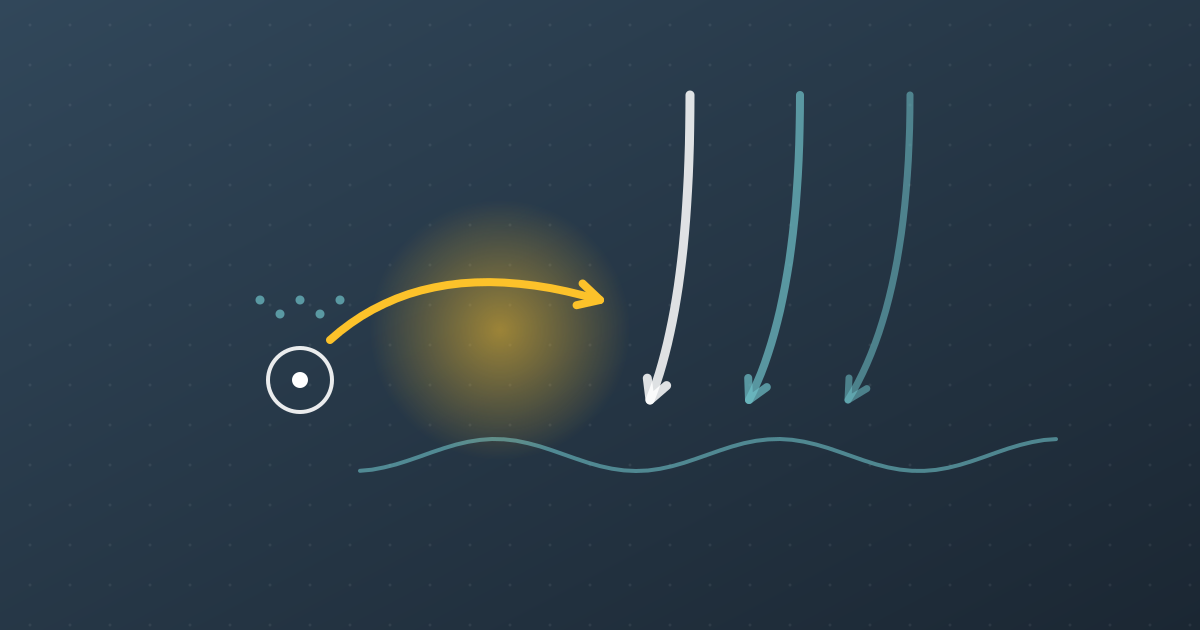
- A line of teal dots stands in front of mist-blue arcs, and a little behind it rests a single golden circle
- When the arcs press at an unexpected point, the golden circle glides there and closes the gap, while a second line without a circle breaks
- At the end, the circle pushes through a gate that opens on the other side
How the principle shows up in practice
Joseph Joffre, the Marne
During the retreat of 1914, Joffre forms a new army near Paris. Its attack on the open German flank stops the advance at the Marne.
Alex Ferguson, the 1999 final
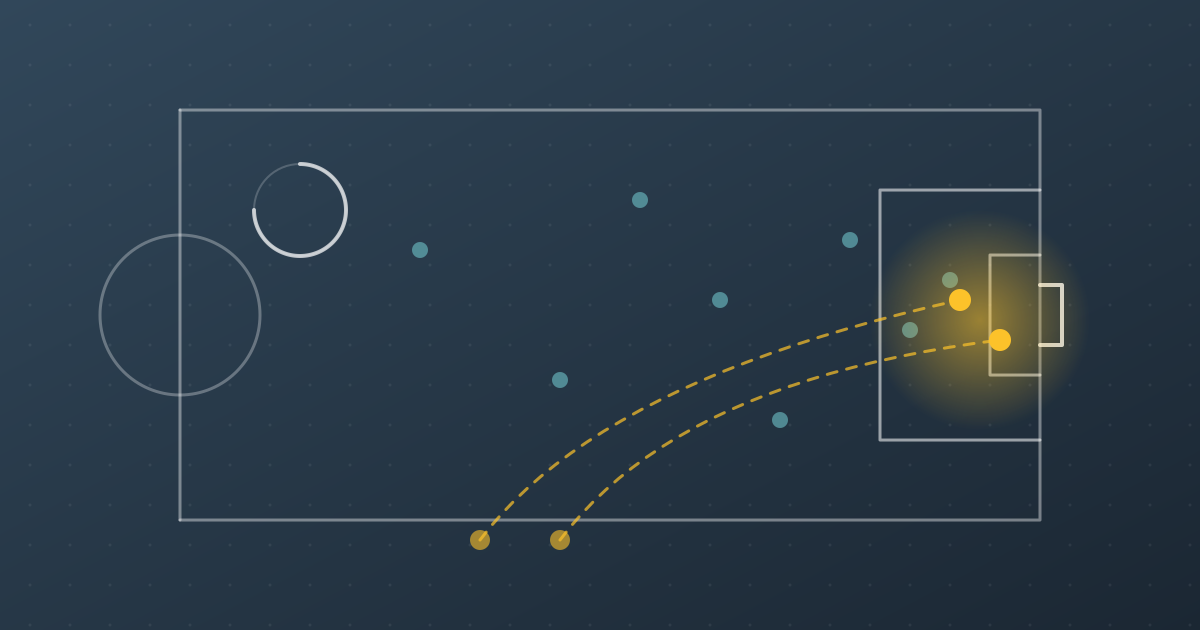
In the Champions League final, Ferguson brings on two strikers, and both score in stoppage time. A high-quality reserve decides the match in three minutes.
Warren Buffett, Goldman Sachs
In the middle of the 2008 financial crisis, Berkshire Hathaway invests $5 billion in Goldman Sachs. What makes it possible is a cash cushion that Buffett deliberately maintains.
What do you keep free?
Get your profile across all 12 groups in about 10 to 15 minutes.
Start the Strategy CheckGroup 2: Forces and Resources
Guiding question: Where do you commit your forces, and how long will they last?
Stage 3 of 5: Choose the path
- TraditionClassical Theory of War
Carl von Clausewitz, Antoine-Henri Jomini, Helmuth von Moltke the Elder, Frederick William Lanchester
- Related principles
Where the 92 principles come from: eight traditions of strategy, from classical war theory to dealing with uncertainty.
More about the originBackground: WEGVISOR’s own selection from the strategy literature · More about the origin