In Peter Jackson’s “The Two Towers” (2002), King Théoden defends the fortress of Helm’s Deep against an overwhelming army. Gandalf is not there. He fetches the banished riders under Éomer, and when the defenders are at the end of their strength, they arrive at dawn as a relief force.
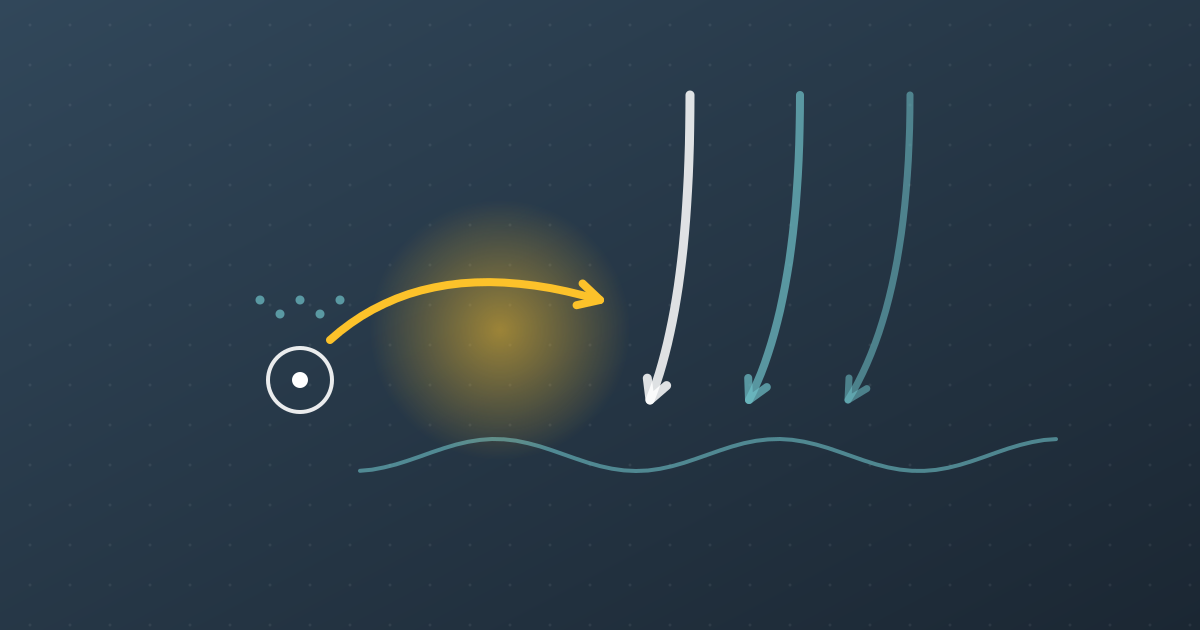
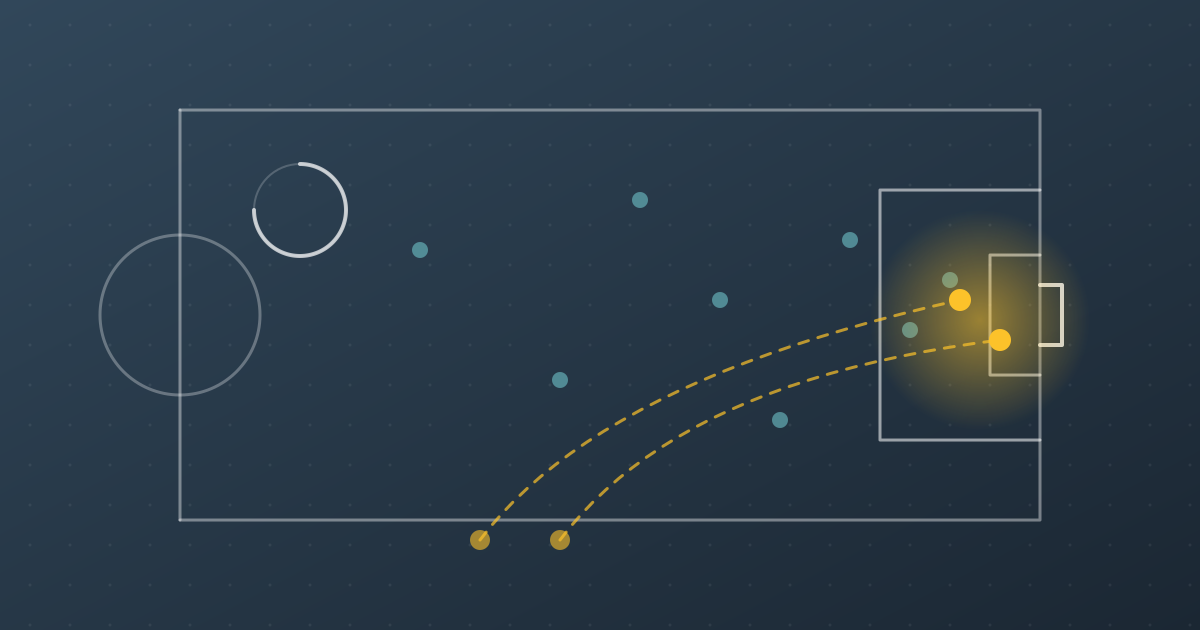
A line of teal dots stands in front of mist-blue arcs, and a little behind it rests a single golden circle. When the arcs press at an unexpected point, the golden circle glides there and closes the gap, while a second line without a circle breaks; at the end, the circle pushes through a gate that opens on the other side.
Principle #12
Reserve: Deliberately hold back strength so that you can respond to the unexpected and exploit a success.
3 min read5 sectionsSituationLink to the principle
Contents
“The Two Towers” is the second part of Peter Jackson’s film adaptation of the novel by John Ronald Reuel Tolkien. Ian McKellen plays Gandalf, Viggo Mortensen plays Aragorn, Bernard Hill plays King Théoden and Karl Urban plays his nephew Éomer. The Battle of Helm’s Deep is one of the film’s best-known scenes. It shows two sides of the Reserve: the strength that holds out and the strength that arrives at the right time.
A mass presses against a curved wall, then the sun rises golden over the ridge and a line of riders charges down – as in “The Two Towers.”
01
A kingdom without an army
Situation
Rohan is weakened. King Théoden is under the influence of the wizard Saruman and his adviser Gríma. Éomer, the king’s nephew, has been banished, and with him loyal riders who have left the land. Gandalf frees Théoden from Saruman’s spell. But the riders are gone.
Link to the principle
A realm whose best forces are out of reach has no reserve. Théoden has to make do with what he has at hand. That is the starting point of many crises: the forces exist, but they are not where they are needed.
02
The wizard rides away
Situation
Instead of staying for the defense, Gandalf sets out to find Éomer and his riders and win them back for their king. Théoden, meanwhile, leads his people to the mountain fortress of Helm’s Deep.
Link to the principle
Gandalf gives up his own strength in the defense in order to bring up a greater one. That is a deliberate decision in favor of the reserve. It costs something in the moment, because the defenders are weaker without him. But it pays off only if it arrives at the right moment.
03
The fortress holds – barely
Situation
A huge army of Saruman’s Uruk-hai attacks Helm’s Deep at night. Shortly before, Elves from Lothlórien arrive as reinforcements. The attackers blow up the outer wall, and Haldir, the leader of the Elves, falls. The defenders withdraw into the inner keep. At dawn, Aragorn persuades the king to ride out one more time.
Link to the principle
A reserve only works if the front holds until it arrives. The defenders of Helm’s Deep buy time, wall by wall. Without their endurance, any relief would come too late. Front and reserve belong together.
04
The ride at sunrise
Situation
As Théoden and Aragorn ride out, Gandalf and Éomer arrive at dawn with around 2,000 Riders of Rohan and attack the Uruk-hai. The battle turns, and Saruman’s army collapses.
Link to the principle
Here we see the purpose of a reserve that Carl von Clausewitz names first: renewing the fight with fresh strength. The riders are rested, and they meet an enemy that has exhausted itself through the night. A comparatively small force is decisive because it is in the right place at the right time.
05
What the film heightens
Situation
The film changes the source material. In Tolkien’s novel, Éomer himself fights at Helm’s Deep, and Gandalf arrives with Erkenbrand and about a thousand foot soldiers. In the book, no Elves from Lothlórien take part in the fighting. The film condenses the plot into a single dramatic relief.
Link to the principle
The dramatization makes the principle especially clear. A reserve is not what is left over. It is a force that is deliberately kept out of the first fight, or gathered, so that it can take effect at the decisive moment.
Key takeaways
Key lessons
01
Bring your scattered forces back before the crisis comes.
02
Sometimes you have to leave the fight in order to fetch the reserve.
03
The front has to hold until the reserve arrives.
04
Commit fresh strength where the enemy is exhausted.
05
Do not abandon those who are holding out: arrive before the front breaks.
Summary
In “The Two Towers,” Rohan has no army when Saruman’s Uruk-hai attack. Gandalf leaves the defenders to fetch Éomer and the banished riders. The defenders of Helm’s Deep hold out until morning at great cost. Then the riders intervene and decide the battle. The film shows what makes a reserve: it is formed deliberately, it needs a front that holds, and it takes effect through the right timing.