In late summer 1914, the French and British armies fall back before the German advance. Joseph Joffre uses the retreat to form new forces, among them the Sixth Army near Paris. When the German flank lies open, it attacks, and the advance on Paris comes to a halt at the Marne.
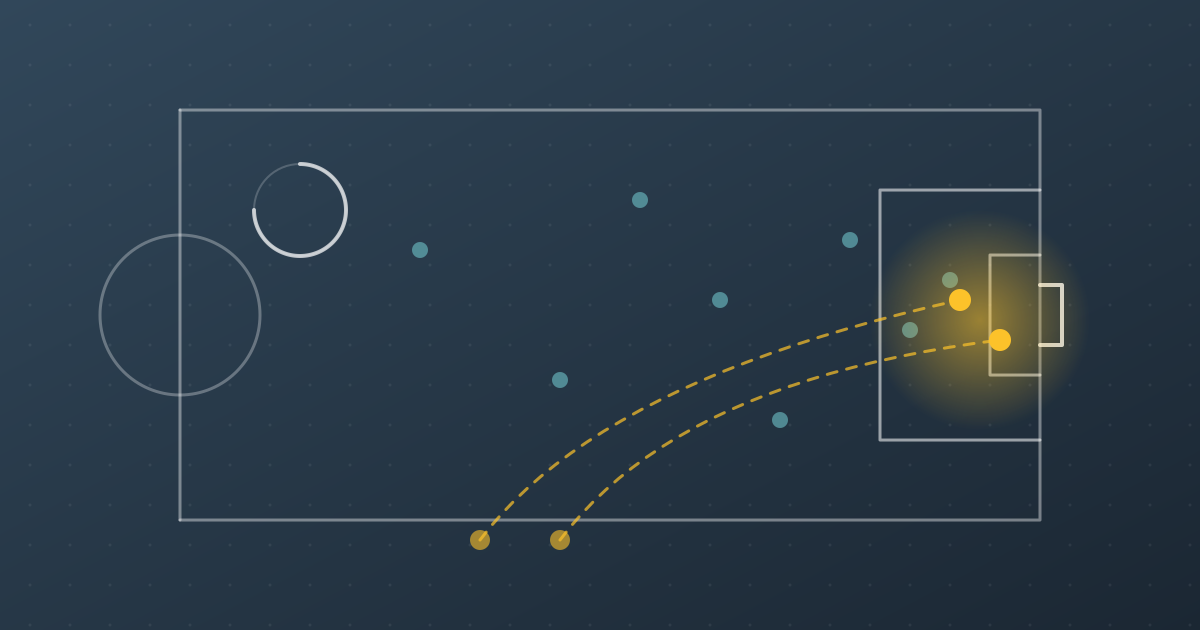
A line of teal dots stands in front of mist-blue arcs, and a little behind it rests a single golden circle. When the arcs press at an unexpected point, the golden circle glides there and closes the gap, while a second line without a circle breaks; at the end, the circle pushes through a gate that opens on the other side.
Principle #12
Reserve: Deliberately hold back strength so that you can respond to the unexpected and exploit a success.
4 min read5 sectionsSituationLink to the principle
Contents
In Book III of “On War,” Carl von Clausewitz names two purposes of a reserve: to prolong and renew the fight, and to be able to respond to the unforeseen. The Battle of the Marne in September 1914 shows both. And it shows what happens when two sides handle their reserves in completely different ways – a lesson in the Reserve.
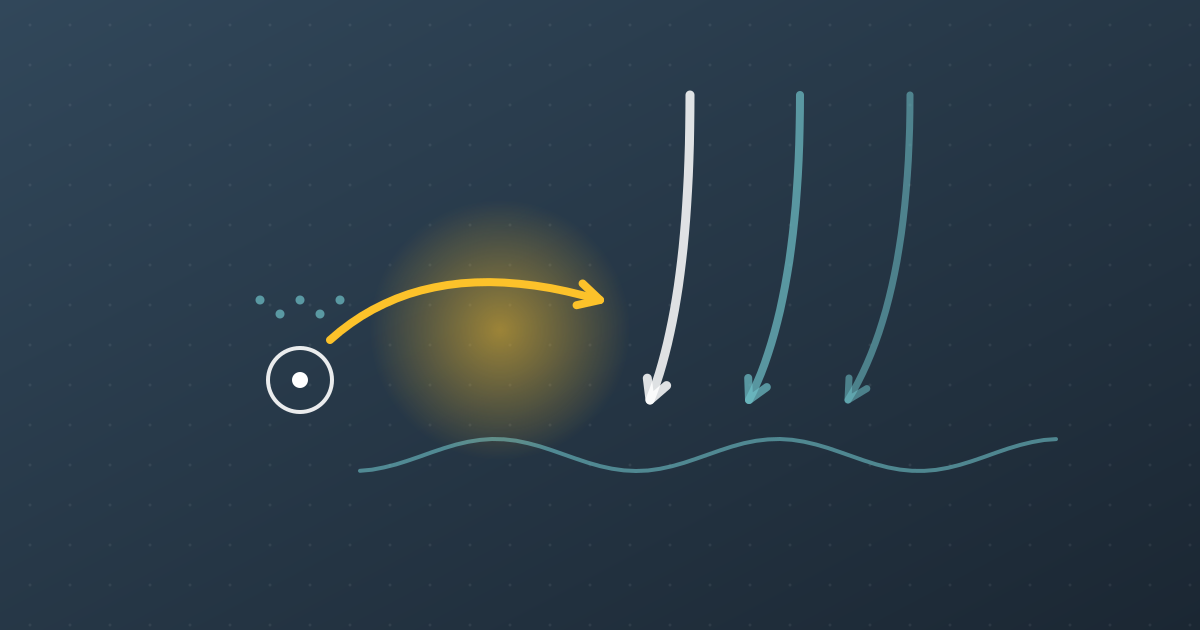
Three broad arrows swing in from the north, and from the reserve near the city a golden thrust hits their open flank – like Joffre at the Marne.
01
A plan built on speed
Situation
In August 1914, the German armies march through Belgium into northern France. They aim to envelop the French forces quickly. The Battles of the Frontiers cost France many soldiers, and the French and British fall back. Helmuth von Moltke the Younger, chief of the German General Staff, sends two corps to the Eastern Front against Russia in August and ties up more in the sieges of Antwerp and Maubeuge.
Link to the principle
The German right wing, which is supposed to decide the campaign, grows weaker as it advances. Forces are used up, withdrawn or tied down. Behind the front, there is hardly anything left standing ready to exploit a success or absorb a surprise.
02
New forces from the retreat
Situation
Joseph Joffre, the French commander-in-chief, does more than just fall back. He moves troops by rail from Lorraine to the west. Near Paris, the new Sixth Army is formed under General Michel-Joseph Maunoury, mostly from reservists – around 150,000 men in the battle. In addition, Joffre forms a Ninth Army under Ferdinand Foch. The military governor of Paris is General Joseph Gallieni.
Link to the principle
Joffre creates the reserve where the decision is likely to come: on the enemy’s open flank. He takes forces from quieter sectors and holds them ready instead of throwing them into the retreating line.
03
The open flank
Situation
Alexander von Kluck, commander of the German First Army, swings southeast and passes east of Paris. On September 3, he crosses the Marne, contrary to his instructions to stay behind the Second Army under Karl von Bülow. His right flank now faces the capital. French aerial reconnaissance detects the movement, and Gallieni considers the German flank vulnerable as early as September 3. On the evening of September 4, Joffre orders the counteroffensive for September 6. As early as September 5, the Sixth Army runs into Kluck’s flank on the Ourcq.
Link to the principle
This is the second purpose according to Clausewitz: responding to the unforeseen. Neither side had planned for this moment. But only one side had fresh forces to exploit it.
04
The gap
Situation
Kluck turns his army west against Maunoury; to do so, some units march around 130 kilometers in two days. Between his First Army and Bülow’s Second Army, a gap of about 50 kilometers opens up. The British Expeditionary Force under John French and the French Fifth Army under Louis Franchet d’Espèrey move into it – the British, however, slowly. Gallieni sends reinforcements to the front, some of them on the night of September 7–8 in around 600 Paris taxis. Militarily, this carries little weight; for morale, all the more. On September 8 and 9, Lieutenant Colonel Richard Hentsch of the German headquarters judges a retreat necessary and orders it in Moltke’s name. The German armies fall back to the Aisne.
Link to the principle
The reserve forces the enemy to turn its own forces against an unplanned threat, and precisely that creates its next weakness. The Germans have no reserve to close the gap. A single reserve committed in time has a double effect: it attacks, and it breaks up the enemy’s formation.
05
What the Marne decided and what it did not
Situation
The battle, which lasts about a week, ends German hopes of a quick victory in the West. On September 14, Moltke is replaced by Erich von Falkenhayn. Losses on both sides run into the hundreds of thousands; estimates vary widely. After that, the war in the West freezes into trench warfare for years.
Link to the principle
The reserve saved Paris, but it did not end the war. Historians still weigh the roles of Joffre, Gallieni and Moltke differently. The principle nevertheless remains clear: if you have fresh forces at hand, you can react. If you throw everything forward, you depend on everything going according to plan.
Key takeaways
Key lessons
01
Hold forces back, even when everything is pushing forward.
02
Form reserves where the decision is likely to come.
03
Take strength from quiet areas to create reserves.
04
Use a retreat to organize new forces.
05
If you commit everything, you need a plan without surprises, and there is no such plan.
Summary
In September 1914, the German advance on Paris seemed almost unstoppable. During the retreat, Joseph Joffre formed new forces, above all the Sixth Army near Paris. When Alexander von Kluck exposed his flank, this reserve attacked. Kluck had to wheel around, a gap opened, and the Germans had nothing to close it with. The Marne shows both purposes of the reserve that Carl von Clausewitz names: responding to the unexpected and renewing the fight with fresh strength.