Contents
In soccer, the substitutes’ bench is the most visible form of a reserve. How good it is rarely shows in ordinary matches. It shows in the moments when a game threatens to tip, or could be tipped. On May 26, 1999, in Barcelona, such a moment lasted only a few minutes. It shows the Reserve at work.
A final with gaps
Situation
In the 1998–99 season, Manchester United has already won the English league title and the FA Cup. A win in Barcelona would bring the treble – a first for an English club. But captain Roy Keane and midfielder Paul Scholes are suspended. Ferguson has to rebuild his midfield.
Link to the principle
The reserve is needed even before kickoff, because the best eleven are not available. A squad that lives only on its 11 strongest players is vulnerable in exactly such moments. The depth of the squad decides whether an absence leaves a gap or a hole.
An early goal against
Situation
Around 90,000 spectators are in the Camp Nou, and the referee is Pierluigi Collina. In the sixth minute, Mario Basler curls a low free kick around the wall to make it 1–0 to Bayern. Bayern controls the game for long stretches. Later, Mehmet Scholl hits the post and Carsten Jancker the crossbar.
Link to the principle
For long stretches, Manchester’s plan is not working. Phases like this decide whether a manager still has options. Without a reserve, all that is left is the hope that the game will turn by itself.
Two substitutions
Situation
In the second half, Ferguson brings on Teddy Sheringham for Jesper Blomqvist. About 10 minutes from time, Ole Gunnar Solskjær comes on for Andy Cole. At about the same time, Bayern coach Ottmar Hitzfeld takes Lothar Matthäus off.
Link to the principle
Ferguson does not hold his reserve back until the last second, but he does not commit it too early either. Fresh attackers meet tired defenders. That is the first purpose of a reserve that Carl von Clausewitz names: renewing the fight with fresh forces. It works because it is not second-rate. Sheringham and Solskjær are experienced strikers who have been part of the squad all season.
Three minutes of stoppage time
Situation
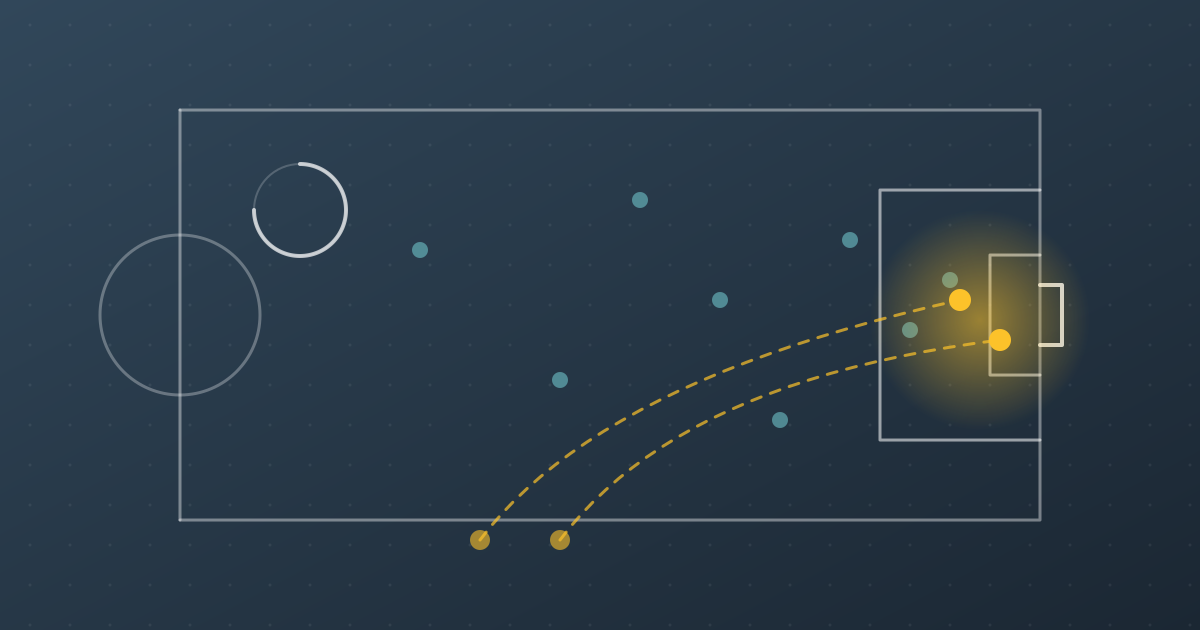
In the first minute of stoppage time, a corner from David Beckham leads to Sheringham’s equalizer. Shortly afterward comes another Beckham corner; Sheringham flicks it on with his head, and Solskjær scores to make it 2–1. Manchester United wins the trophy and the treble.
Link to the principle
Both goals are scored by the substitutes. A small number of fresh forces changes the game completely, because they meet a tired opponent at the right moment. The reserve does not decide the 90 minutes. It decides the three minutes that matter.
A reserve that is looked after
Situation
This season, Ferguson has four experienced strikers: Dwight Yorke, Andy Cole, Teddy Sheringham and Ole Gunnar Solskjær. Not all of them can play at the same time. Those on the bench still have to be ready.
Link to the principle
A reserve is not created on the day you need it. It has to be built up, paid for and kept in good spirits. Good players want to play, and if you keep them on the bench, you have to lead them. That costs money and energy. Ferguson accepted these costs, and in Barcelona they paid off.
Key takeaways
Key lessons
- Build up your reserve before you need it.
- A reserve is only as good as the people in it.
- Commit it when the opponent is tired, not too early and not too late.
- Give those who are waiting the sense that they belong.
- Be prepared for your plan to fall apart even before kickoff.
Summary
Manchester United went into the 1999 final without Roy Keane and Paul Scholes, fell behind early and for a long time found no answer. Alex Ferguson brought on two experienced strikers. In stoppage time, Teddy Sheringham and Ole Gunnar Solskjær scored, and a defeat turned into the treble. The match shows what makes a good reserve: it is built up in advance, it is high-quality and it comes in at the right moment.
Sources
- Carl von Clausewitz: Vom Kriege. Berlin: Ferdinand Dümmler 1832, Book III, Chapter 13 (in German).