The principle in detail
Three steps through the principle: grasp it, place it, put it to work. Open each topic on its own.
The core messageCore statement and 3 clarifications
Incomplete knowledge is not a flaw in the system; it is the system. You still have to decide.
- It does not say
- That you can do without reconnaissance. It improves the picture, but it never completes it.
- It does not say
- That every quick decision is a good one. Judgment grows out of experience, good advisers and simple tools.
- It also says
- If you pretend to others that you are certain, you take away their own judgment and make yourself vulnerable when things turn out differently.
The explanationHow the principle works and what matters
Two tasks follow from this.
- You have to decide even though the picture is incomplete, because waiting is not a safe choice but a different kind of risk.
- And you have to name the uncertainty honestly so that others can judge for themselves.
What certainty are you waiting for right now, even though it will not come?
The signs3 signs when you heed it · 2 when you overlook it
- You give ranges instead of reassuring single figures.
- Before a decision, you specify which sign will guide your next step.
- You say openly what you don’t know.
- One more analysis follows, then one more expert opinion, and the moment passes.
- “Unlikely” turns into “ruled out.” Decisions move up the hierarchy, where the picture is no clearer, only farther away.
The backgroundTradition T1 Classical Theory of War
- 1832OriginCarl von Clausewitz
On War
- 1921SupplementedFrank H. Knight
Risk, Uncertainty and Profit
- 2005SupplementedPhilip E. Tetlock
Expert Political Judgment
- 2011SupplementedGerd Gigerenzer and Wolfgang Gaissmaier
Heuristic Decision Making
- Tradition T1TraditionClassical Theory of War
Carl von Clausewitz, Antoine-Henri Jomini, Helmuth von Moltke the Elder, Frederick William Lanchester
See the tradition on the Origin page
Read more: the full background
From Clausewitz’s “On War” (1832), Book I, Chapter 3, supplemented by Knight’s distinction between risk and uncertainty, Tetlock’s forecasting research and Gigerenzer’s work on rules of thumb.
The research4 sources: 1 classic, 1 theory, 1 primary study, 1 review · 1832–2011 · with limitations of the research
- weak
- moderate
- strong
That true uncertainty cannot be calculated away and that excessive certainty makes for poor forecasts is well documented; how judgment develops in the individual case is shown by the sources only in outline.
- 1921Frank H. Knight
“Risk, Uncertainty and Profit”: distinguishes risk, in which the distribution of outcomes is known, from uncertainty without that knowledge.
- 2005Philip E. Tetlock
“Expert Political Judgment”: Many experts forecast hardly better than chance; the cautious ones who were willing to learn did best.
- 2011Gerd Gigerenzer and Wolfgang Gaissmaier
“Heuristic Decision Making”: Under uncertainty, simple rules of thumb often perform better than elaborate models.
- Uncertainty is no excuse for what could have been found out.
- Carl von Clausewitz’s “three quarters” are an image, not a measurement.
- Without experience and honest review, judgment quickly turns into a gut decision.
- The phrase “fog of war” itself appears only later, for example in 1896 in the work of Lonsdale Augustus Hale.
Read more: what research shows
The image comes from Carl von Clausewitz. In “On War,” Book I, Chapter 3, he calls war the realm of uncertainty: three quarters of the factors on which action is based lie in a fog. What is needed, therefore, is a fine, penetrating intellect that can sense the truth through the tact of its judgment. In 1921, Frank H. Knight distinguished measurable risk, in which the distribution of outcomes is known, from true uncertainty. In a study spanning many years, Philip E. Tetlock found that many experts did hardly better than chance in their political forecasts and that the cautious ones who were willing to learn did best. Gerd Gigerenzer shows that, under uncertainty, simple rules of thumb often perform better than complicated models.
The related principles17 Foreknowledge · 18 Friction · 22 Mission Command · 88 Scenario Thinking
To go deeper, see 17 Foreknowledge (reconnaissance is the most important antidote, even if it never clears the fog completely) and 88 Scenario Thinking (thinking through several possible futures)
22 Mission Command lets people on the ground decide when the picture is missing at the top
18 Friction complements it: fog and friction are the two reasons why plans turn out differently in reality
Read more: the full text
To go deeper, see 17 Foreknowledge (reconnaissance is the most important antidote, even if it never clears the fog completely) and 88 Scenario Thinking (thinking through several possible futures); 22 Mission Command lets people on the ground decide when the picture is missing at the top. 18 Friction complements it: fog and friction are the two reasons why plans turn out differently in reality.
The action steps5 things you can actually do
For every important decision, set a point in time at which you will decide, even if the picture is still incomplete.
Give assessments as a range and say what they are based on.
Decide in advance on a sign that will tell you whether your first step is holding up, and base the next one on it.
Wherever possible, choose a small step that clarifies or simplifies the situation instead of waiting for the big picture.
- In every situation briefing, separate three things: what you know, what you suspect and what you don’t know.
The reflection questions3 questions: Which decision are you putting off because you are waiting for certainty?
- Which decision are you putting off because you are waiting for certainty?
- When did you last give a range instead of a single number?
- What do you know for certain about your most important project, what do you only suspect and what don’t you know?
Take your time with one question. Write down your answer – or talk it over with someone you trust.
The picture to rememberThe animation once more, with an explanation
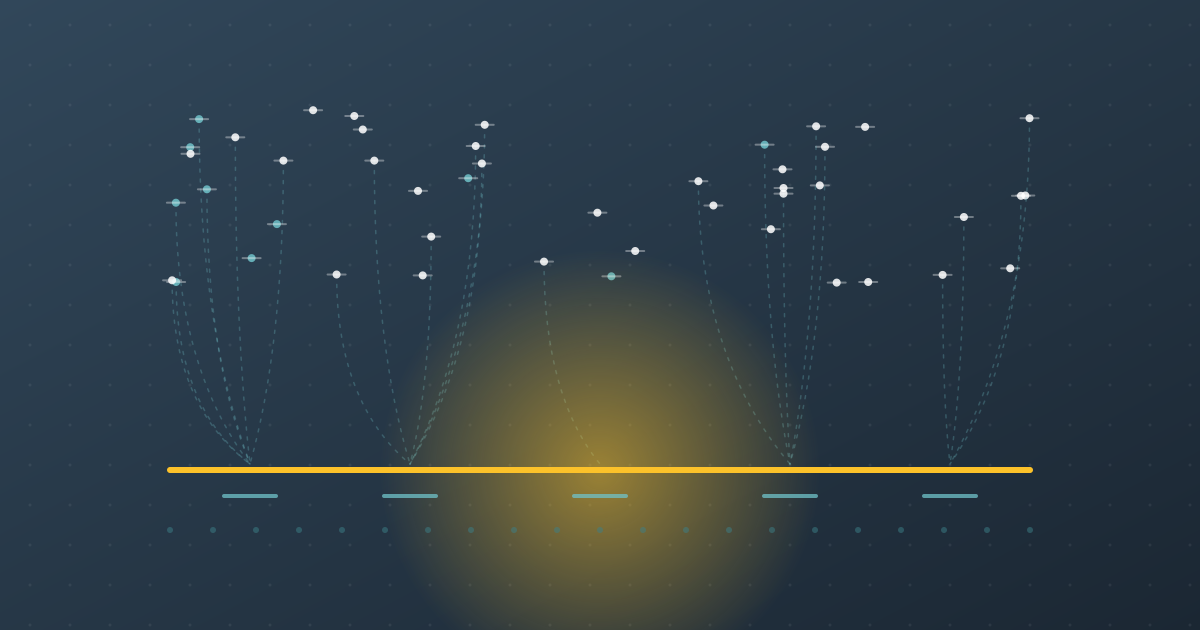
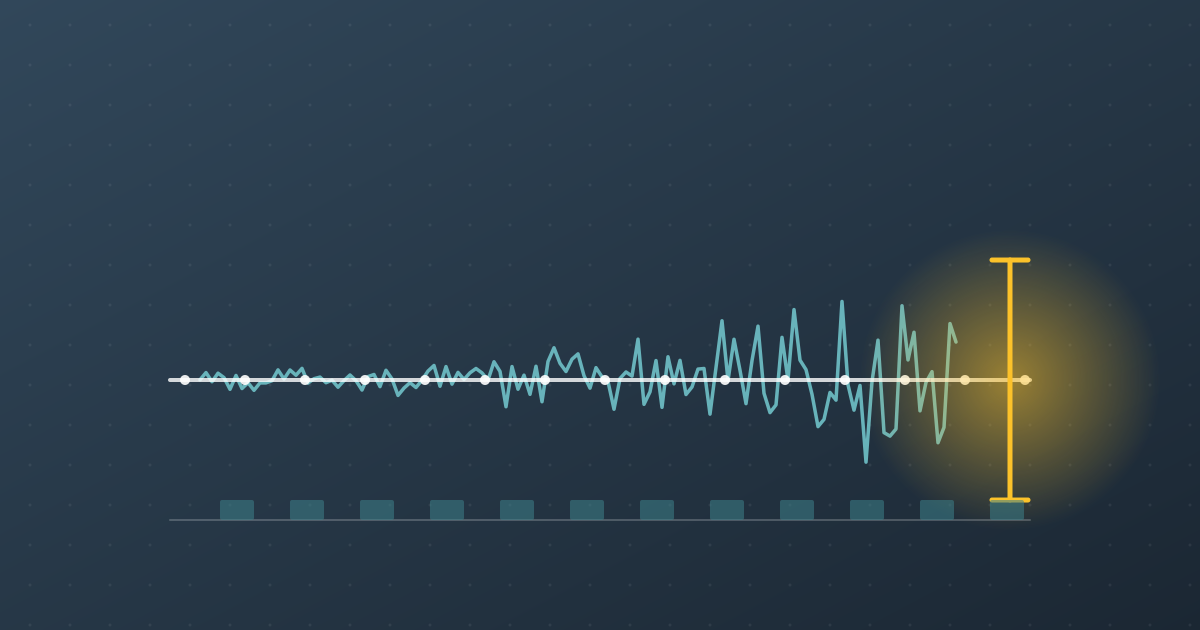
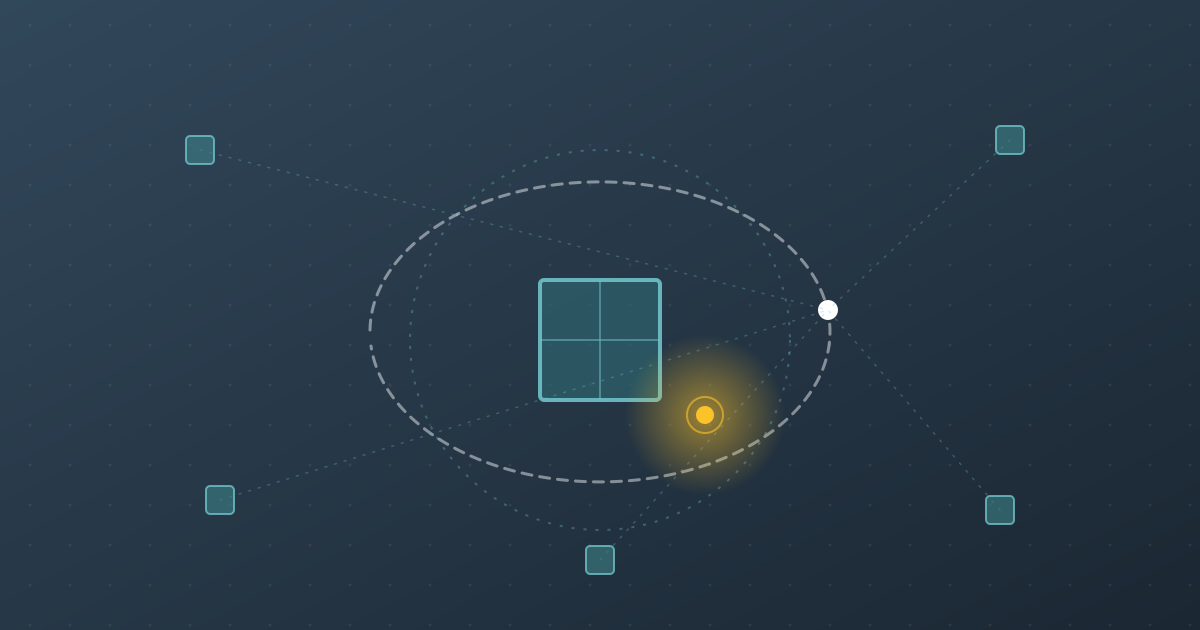
- A golden dot stands in a grid of mist-blue squares
- Only the three squares around it are clear, and a teal arc runs down like an hourglass while it waits and the fog stays
- Then the dot takes a small step, several squares clear, and above one square a range made of two short lines appears instead of a single mark
How the principle shows up in practice
Ben Sliney, September 11, 2001
Without a complete picture, the FAA’s operations manager orders all of the roughly 4,200 aircraft over the United States to land, and so makes every suspicious plane visible.
L’Aquila 2009
Experts know that earthquakes cannot be predicted, but what reaches the public is mainly an all-clear. The earthquake kills 308 people.
D-Day 1944
Dwight D. Eisenhower gets no weather guarantee, only an honest assessment; he decides at the last possible moment and accepts responsibility for failure in advance.
What are you still waiting for?
Get your profile across all 12 groups in about 10 to 15 minutes.
Start the Strategy CheckGroup 3: Knowledge, Uncertainty and Leadership
Guiding question: What do you know, and how do you lead when you don’t know?
Stage 2 of 5: Understand the situation
- Anchor principle of the group
It names the condition the whole group responds to: because you never know everything, you need intelligence, plans that adapt and leadership that lets people decide on the spot.
The other 9 principles in the group build on it.
- TraditionClassical Theory of War
Carl von Clausewitz, Antoine-Henri Jomini, Helmuth von Moltke the Elder, Frederick William Lanchester
- Related principles
Where the 92 principles come from: eight traditions of strategy, from classical war theory to dealing with uncertainty.
More about the originBackground: WEGVISOR’s own selection from the strategy literature · More about the origin