The principle in detail
Three steps through the principle: grasp it, place it, put it to work. Open each topic on its own.
The core messageCore statement and 3 clarifications
Don’t plan against a single future. Sketch several and check which decisions hold up in all of them.
- It does not say
- That scenarios are predictions. They are not refuted if one of them fails to happen.
- It does not say
- That high, medium and low already count as scenarios. If you end up planning with the medium figure after all, you have only a forecast with a margin.
- It also says
- Scenarios without decisions and without early warning signs are a pastime.
The explanationThe goal is not to be proved right but to be prepared.
The goal is not to be proved right but to be prepared. If you have played through a crisis in your mind once, you lose less time to disbelief when it comes.
Which future are you not prepared for?
The signs3 signs when you heed it · 3 when you overlook it
- For your most important project, you know two or three developments that would endanger it.
- For each one, there is a sign someone is watching for.
- When one appears, people act instead of debating first.
- Your plans rest on a single figure.
- When things turn out differently, the team spends weeks asking whether it is really happening.
- Unwelcome futures never come up in meetings.
The backgroundTradition T8 Uncertainty and Change
- 1950s–1960sOriginHerman Kahn
At the RAND Corporation and the Hudson Institute
- 1985OriginPierre Wack
Scenarios: Uncharted Waters Ahead · Scenarios: Shooting the Rapids
- 1991SupplementedPeter Schwartz
The Art of the Long View
- Tradition T8TraditionUncertainty and Change
Pierre Wack, Nassim Nicholas Taleb, Leigh Van Valen, James G. March
See the tradition on the Origin page
Read more: the full background
From the work of Herman Kahn at the RAND Corporation and the Hudson Institute (1950s and 1960s) and from Pierre Wack’s articles “Scenarios: Uncharted Waters Ahead” and “Scenarios: Shooting the Rapids” (1985). Supplemented by Peter Schwartz’s “The Art of the Long View” (1991).
The research4 sources: 2 case studies, 1 review, 1 primary study · 1985–2005 · with limitations of the research
- weak
- moderate
- strong
The weakness of long-term forecasts is well documented; that scenarios help you recognize turning points earlier rests mainly on case studies.
- 1985Pierre Wack
“Scenarios: Uncharted Waters Ahead”: planning based on forecasts had been missing the mark more and more often since the early 1970s; scenarios at Shell as the response.
- 1985Pierre Wack
“Scenarios: Shooting the Rapids”: scenarios are useful only if decision-makers can derive from them what they should do.
- 1991Peter Schwartz
“The Art of the Long View”: described the method for companies and individuals and spread it widely.
- 2005Philip E. Tetlock
“Expert Political Judgment”: experts’ long-term political predictions were often hardly better than chance.
- Scenarios capture only what can be imagined; truly surprising events often lie outside all the stories.
- Scenario work takes time and becomes an end in itself if no decision follows from it.
- Its effect rests largely on the accounts of those involved, as in the Shell case.
- The idea that scenario thinking lets you recognize turning points earlier and act faster is plausible but has not been demonstrated by comparative studies.
Read more: what research shows
At the RAND Corporation, Herman Kahn wrote stories about possible futures in order to make the unthinkable thinkable. At Royal Dutch Shell, Ted Newland and Pierre Wack turned this into a tool for companies; Pierre Wack described it in 1985 in two articles in the Harvard Business Review. He noted that planning based on forecasts had been missing the mark more and more often since the early 1970s. In 2005, Philip E. Tetlock showed in a large study that experts’ long-term political predictions were often hardly better than chance. This supports the starting assumption. How much scenario work itself improves the success of organizations, by contrast, is hard to measure; most of the evidence consists of case studies like Shell’s.
The related principles17 Foreknowledge · 19 Fog of Uncertainty · 21 Plan and Adaptation · 89 Antifragility
Scenario thinking responds to 19 Fog of Uncertainty, uses 17 Foreknowledge to sort out what is known and what is not, and supplies 21 Plan and Adaptation with the early warning signs for a change of course
89 Antifragility builds on it: if you know several futures, you can create options that hold up in many of them
Read more: the full text
Scenario thinking responds to 19 Fog of Uncertainty, uses 17 Foreknowledge to sort out what is known and what is not, and supplies 21 Plan and Adaptation with the early warning signs for a change of course. 89 Antifragility builds on it: if you know several futures, you can create options that hold up in many of them.
The action steps5 things you can actually do
Write down what is already certain for your project, such as age structure, contracts or developments already under way.
- Choose the two most important open questions and build four stories from their possible outcomes. Give each one a name.
- Test your decisions against all four: what holds up everywhere, what only in one, what does harm in one?
For each story, set an early sign and decide who watches for it and what happens then.
Include at least one story you don’t want to happen, and play it through with your team.
The reflection questions3 questions: On what single figure does your most important plan rest?
- On what single figure does your most important plan rest?
- Which future would you rather not discuss with your team?
- How would you notice today that your plan no longer fits the situation?
Take your time with one question. Write down your answer – or talk it over with someone you trust.
The picture to rememberThe animation once more, with an explanation
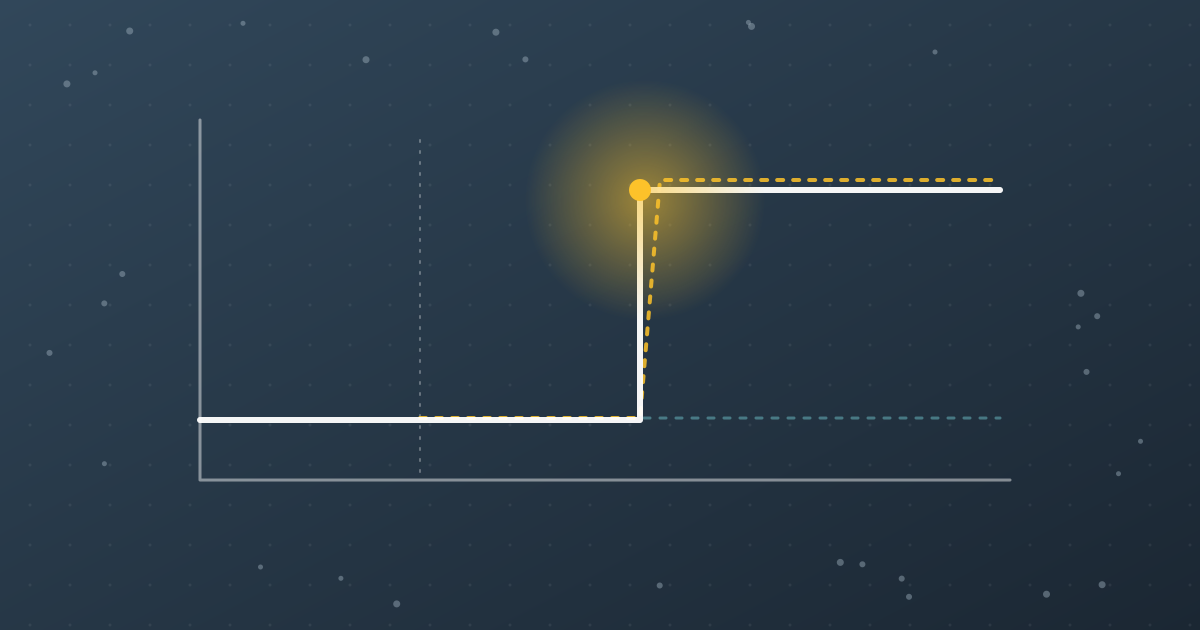
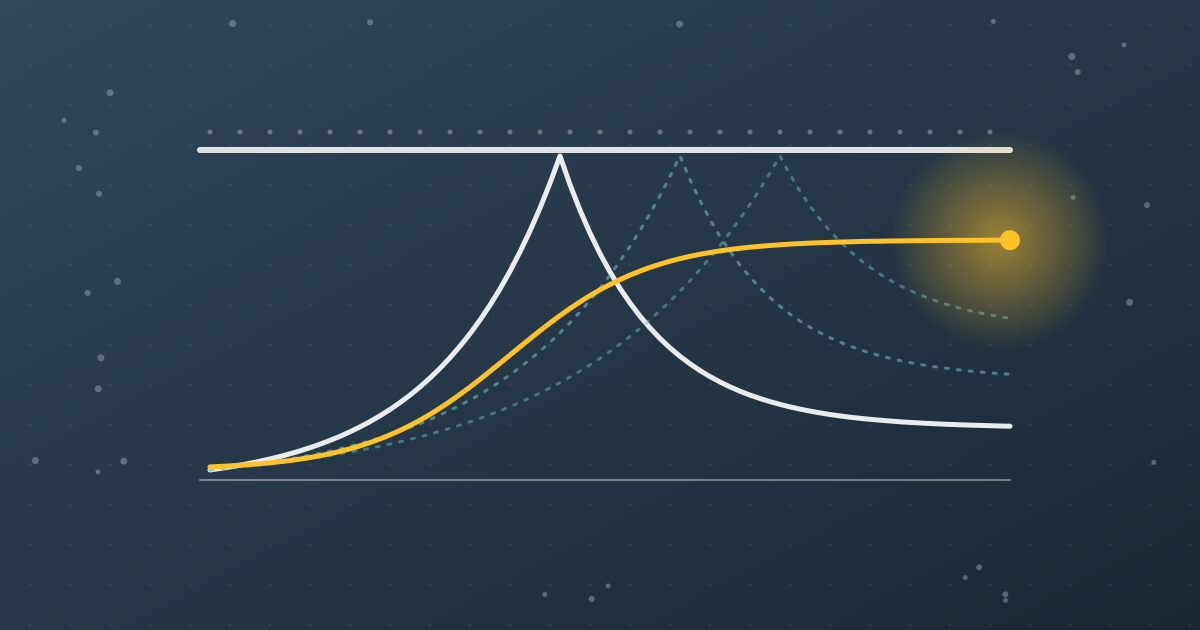
- A gold dot stands at a fork in the fog and first follows a single line, above which a bright frame hovers
- The line breaks off
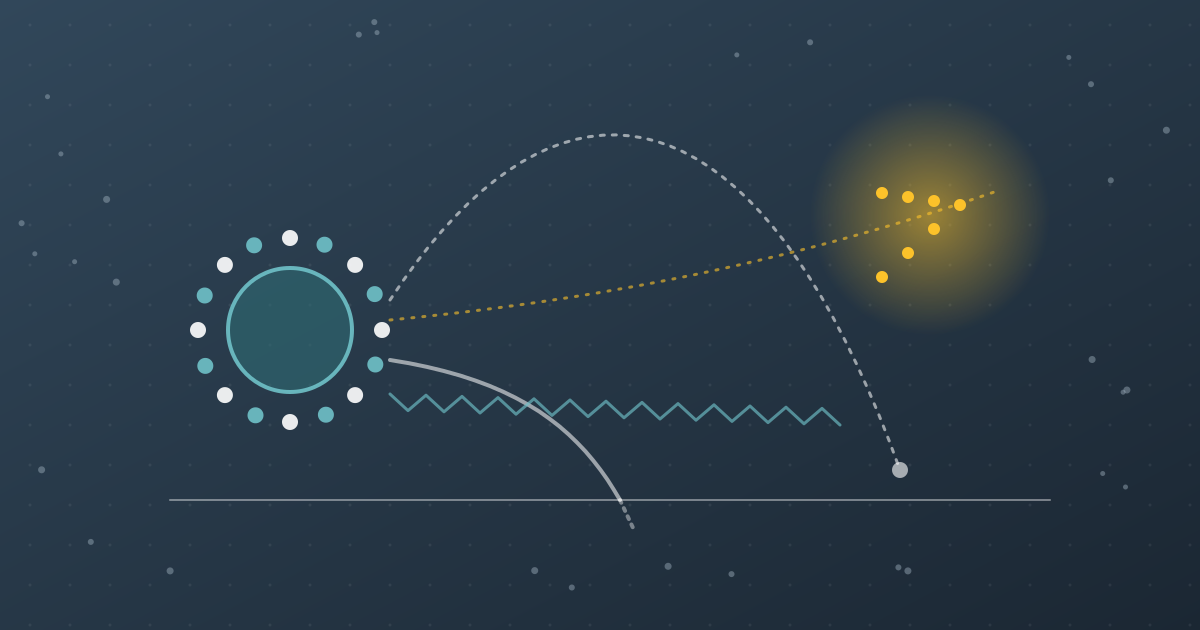
- Back at the start, four arcs of light open up the fog and reveal four paths, each with a small gate as a sign
- When one lights up gold, the dot sets off without hesitation
How the principle shows up in practice
Shell, 1973
Pierre Wack’s team had played through the possibility that the producing countries would take control of the oil price. When the oil crisis came, Shell recognized the situation faster than many others.
The Limits to Growth, 1972
A team at the Massachusetts Institute of Technology calculated several futures for the world and stressed that it was not making a prediction. The key insight: the timing of action matters.
Mont Fleur, 1991–92
South Africans from opposing camps drafted four futures for their country. According to participants, the warning scenario Icarus became a reference point for the future government.
What are you not prepared for?
Get your profile across all 12 groups in about 10 to 15 minutes.
Start the Strategy CheckGroup 11: Uncertainty and Crises
Guiding question: How do you keep your ability to act when the future is open?
Stage 5 of 5: Persevere and adapt
- Anchor principle of the group
It is the tool for preparing for an open future; Antifragility and the Red Queen Effect show how to turn that into strength and constant adaptation.
The other 2 principles in the group build on it.
- Related principles
Where the 92 principles come from: eight traditions of strategy, from classical war theory to dealing with uncertainty.
More about the originBackground: WEGVISOR’s own selection from the strategy literature · More about the origin