Contents
Hardly any nonfiction book has caused as much controversy as “The Limits to Growth.” To this day, it is alternately celebrated as a warning and mocked as a refuted forecast of doom. Both miss the point. Above all, the book is an early lesson in Scenario Thinking: it asks not what is coming but what could come under which conditions.
Commissioned by the Club of Rome
Situation
In the early 1970s, the Club of Rome, an association of business leaders, scientists and civil servants, commissioned a team at the Massachusetts Institute of Technology. Its task was to investigate where the growth of population and industry would lead on a finite planet. The book appeared in March 1972. Its authors were Donella H. Meadows, Dennis L. Meadows, Jørgen Randers and William W. Behrens III, representing a team of 17 researchers. It was based on the computer model World3, which built on work by Jay W. Forrester. The model linked five variables: population, food production, industrialization, pollution and the consumption of nonrenewable resources.
Link to the principle
The team asked an if-then question, not a what-will-happen question. Precisely there lies the difference between a scenario and a forecast.
Several futures instead of one
Situation
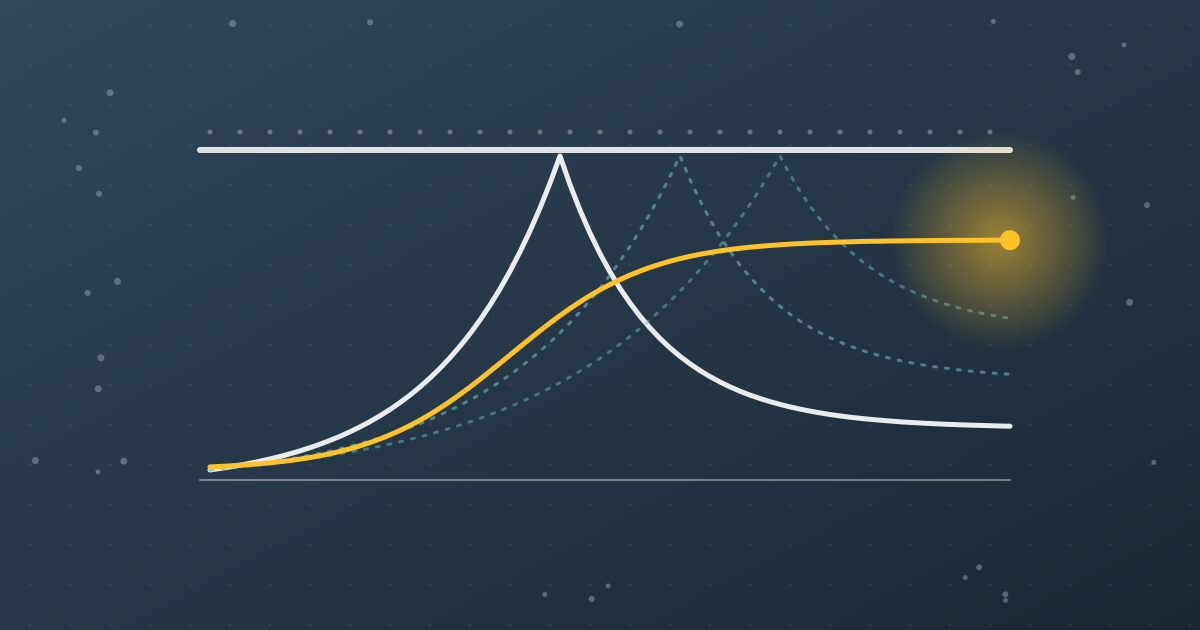
The researchers ran the model under different assumptions. In what the team called the standard run, nothing changes in policy. Population and industrial output then peak in the course of the 21st century and collapse afterward. Further runs tested what happens if resource reserves double, if pollution is limited, if the birth rate falls or if population and capital are stabilized. Some runs showed overshoot followed by collapse; others showed a stable world. The authors wrote explicitly that their curves were predictions only in the narrowest sense of the word.
Link to the principle
If you set several runs side by side, you see which levers make the difference. The result is not a number but a map of possible paths.
The most important variable: timing
Situation
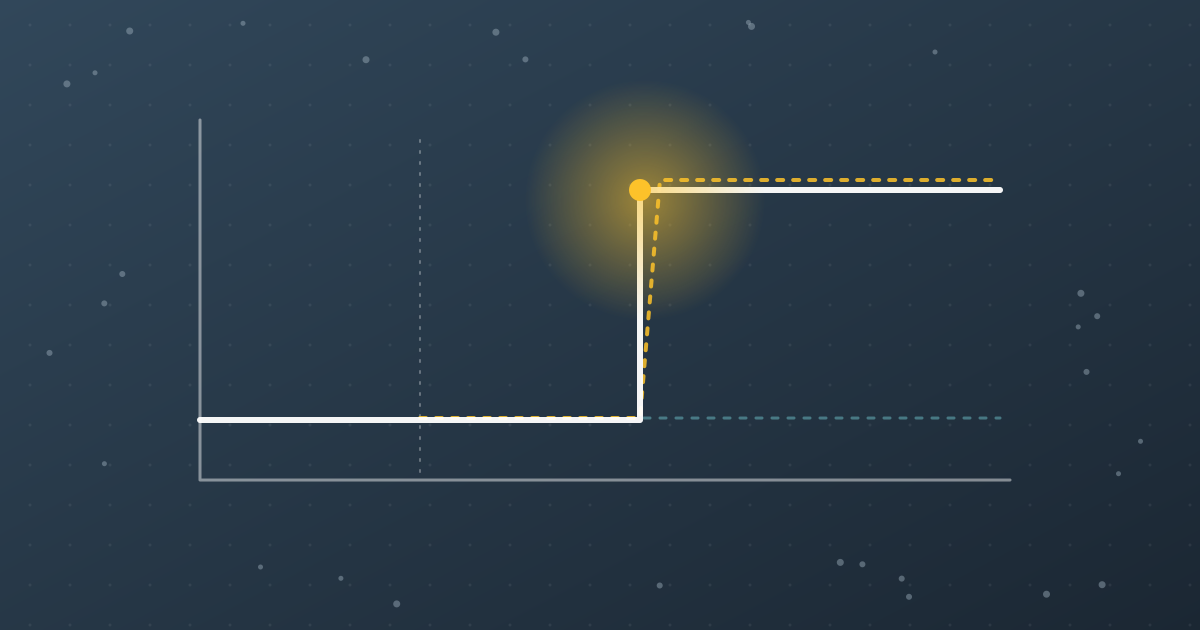
One of the most revealing variants was a run in which the same stabilizing measures are taken, not in 1975 but only in the year 2000. In the model, they then came too late to prevent the decline. The team thus showed that what counts is not only the direction of a decision but also its timing.
Link to the principle
Scenarios show when a window for action is closing. That is often more valuable than any statement about the end result.
Read as a prophecy
Situation
The book became a worldwide success and was translated into many languages; a German edition appeared in 1972. The criticism was fierce. Economists such as Robert Solow and Julian Simon considered the assumptions too pessimistic and stressed that human ingenuity opens up new resources. In April 1972, a review in The New York Times called the book empty and misleading. Later, it was often said that the book had predicted the resources would run out by the year 2000. The Italian scientist Ugo Bardi and others consider this a misreading: the tables on resource reserves were sample calculations, not forecasts.
Link to the principle
Scenarios are easily misunderstood as predictions, especially when one run turns out dramatically. If you present scenarios, you therefore have to say just as clearly what they are not.
Fifty years on
Situation
In 2008, Graham Turner of the Australian research organization CSIRO compared 30 years of real data with the model runs. Industrial output, food and pollution were closer to the standard run than to the runs with stabilizing policies. In a 2020 study in the Journal of Industrial Ecology, Gaya Herrington used updated data and reached a similar finding. The model’s limitations are well known: the authors themselves admitted that they did not model disruptions such as wars or epidemics. The financial system, inequality and politics did not appear in the model. In a 2012 interview, Dennis Meadows said that political and economic questions had been outside the scope of the study.
Link to the principle
Whether a scenario “was right” is the wrong question. The right one is: did it help decision-makers recognize connections and levers? The book set off this debate worldwide.
Key takeaways
Key lessons
- Formulate scenarios as if-then statements, not as predictions.
- Set several runs side by side so that you can see the levers.
- Pay attention to timing: the same measure can come too early, in time or too late.
- Say clearly what your scenarios do not include.
- Be prepared for a dramatic scenario to be read as a prophecy, and take precautions.
Summary
In 1972, “The Limits to Growth” calculated several futures for the world and explicitly did not present them as predictions. Its strongest insight was that the timing of action matters. The book shows both how scenarios open up debates and how easily they turn into a supposed prophecy.
Sources
- Donella H. Meadows, Dennis L. Meadows, Jørgen Randers, William W. Behrens III: The Limits to Growth. New York: Universe Books 1972.
- Donella H. Meadows et al.: Die Grenzen des Wachstums. Bericht des Club of Rome zur Lage der Menschheit (in German). Stuttgart: Deutsche Verlags-Anstalt 1972.