In 1991, representatives of the opposition and the establishment in South Africa sit down together and draft four possible futures for their country. The gloomy scenarios become warnings that both sides take seriously, and one of them becomes a reference point for the future government.
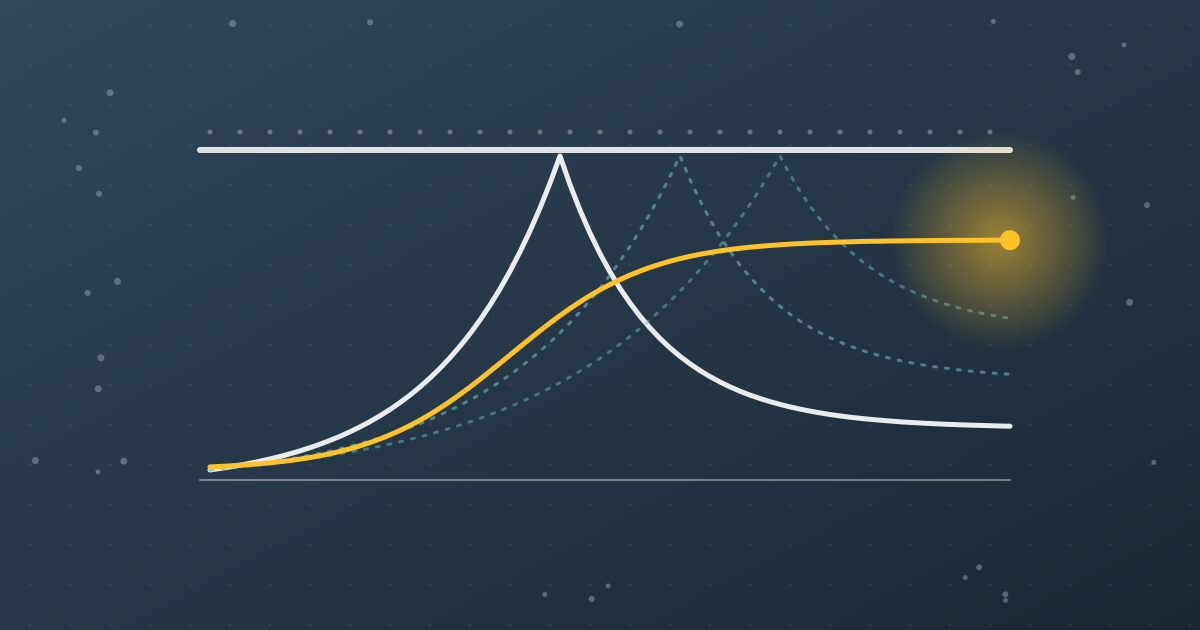
A gold dot stands at a fork in the fog and first follows a single line, above which a bright frame hovers; the line breaks off. Back at the start, four arcs of light open up the fog and reveal four paths, each with a small gate as a sign; when one lights up gold, the dot sets off without hesitation.
Principle #88
Scenario Thinking: If you think through several possible futures instead of betting on a single forecast, you recognize turning points earlier and act faster when it counts.
4 min read5 sectionsSituationLink to the principle
Contents
Scenarios are not just a tool for corporations. They can give people who distrust one another a common language. That is exactly what happened in South Africa during the transition – a striking case of Scenario Thinking. The work was facilitated by Adam Kahane, who at the time came from Shell’s scenario team, in other words from Pierre Wack’s school.
Four flight paths start from a round table: one dives, one limps, one crashes, and a golden flock rises together – as at Mont Fleur.
01
A country between two worlds
Situation
Nelson Mandela had been released from prison in February 1990. Negotiations to end apartheid had begun, and their outcome was open. In mid-1991, Pieter le Roux, who headed an institute for social development at the University of the Western Cape, and the political scientist Vincent Maphai invited people to a series of workshops. They took place between September 1991 and March 1992 at the Mont Fleur conference center near Stellenbosch. The 22 participants came from the opposition and the establishment: politicians, activists, trade unionists, business leaders and academics.
Link to the principle
Scenario thinking needs different perspectives. If you talk about the future only with like-minded people, you see only the future you hope for or fear.
02
Not what we want, but what could happen
Situation
The group agreed not to argue about desirable states of affairs but to describe what could happen. In the end, there were four stories, each named after an image. In the Ostrich scenario, the white minority government buries its head in the sand and avoids a negotiated settlement. In the Lame Duck scenario, the transition drags on, and a weak government tries to please everyone without satisfying anyone. In the Icarus scenario, a Black government with broad support comes to power, finances its promises with debt and sends the economy into a crash. Only in the Flight of the Flamingos scenario does the transition succeed, and the country rises slowly and together.
Link to the principle
Three out of four scenarios were warnings. That is typical of good scenario thinking: it makes the paths to failure so concrete that you can recognize and avoid them.
03
Icarus: a warning to its own camp
Situation
The Icarus scenario received the most attention. It described the danger posed by the future governing majority itself. According to Adam Kahane’s account, Trevor Manuel and Tito Mboweni, both from the African National Congress, presented the scenarios to the party leadership, including Nelson Mandela, Oliver Tambo and Joe Slovo. Derek Keys, finance minister in the government of Frederik Willem de Klerk, also attended one of the meetings.
Link to the principle
A scenario is especially powerful when it shows the blind spots of your own side. Icarus was uncomfortable because it was not about the opponent but about its own side’s temptation.
04
Long-term traces
Situation
The scenarios were published in 1992 as a supplement to a weekly newspaper and as a video. The team presented them to more than 50 groups, from parties to companies to trade unions. After 1994, the new government pursued a cautious fiscal policy, and in 1996 it adopted the GEAR economic program. Kahane and others see this as an effect of Mont Fleur. Trevor Manuel, by then finance minister, said in 2000 that the road from Mont Fleur to GEAR had been a winding one. On taking office as governor of the central bank in 1999, Tito Mboweni declared, in essence, that South Africa was not Icarus.
Link to the principle
Scenarios rarely have a direct effect. They leave behind images and terms that decision-makers later draw on. The line about not being Icarus is one such image.
05
What remains open
Situation
The effect of Mont Fleur is hard to measure. Mont Fleur was one of several forums for dialogue in those years, and the Inkatha Freedom Party did not take part. South Africa’s transition had many causes, and most accounts of the scenarios come from participants such as Adam Kahane himself. Moreover, the economic policy shift of the 1990s remains controversial to this day.
Link to the principle
Scenario thinking does not claim to make history. It creates a space in which people can talk about futures without committing themselves right away. In deadlocked situations, that is a great deal.
Key takeaways
Key lessons
01
Bring people to the table who see the future differently from you.
02
Don’t argue about wishes first; describe what could happen.
03
Give scenarios memorable names. Images stick.
04
Look for the scenario that warns your own side.
05
Don’t expect a direct effect. Scenarios work through the language they leave behind.
Summary
At Mont Fleur in 1991 and 1992, South Africans from opposing camps drafted four futures for their country: Ostrich, Lame Duck, Icarus and Flight of the Flamingos. Three of them were warnings. Icarus in particular, the warning against a government that overreaches with its promises, stayed in the minds of the future decision-makers. Here scenario thinking became a common language for an open future.