The principle in detail
Three steps through the principle: grasp it, place it, put it to work. Open each topic on its own.
The core messageCore statement and 3 clarifications
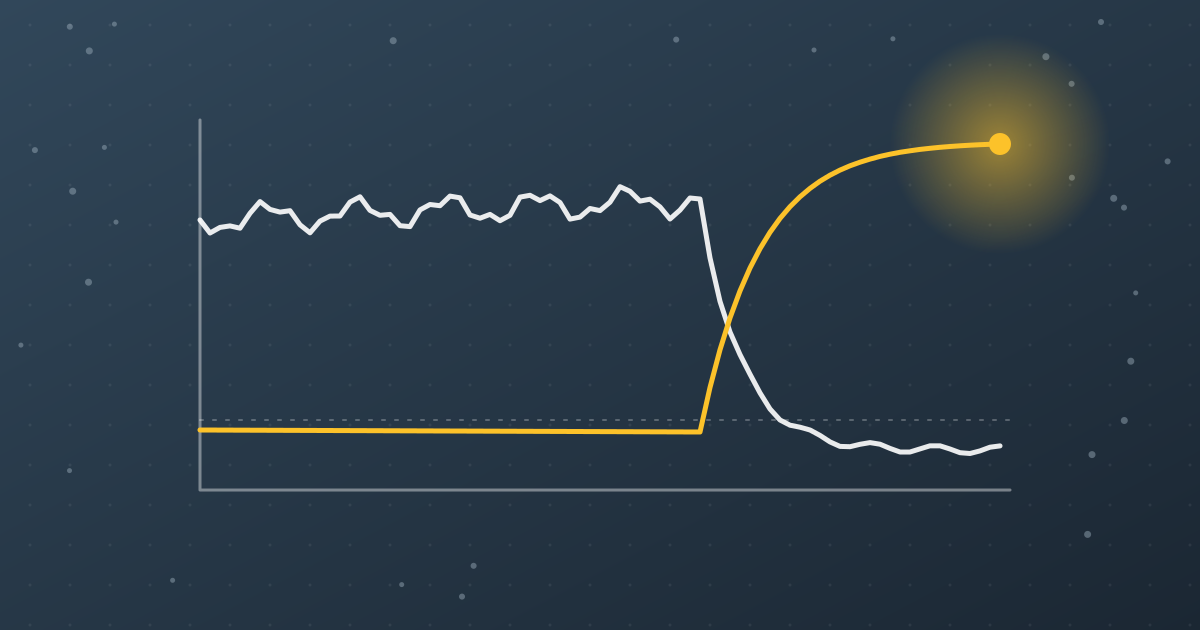
Robust is not enough. Build structures that learn from small shocks and mistakes.
- It also says
- Keep options open, a right without an obligation. You pay a small, known price and can gain a lot.
- It does not say
- That every shock makes you stronger. Small stresses can strengthen; large ones destroy.
- It does not say
- That suffering is good. A system can learn while individual people are harmed in the process.
The explanationThe future cannot be predicted, so if you bet everything on one forecast, you are fragile.
The future cannot be predicted, so if you bet everything on one forecast, you are fragile. If you are built so that surprises work in your favor, you don’t have to guess right.
What can your team grow from instead of merely holding out?
The signs3 signs when you heed it · 3 when you overlook it
- Mistakes are reported and reviewed without anyone being shamed.
- There are reserves and several small trials alongside the core business.
- Your area does not depend on a single person.
- Every fluctuation is suppressed until the tension erupts all at once.
- Efficiency has been pushed so far that no reserve is left.
- Everything rests on one big project or on one person.
The backgroundTradition T8 Uncertainty and Change
- 1889SupplementedFriedrich Nietzsche
Twilight of the Idols
- 2007OriginNassim Nicholas Taleb
The Black Swan
- 2012OriginNassim Nicholas Taleb
Antifragile: Things That Gain from Disorder
- Tradition T8TraditionUncertainty and Change
Pierre Wack, Nassim Nicholas Taleb, Leigh Van Valen, James G. March
See the tradition on the Origin page
Read more: the full background
The principle comes from Nassim Nicholas Taleb’s book “Antifragile: Things That Gain from Disorder” (2012), part of his series on uncertainty that includes “The Black Swan” (2007). It is supplemented by Friedrich Nietzsche’s “Twilight of the Idols” (1889) and the research on posttraumatic growth by Richard G. Tedeschi and Lawrence G. Calhoun.
The research4 sources: 3 theories, 1 classic · 1889–2012 · with limitations of the research
- weak
- moderate
- strong
The concepts are vivid and have parallels in biology and psychology; for organizations, the principle has hardly been studied and is hard to measure.
- 1995Richard G. Tedeschi and Lawrence G. Calhoun
“Trauma and Transformation”: many people report growth after severe crises.
- 2007Nassim Nicholas Taleb
“The Black Swan: The Impact of the Highly Improbable”: part of the same series on uncertainty; it deals with the impact of highly improbable events.
- 2012Nassim Nicholas Taleb
“Antifragile: Things That Gain from Disorder”: fragile, robust, antifragile; small stakes with an open-ended upside; the barbell: very safe investments combined with a few risky ones.
- Antifragility depends on the dose: small shocks strengthen, large ones destroy.
- The concept is vague and hard to measure, and Nassim Nicholas Taleb’s theses are disputed.
- Posttraumatic growth rests largely on what people report about themselves.
- Above all, antifragility does not make a shock good: a system can learn while individual people go under in the process.
- If you use the principle to gloss over suffering, you are misusing it.
Read more: what research shows
Nassim Nicholas Taleb coined the term in 2012. He distinguishes between what is harmed by disorder, what withstands it unscathed and what benefits from it, and he links this to options: small, limited stakes with an open-ended upside. This is a mental model, not a tested theory, and it is disputed among statisticians and economists. Parts of it have parallels in research. Biology has the concept of hormesis: small doses of a stressor can strengthen an organism, while large doses harm it. In the 1990s, Richard G. Tedeschi and Lawrence G. Calhoun described posttraumatic growth: many people report new strength and clarity after severe crises. These findings rest largely on self-reports. There are no measurements showing that organizations built this way actually grow stronger from shocks.
The related principles12 Reserve · 40 Freedom of Action · 79 Exploration and Exploitation · 88 Scenario Thinking
The prerequisite is 12 Reserve: without it, the first big shock will ruin you before you can grow from it
Options are stored-up 40 Freedom of Action, many small trials are a form of 79 Exploration and Exploitation
88 Scenario Thinking shows which options are worth having
Read more: the full text
The prerequisite is 12 Reserve: without it, the first big shock will ruin you before you can grow from it. Options are stored-up 40 Freedom of Action, many small trials are a form of 79 Exploration and Exploitation, and 88 Scenario Thinking shows which options are worth having.
The action steps5 things you can actually do
Review every setback by asking what your team can now do better because of it, and put at least one change into practice.
- Keep a reserve of time, money or people. Without one, the first big shock will ruin you before you can grow from it.
Start several small trials with a limited stake instead of betting everything on one major project.
Spread responsibility so that the loss of one person or unit does not bring everything to a halt.
- Apply stress in deliberate doses: challenge your team, but make sure that a failure remains survivable.
The reflection questions3 questions: Which setback in the past year really made your team better, and why that one in particular?
- Which setback in the past year really made your team better, and why that one in particular?
- Which loss would paralyze your area today?
- What small trial could you start that costs little and could bring a lot?
Take your time with one question. Write down your answer – or talk it over with someone you trust.
The picture to rememberThe animation once more, with an explanation
- Three shapes stand side by side: a fine ring of dots, a dense teal circle and a small gold dot with short lines like roots
- A wave hits them: the ring falls apart, the circle stays unchanged, and the gold dot’s lines grow longer
- Finally a scale tilts, with a small dot as the stake on one side and a wide-open gold arc on the other
How the principle shows up in practice
Nassim Nicholas Taleb, 1987
His hedged position profited from the stock market crash on Black Monday. From this, he developed his theory of options with a small stake and an open-ended gain.
Lisbon, 1755
After the earthquake, tsunami and fire, the Marquis of Pombal had the lower town rebuilt with straight streets, firewalls and the flexible gaiola construction. The city learned from the catastrophe.
House churches in China
After 1949, under prohibition and persecution, Christianity grew in a decentralized way in people’s homes, from at most around one million Protestants to many millions.
What can your team grow from?
Get your profile across all 12 groups in about 10 to 15 minutes.
Start the Strategy CheckGroup 11: Uncertainty and Crises
Guiding question: How do you keep your ability to act when the future is open?
Stage 5 of 5: Persevere and adapt
- Related principles
Where the 92 principles come from: eight traditions of strategy, from classical war theory to dealing with uncertainty.
More about the originBackground: WEGVISOR’s own selection from the strategy literature · More about the origin