Contents
Antifragility does not mean that a shock is good. It means that a system stands stronger after the shock than before, because it has learned from it. Lisbon after 1755 is an early and striking example. The city paid a terrible price. But it made that price count.
All Saints’ Day 1755
Situation
On the morning of November 1, 1755, at around 9:40 a.m., a severe earthquake shook Lisbon. It was All Saints’ Day, and many people were in church. About 40 minutes later, a tsunami flooded the harbor and the lower town, and more waves followed. Overturned candles started fires that merged into a firestorm. The economic historian Álvaro Pereira estimates the number of dead in Lisbon at 30,000 to 40,000 out of roughly 200,000 inhabitants. About 85% of the buildings were destroyed.
Link to the principle
The old city was fragile in several respects: narrow, winding alleys, heavy masonry, houses built close together. Each of these factors turned an earthquake into a catastrophe.
First restore order, then learn
Situation
Sebastião José de Carvalho e Melo, later the Marquis of Pombal, was the leading minister of King Joseph I. He organized firefighting, the recovery of the dead and the care of the survivors, and he had gallows set up to deter looters. At the same time, he had a questionnaire sent to every parish: When did the earthquake begin, how long did it last, from which direction did it come, how did the sea behave, how many died, where were there fires? The answers are still kept today in the Torre do Tombo National Archive. Pombal is therefore regarded as a pioneer of seismology.
Link to the principle
A system can learn from a shock only if it records it accurately. The questionnaire turned misfortune into knowledge. That is the first step toward antifragility.
Four plans and a bold choice
Situation
The kingdom’s chief engineer, Manuel da Maia, presented four plans for the reconstruction. The king chose the most far-reaching one for the lower town, the Baixa: clear the district completely and build it anew according to a new plan. Under the architect Eugénio dos Santos, a grid of wide, straight streets took shape, running down to the Praça do Comércio on the Tagus. The rubble was cleared in less than a year.
Link to the principle
The destruction opened up an option that had not existed before. Pombal used it so as not to repeat the old weaknesses. A fragile system rebuilds the old state. An antifragile one builds a better one.
The cage in the masonry
Situation
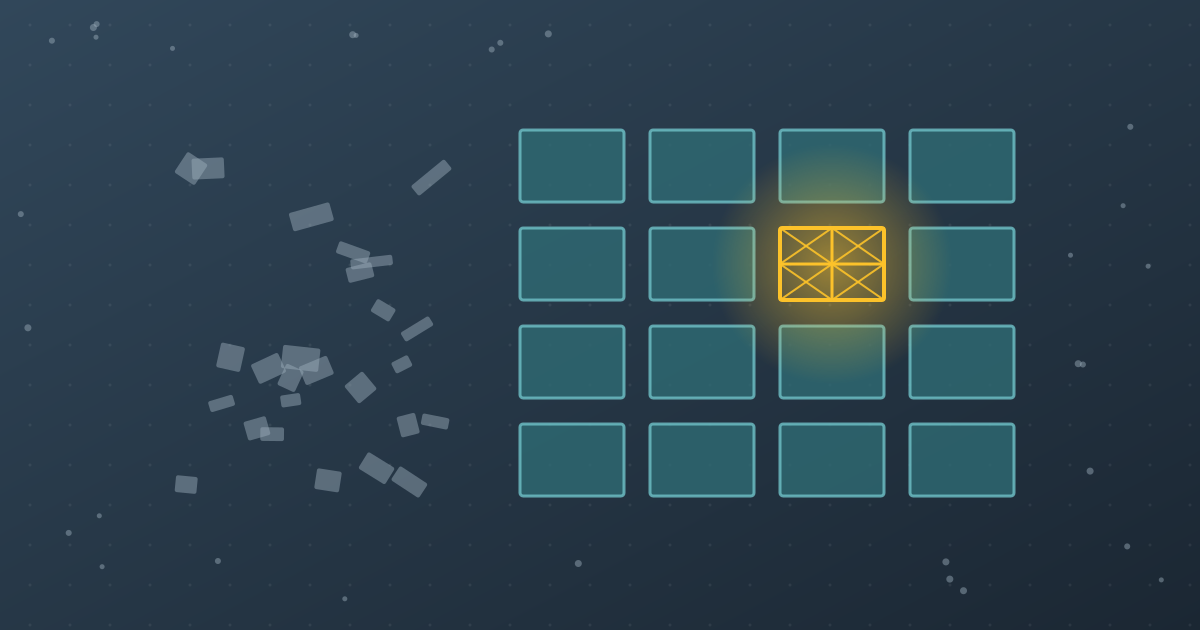
The heart of the new houses was a construction method developed by the engineers of the reconstruction: the gaiola pombalina, or Pombaline cage. A three-dimensional, symmetrical lattice of timber was built into the walls and filled in with masonry. The timber gives way under shaking and distributes the forces, while the masonry protects against fire. Firewalls between the houses were raised higher than the roof beams so that fire could not jump across. Reportedly, the builders tested wooden models by having soldiers march around them in step. The Baixa is considered one of the first examples of earthquake-resistant construction.
Link to the principle
Here the shock becomes the blueprint. Every weakness the earthquake had exposed was answered deliberately: flexibility against the earthquake, walls against the fire, wide streets against the crush of people.
The price and the limit
Situation
Tens of thousands of people died, and nothing about the later city undoes that. Pombal also ruled harshly. After the earthquake, he had more than 30 people publicly executed and forced many able-bodied people to work on the reconstruction. The Baixa has been on Portugal’s tentative list for UNESCO World Heritage status since 2004.
Link to the principle
Antifragility describes a system, not the fate of individual people. The city learned; the victims gained nothing from it. If you speak of antifragility, you must not play down the suffering that set the learning process in motion.
Key takeaways
Key lessons
- Record a shock accurately before you react. Without knowledge, there is no learning.
- After a crisis, don’t rebuild the old state; build a better one.
- Use the options that destruction opens up while they are still open.
- Answer every exposed weakness with a concrete measure.
- Never play down the price of a shock, even if you learn from it.
Summary
The earthquake of 1755 destroyed Lisbon and cost tens of thousands of lives. Under the Marquis of Pombal, the lower town was rebuilt so that it embodied the lessons of the catastrophe: a clear street grid, firewalls and the flexible gaiola construction. On top of that came the first systematic survey of an earthquake. Lisbon shows how a community can emerge stronger from a shock, and at the same time how high the price is.