Contents
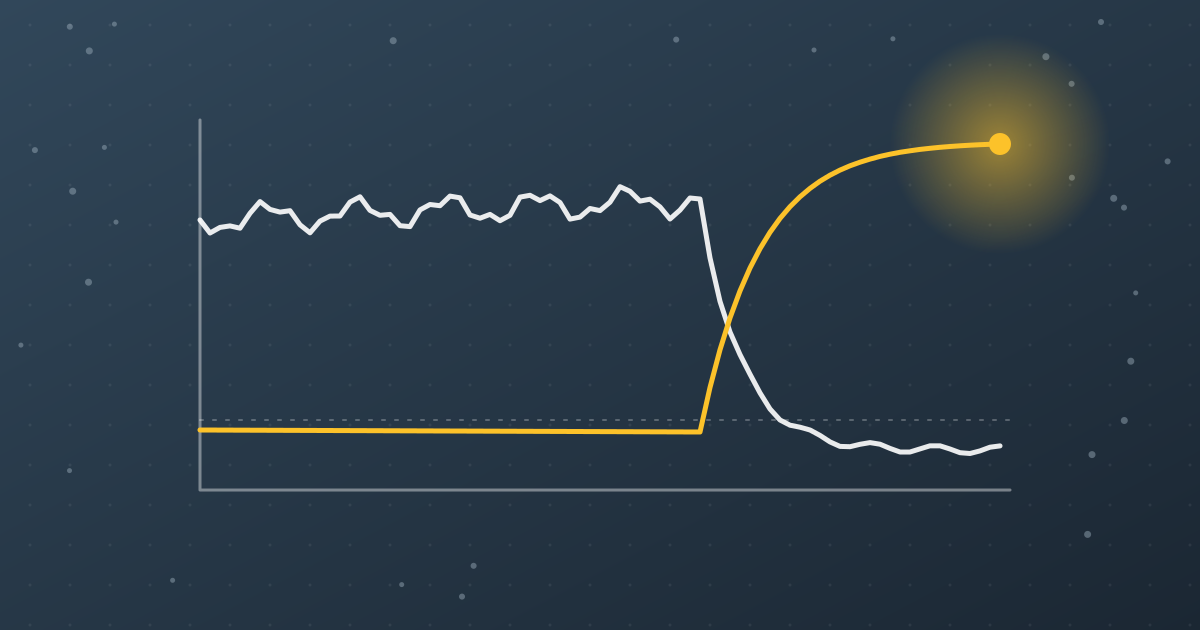
Most strategies try to avoid shocks or to withstand them. Nassim Nicholas Taleb asks a different question: how do you build something that profits from shocks? The roots of this question – and of Antifragility – lie not in philosophy but on the trading floor of an investment bank in the fall of 1987.
A trader who bets on the rare event
Situation
Taleb was born in 1960 in Amioun, Lebanon. He studied in Paris and earned an MBA from the Wharton School of the University of Pennsylvania in 1983. After that he traded options for several banks, in 1987 at First Boston in New York. Options are rights to buy or sell something at a fixed price. If you buy them, you pay a small, known price. If the market moves sharply, the gain can be many times that amount.
Link to the principle
An option is the simplest picture of optionality. The loss is limited, the possible gain open-ended. If you are positioned this way, you don’t have to predict the future. All you have to do is make sure that big surprises work in your favor.
Black Monday
Situation
On Monday, October 19, 1987, the Dow Jones Industrial Average, the leading U.S. stock index, fell 22.6% in a single day. It was the largest one-day percentage loss in its history. At that point, Taleb held a hedged position that profited from large movements. By his own account and according to consistent reports, the crash made him financially independent.
Link to the principle
While many market participants were hit hard, Taleb’s position was built so that chaos worked in its favor. This is the difference between fragile, robust and antifragile: the fragile suffers from the shock, the robust withstands it, the antifragile gains.
From the trading floor to a theory
Situation
In 1999, Taleb founded Empirica Capital, a fund that existed until 2004. In 2007, he became an adviser to Universa Investments, the investment firm of his former Empirica partner Mark Spitznagel. At the same time, Taleb wrote books: “Fooled by Randomness” (2001), “The Black Swan” (2007) and “Antifragile” (2012). He has taught at New York University since 2008. In “Antifragile,” he generalized his experience: some systems, such as muscles, immune systems or learning organizations, grow stronger through stress, mistakes and volatility.
Link to the principle
Taleb transferred an experience from finance to organizations and to life. The question is no longer just how big a risk is, but whether you profit or suffer harm when it materializes.
The barbell
Situation
Taleb recommends a setup he calls the barbell. You invest most of your wealth, around 80% to 90%, in extremely safe assets. You put the small remainder into many risky bets with a large possible gain. You avoid the middle, the seemingly sensible medium risk. In his view, that is where losses are hardest to estimate. In this article, the barbell is a way of thinking, not investment advice.
Link to the principle
The barbell combines protection and optionality. The safe part makes sure that no shock ruins you. The risky part makes sure that you can profit from the unexpected. This can also be applied to careers and organizations.
The price of waiting
Situation
Strategies that bet on rare events cost money continuously in calm times. If you buy options, you often lose the premium year after year until the big swing finally comes. Taleb’s theses are also disputed. Statisticians accuse him of overlooking existing methods, and his sharp attacks on economists have earned him many opponents.
Link to the principle
Antifragility does not come free. It requires small, regular losses and the patience to bear them. If you cannot hold out, you give up the position just before it pays off.
Key takeaways
Key lessons
- With every risk, ask: will the surprise harm me or help me?
- Look for bets with a small, known stake and an open-ended gain.
- First protect yourself against ruin, and only then play.
- Distrust the comfortable middle if you don’t really know its risk.
- Plan for the cost of waiting. Optionality requires patience.
Summary
Nassim Nicholas Taleb profited from Black Monday in 1987 because his position was built so that a shock worked in its favor. From this experience, he developed the theory of antifragility: systems can be set up so that they gain from stress and surprise. The key is optionality – a limited stake with an open-ended gain – and the willingness to bear the cost of waiting.
Sources
- Nassim Nicholas Taleb: Antifragile: Things That Gain from Disorder. New York: Random House, 2012.
- Nassim Nicholas Taleb: The Black Swan: The Impact of the Highly Improbable. New York: Random House, 2007.