The principle in detail
Three steps through the principle: grasp it, place it, put it to work. Open each topic on its own.
The core messageCore statement and 3 clarifications
The most valuable information concerns intentions. If you know them in time, you can shape events instead of having to react.
- It does not say
- That anything goes when it comes to gaining knowledge. How you obtain it matters.
- It does not say
- That knowledge replaces the decision. Even good foreknowledge is, in the end, a probability.
- It also says
- Knowledge of the past is no certainty about the future.
The explanationIn everyday leadership, foreknowledge rarely means espionage.
In everyday leadership, foreknowledge rarely means espionage.
Mostly it means closeness.
- Foreknowledge does not come from guessing.
- It comes from patient listening, usually to people close to the other side.
- It can be wrong, and it loses its value if you act on it too openly and give away your source.
What will you only find out when it is too late, and who could tell you today?
The signs3 signs when you heed it · 3 when you overlook it
- You talk to people before conflicts break out into the open.
- You check leads before you act on them.
- Those who confide in you are not exposed because of it.
- You start gathering information only once the crisis is here.
- You mistake assumptions for knowledge.
- You set aside warnings that don’t fit your picture.
The backgroundTradition T2 Eastern Strategy
- 5th c. BCOriginSun Tzu
The Art of War,
- 1962SupplementedRoberta Wohlstetter
Pearl Harbor: Warning and Decision
- 1978SupplementedRichard K. Betts
Analysis, War, and Decision: Why Intelligence Failures Are Inevitable
- Tradition T2TraditionEastern Strategy
Sun Tzu, Kautilya, the Thirty-Six Stratagems, the Tao Te Ching, Miyamoto Musashi, François Jullien
See the tradition on the Origin page
Read more: the full background
From Sun Tzu’s “The Art of War,” Chapter 13 on the use of spies (English translation by Lionel Giles, 1910), supplemented by Roberta Wohlstetter’s and Richard K. Betts’s research on warning and surprise.
The research4 sources: 2 classics, 1 case study, 1 theory · 1832–1978 · with limitations of the research
- weak
- moderate
- strong
The sources mainly use cases to show how hard it is to gain and interpret reliable foreknowledge; that it is often worth more than additional strength is an inference.
- 1962Roberta Wohlstetter
“Pearl Harbor: Warning and Decision”: In 1941 the right signals were drowned out by the noise of false and contradictory reports.
- 1978Richard K. Betts
“Analysis, War, and Decision: Why Intelligence Failures Are Inevitable”: Failures often lie in interpreting and believing, not in collecting.
Carl von Clausewitz was skeptical of every report from the field. Foreknowledge can be deceptive, especially when the other side deliberately lays false trails, and the way it is obtained raises ethical questions.
Read more: what research shows
The principle comes from the thirteenth chapter of “The Art of War,” attributed to Sun Tzu. In essence, it says that foreknowledge cannot be had from spirits, from comparisons with earlier events or from calculation, but only from people who know the enemy’s situation. Modern research on intelligence work mainly shows the flip side. In 1962, Roberta Wohlstetter examined why the United States was taken by surprise at Pearl Harbor in 1941 despite many warning signs: the right signals were drowned out by the noise of false and contradictory reports. In 1978, Richard K. Betts argued that intelligence failures are inevitable because the problem often lies not in collecting but in interpreting and believing. That knowledge is worth more than additional strength is shown by cases such as Midway in 1942, not by measurement.
The related principles16 Know the Enemy and Yourself · 19 Fog of Uncertainty · 25 OODA Loop · 26 Deception
To go deeper, see 16 Know the Enemy and Yourself (foreknowledge is the basis for knowing the other side) and 25 OODA Loop (if you know sooner, you observe, decide and act faster)
It stands in tension with 26 Deception, the other side’s countermeasure, and with 19 Fog of Uncertainty: all knowledge remains incomplete
Read more: the full text
To go deeper, see 16 Know the Enemy and Yourself (foreknowledge is the basis for knowing the other side) and 25 OODA Loop (if you know sooner, you observe, decide and act faster). It stands in tension with 26 Deception, the other side’s countermeasure, and with 19 Fog of Uncertainty: all knowledge remains incomplete.
The action steps5 things you can actually do
- Create regular opportunities to hear early what others are planning: one-on-ones, customer visits, walks through the workplace.
Pay more attention to how people behave than to what they say they think, for example, to what customers actually buy.
Check every important report against a second, independent source before you act on it.
- Protect your sources: act in a way that lets no one work out who told you something.
For every warning, write down why you believe it or not, and check later whether you were right.
The reflection questions3 questions: What have you found out in recent months only after it had already happened?
- What have you found out in recent months only after it had already happened?
- Who around you knows earlier than you what customers, employees or partners are planning?
- Which warning did you last dismiss because it didn’t fit your picture?
Take your time with one question. Write down your answer – or talk it over with someone you trust.
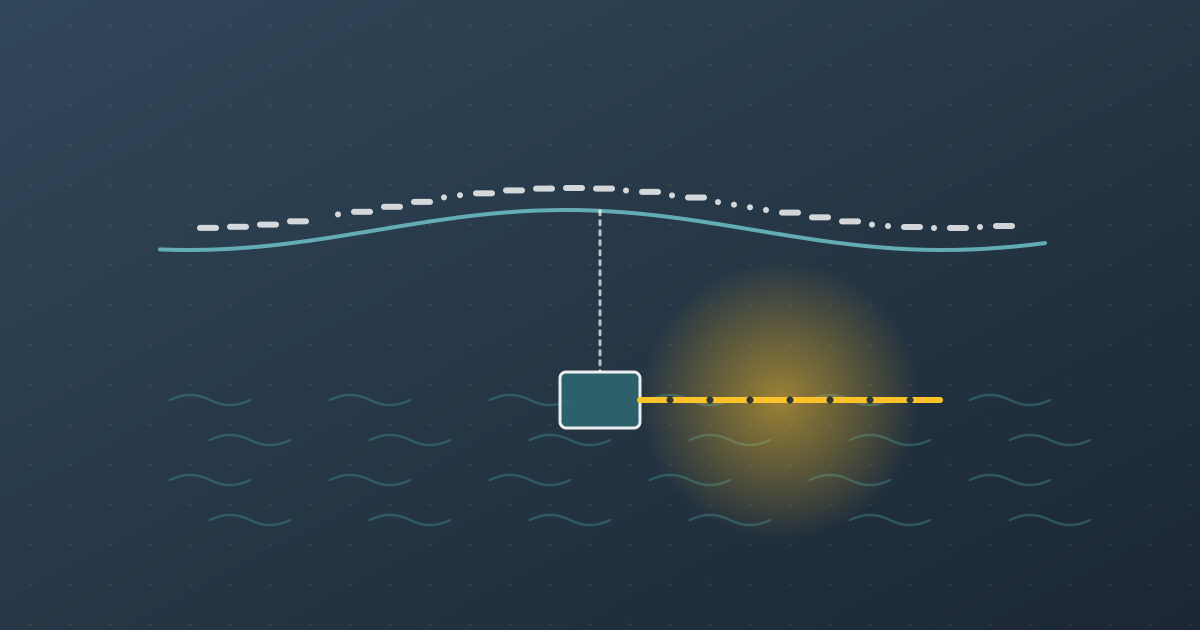
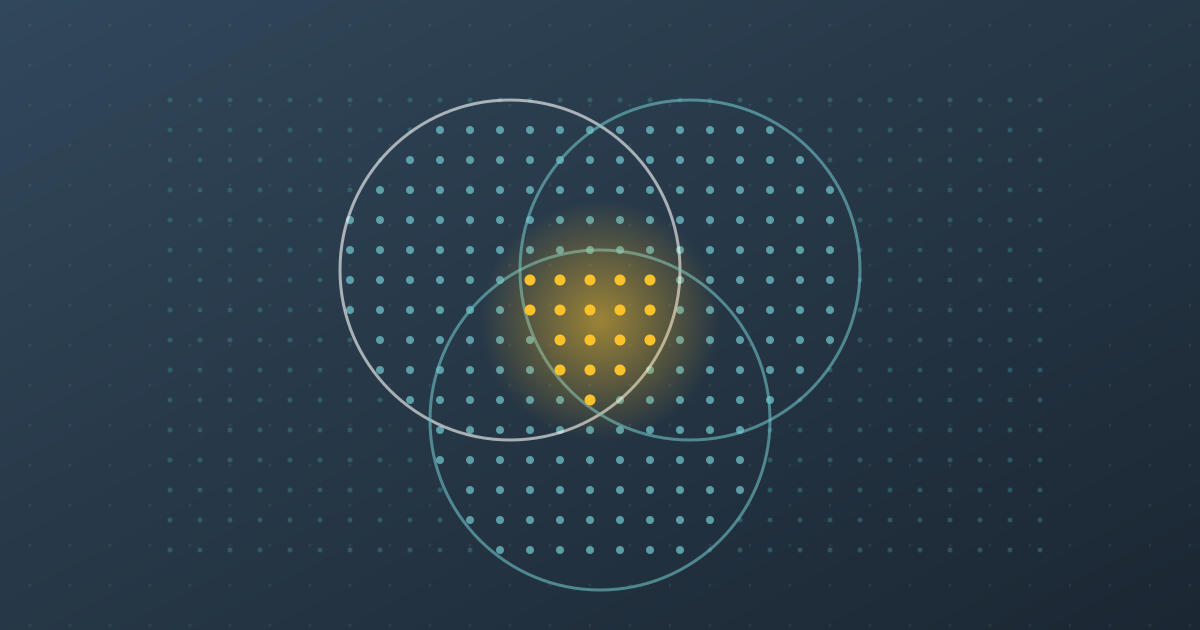
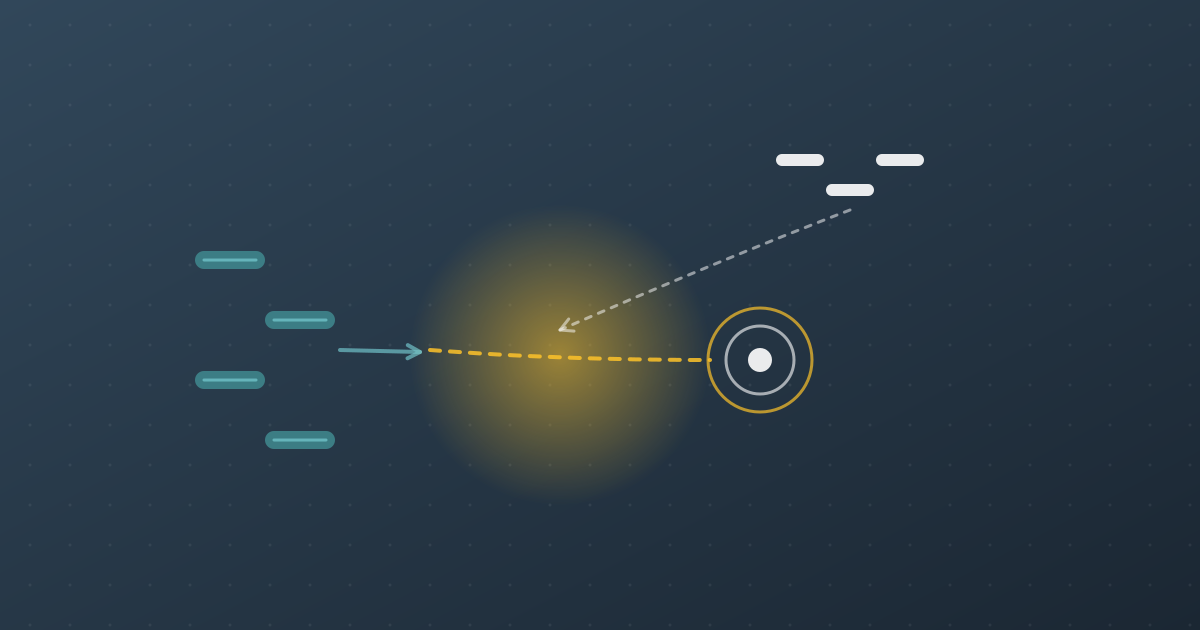
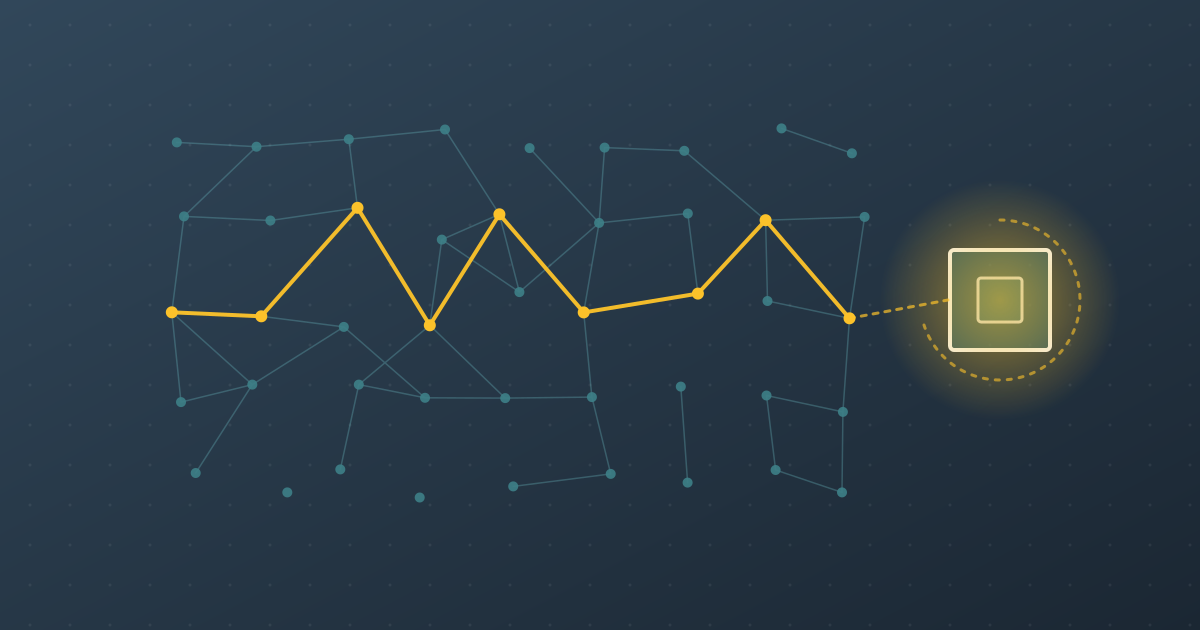
The picture to rememberThe animation once more, with an explanation
- A golden circle draws teal lines around itself on every side like walls and grows paler as it does, while behind a mist-blue frame a dot can only be guessed at as a shadow
- A small golden point of light travels across from the other side and points to one spot with an arc
- The circle releases the other lines, places a single golden line there, and the shadow dot runs into it at exactly that spot
How the principle shows up in practice
The Zimmermann Telegram (1917)
British codebreakers read Germany’s secret offer of an alliance to Mexico and passed it on only once they could protect their source with a cover story.
Netflix and “House of Cards” (2011)
Viewing data showed what the audience wanted to watch and made it possible to commit to two seasons without a pilot.
Midway (1942)
The U.S. Navy decrypted Japan’s attack plan, confirmed the target with a trick and sank four aircraft carriers.
What do you find out too late?
Get your profile across all 12 groups in about 10 to 15 minutes.
Start the Strategy CheckGroup 3: Knowledge, Uncertainty and Leadership
Guiding question: What do you know, and how do you lead when you don’t know?
Stage 2 of 5: Understand the situation
- TraditionEastern Strategy
Sun Tzu, Kautilya, the Thirty-Six Stratagems, the Tao Te Ching, Miyamoto Musashi, François Jullien
- Related principles
Where the 92 principles come from: eight traditions of strategy, from classical war theory to dealing with uncertainty.
More about the originBackground: WEGVISOR’s own selection from the strategy literature · More about the origin