The principle in detail
Three steps through the principle: grasp it, place it, put it to work. Open each topic on its own.
The core messageCore statement and 3 clarifications
You need both kinds of knowledge. If you study only the other side and assume you already know yourself, you will sometimes win and sometimes lose.
- It does not say
- That you will win every contest if you know enough. Above all, knowledge helps you avoid the fights you cannot win.
- It does not say
- That you should wait until you know everything. It calls for a process of checking that is never finished.
- It also says
- Negotiating or stepping aside is not weakness if the comparison goes against you. What matters is that you do the math in time.
The explanationHow the principle works and what matters
- A false self-assessment tips one of two ways: into overconfidence that overlooks your own limits, or into faintheartedness that forgets your own sources of strength.
- Both mistakes feel like realism from the inside.
- That is why it takes a deliberate step to lay both sides next to each other.
What do you really know about yourself, and what do you only believe because you have always believed it?
The signs3 signs when you heed it · 3 when you overlook it
- Before important ventures, you write down the strengths and weaknesses of both sides next to each other.
- You review your picture of the other side when the expected effect fails to materialize.
- You deliberately turn down some contests.
- You know the competition inside out, but no one has ever written down your own weaknesses.
- You take on the opponent who is most convenient, not the most dangerous one.
- You do the math only when there is no choice left.
The backgroundTradition T2 Eastern Strategy
- 6th/5th c. BCOriginSun Tzu
The Art of War,
- 1999SupplementedJustin Kruger and David Dunning
Unskilled and Unaware of It
- 2004SupplementedDominic D. P. Johnson
Overconfidence and War
- Tradition T2TraditionEastern Strategy
Sun Tzu, Kautilya, the Thirty-Six Stratagems, the Tao Te Ching, Miyamoto Musashi, François Jullien
See the tradition on the Origin page
Read more: the full background
From Sun Tzu’s “The Art of War,” Chapter 3 (China, traditionally dated to the 6th or 5th century BC; English translation by Lionel Giles, 1910). Supplemented by research on overconfidence by Dominic D. P. Johnson and by Justin Kruger and David Dunning.
The research4 sources: 2 classics, 1 case study, 1 experiment · 1832–2004 · with limitations of the research
- weak
- moderate
- strong
Research on overconfidence supports the warning against a false self-image; the gradation itself is a classical teaching without measurement.
- 1999Justin Kruger and David Dunning
“Unskilled and Unaware of It”: people with low competence often overestimate their abilities the most.
- 2004Dominic D. P. Johnson
“Overconfidence and War”: positive illusions about their own chances lead states into wars they cannot win.
- Complete knowledge does not exist; Carl von Clausewitz warns that many reports are contradictory and even more are false.
- If you want to act only once you know both sides completely, you will never act, and the opponent changes as soon as it notices that it is being studied.
- The principle is an attitude of constant checking, not a guarantee of victory.
- The dating and authorship of “The Art of War” are disputed among scholars.
Read more: what research shows
The principle is a classical teaching, not a measured rule. In “The Art of War,” attributed to Sun Tzu, the end of the third chapter sets out a gradation: if you know the enemy and yourself, you need not fear the outcome of a hundred battles. If you know only yourself, you will suffer a defeat for every victory, and if you know neither, you will succumb in every battle. Research mainly supports the warning against a false self-assessment. Dominic D. P. Johnson shows how positive illusions about their own chances lead states into wars they cannot win. In 1999 Justin Kruger and David Dunning found that people with low competence often overestimate their abilities the most. None of these studies directly measures whether this twofold knowledge leads to better decisions.
The related principles17 Foreknowledge · 19 Fog of Uncertainty · 39 First Make Yourself Invincible · 84 Become the Enemy
To go deeper, see 17 Foreknowledge (knowledge of the other side’s intentions) and 84 Become the Enemy (putting yourself in the other side’s shoes)
39 First Make Yourself Invincible starts with self-knowledge before you attack
It stands in tension with 19 Fog of Uncertainty: this knowledge always remains incomplete
Read more: the full text
To go deeper, see 17 Foreknowledge (knowledge of the other side’s intentions) and 84 Become the Enemy (putting yourself in the other side’s shoes); 39 First Make Yourself Invincible starts with self-knowledge before you attack. It stands in tension with 19 Fog of Uncertainty: this knowledge always remains incomplete.
The action steps5 things you can actually do
- Before every major venture, ask the same three questions about both sides: what can it do, what does it want, where is it vulnerable?
Have your self-assessment checked by someone who is allowed to contradict you, such as a colleague from outside your area.
Distinguish between what you know about the other side and what you merely suspect.
- Review your picture of the other side as soon as a measure isn’t working, instead of doubling down on the same measure.
- After the comparison, decide explicitly: seek out, avoid or postpone. Write down how you would notice that the situation has changed.
The reflection questions3 questions for you or for a conversation
- Which contest are you currently engaged in without ever having written down your own weaknesses in it?
- When did you last change your picture of a competitor, a partner or the other side?
- Which fight should you avoid or postpone, and what is stopping you?
Take your time with one question. Write down your answer – or talk it over with someone you trust.
The picture to rememberThe animation once more, with an explanation
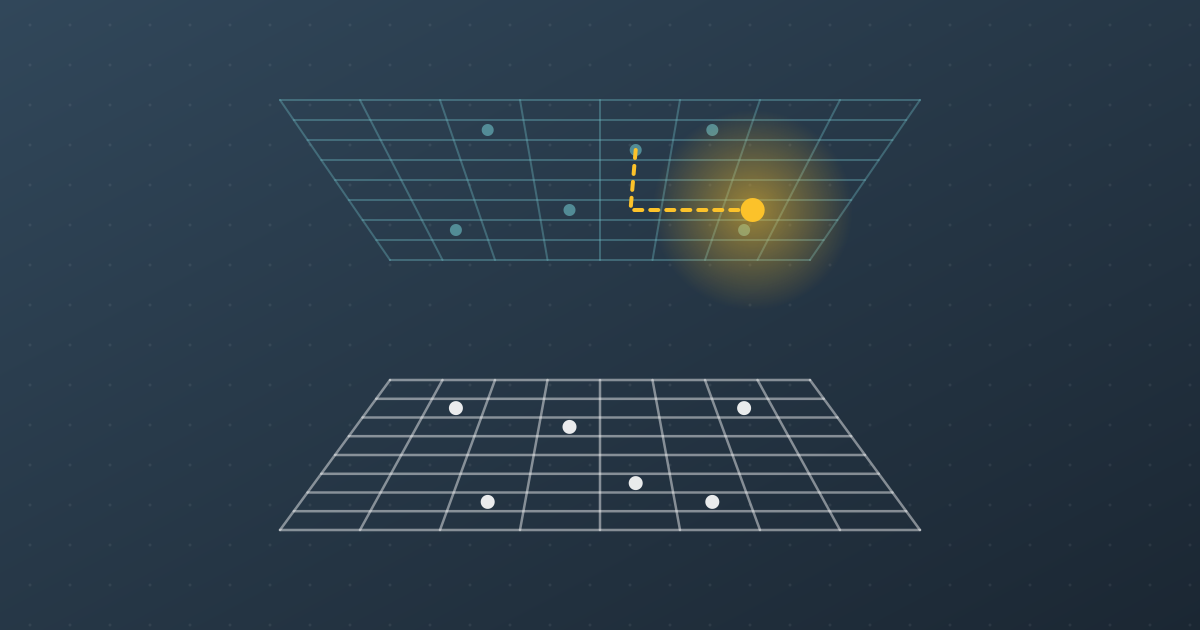
- A golden circle directs a beam of light at a group of mist-blue dots opposite it, above which short and long lines appear as strengths and weaknesses
- Then the beam turns back on the circle itself, and lines appear above it, too
- Only when both rows of lines lie side by side on a teal balance line does a golden gate open on the side where the circle can prevail, while a second gate deliberately stays closed
How the principle shows up in practice
Scipio at Zama (202 BC)
Scipio knew Hannibal’s method from his own experience, made up for the weakness of the Roman cavalry through his alliance with Masinissa and let the elephants run through lanes.
Matteo Ricci in China (1582–1610)
The Jesuit learned the language and values of the Chinese scholars, corrected his misjudgment and reached the imperial court in Beijing in 1601.
Kodak and the digital camera (1975–2012)
Kodak invented the digital camera and predicted the upheaval, but failed because it saw itself only as a film manufacturer.
Which fight should you avoid?
Get your profile across all 12 groups in about 10 to 15 minutes.
Start the Strategy CheckGroup 3: Knowledge, Uncertainty and Leadership
Guiding question: What do you know, and how do you lead when you don’t know?
Stage 2 of 5: Understand the situation
- TraditionEastern Strategy
Sun Tzu, Kautilya, the Thirty-Six Stratagems, the Tao Te Ching, Miyamoto Musashi, François Jullien
Where the 92 principles come from: eight traditions of strategy, from classical war theory to dealing with uncertainty.
More about the originBackground: WEGVISOR’s own selection from the strategy literature · More about the origin