The principle in detail
Three steps through the principle: grasp it, place it, put it to work. Open each topic on its own.
The core messageCore statement and 3 clarifications
If you think the situation through from the other side’s point of view, you can anticipate their moves instead of merely reacting to them.
- It does not say
- That you give up your own position. If you put yourself too deeply in the other person’s place, you can forget what you yourself want.
- It does not say
- That empathy is enough. The point is to follow the other person’s thinking, not just to share their feelings.
- It also says
- Your picture of the other side remains an assumption and does not replace facts.
The explanationThe principle is not a tool to be used only against enemies.
- The principle is not a tool to be used only against enemies.
- It helps with an employee who is digging in their heels and in a family quarrel.
- It is also a form of respect.
Do you know the other side’s fears as well as you know your own goals?
The signs3 signs when you heed it · 3 when you overlook it
- Before difficult conversations, you write down what the other side wants, what it fears and what it thinks of you.
- Your competitors’ reactions rarely surprise you.
- You can restate a critic’s position in a way they agree with.
- You explain other people’s behavior as stupidity or ill will.
- In negotiations, you plan only your own steps.
- The other party reacts differently from how you would have in their place, and it surprises you every time.
The backgroundFrom Miyamoto Musashi’s “Gorin no Sho” (“The Book of Five Rings,” 1645), the Fire Book. · T2 Eastern Strategy
- 1645OriginMiyamoto Musashi
Gorin no Sho
- 2008SupplementedAdam D. Galinsky, William W. Maddux, Debra Gilin and Judith B. White
Why It Pays to Get Inside the Head of Your Opponent
- Tradition T2TraditionEastern Strategy
Sun Tzu, Kautilya, the Thirty-Six Stratagems, the Tao Te Ching, Miyamoto Musashi, François Jullien
See the tradition on the Origin page
Read more: the full background
From Miyamoto Musashi’s “Gorin no Sho” (“The Book of Five Rings,” 1645), the Fire Book. Supplemented by the negotiation research on perspective-taking by Adam D. Galinsky and colleagues (2008).
The research3 sources: 2 classics, 1 experiment · 1645–2008 · with limitations of the research
- weak
- moderate
- strong
Experiments have shown that perspective-taking helps in negotiations; predicting an opponent’s moves rests on the classic text and on case histories.
- 2008Adam D. Galinsky, William W. Maddux, Debra Gilin and Judith B. White
“Why It Pays to Get Inside the Head of Your Opponent”: those who get inside the other side’s head find hidden agreements more often; empathy helps less.
- Your picture of the opponent remains an assumption.
- Against new or unknown opponents, it can deceive you, and a smart opponent who knows they are being watched will deliberately break their habits.
- Success stories such as that of the psychiatrist James A. Brussel are often made to sound bigger in hindsight than they were.
- The experiments measure negotiation outcomes, not the prediction of moves.
- And the principle can be abused: if you know another person’s mind, you can also manipulate them.
Read more: what research shows
Miyamoto Musashi described the principle around 1645 in “The Book of Five Rings.” In the Fire Book, he advises putting yourself in your opponent’s place. A thief who has barricaded himself in a house looks dangerous from the outside; from his own point of view, he is the one under threat. A related idea already appears in Sun Tzu: know the enemy and know yourself. In 2008, Adam D. Galinsky, William W. Maddux, Debra Gilin and Judith B. White measured part of this. In three negotiation studies, participants who got inside the other side’s head found hidden agreements more often and achieved better outcomes. Empathy helped considerably less and sometimes hurt. The studies did not test whether this allows you to predict an opponent’s next move.
The related principles16 Know the Enemy and Yourself · 25 OODA Loop · 26 Deception · 82 Loss Aversion
To go deeper, see 16 Know the Enemy and Yourself (there, knowledge about the opponent
Here, the view from their side) and 82 Loss Aversion (if you know the opponent’s reference point, you know what they are fighting for)
25 OODA Loop uses this knowledge to get inside the opponent’s decision cycle
26 Deception shows the delicate side: only if you know what the opponent believes can you deceive them
Read more: the full text
To go deeper, see 16 Know the Enemy and Yourself (there, knowledge about the opponent; here, the view from their side) and 82 Loss Aversion (if you know the opponent’s reference point, you know what they are fighting for). 25 OODA Loop uses this knowledge to get inside the opponent’s decision cycle; 26 Deception shows the delicate side: only if you know what the opponent believes can you deceive them.
The action steps5 things you can actually do
Before a difficult negotiation, write half a page in the first person from the other side’s point of view: what I want, what I fear, what I think of you.
- Don’t ask what you would do in their place. Ask what they have done in similar situations so far.
- Look for the other party’s habits: how they decide under pressure, whom they ask for advice, what they never do.
Test your picture against facts, and ask people who know the other side well.
- Write down your own goals before you put yourself in the other person’s place, so that you don’t lose sight of them.
The reflection questions3 questions: Whom are you about to negotiate with, and what does that person fear?
- Whom are you about to negotiate with, and what does that person fear?
- Whose behavior are you currently explaining to yourself as stupidity or ill will?
- How does the person you find hardest to talk to see you?
Take your time with one question. Write down your answer – or talk it over with someone you trust.
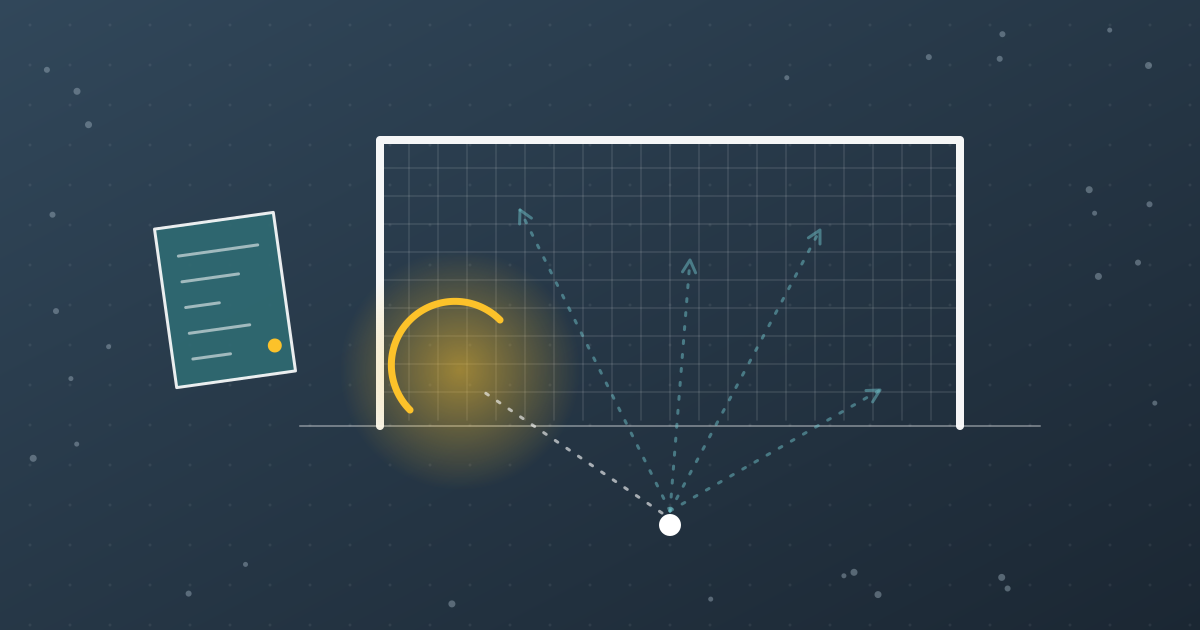
The picture to rememberThe animation once more, with an explanation
- A teal dot stands at the edge of a grid of lines, and short lines of thought run from it across the grid
- It travels in an arc to the opposite side, the grid turns with it, and from this view a gold line lights up, the other side’s planned move
- Back in its own place, it sets a small circle so that the gold line runs into nothing
How the principle shows up in practice
James Brussel and the Mad Bomber (1956)
Using a bomber’s letters, the psychiatrist gets inside his head. In many respects, his profile resembles George Metesky, the man later caught; the arrest succeeds thanks to Metesky’s need to explain the injustice done to him.
Jens Lehmann’s note (2006)
In the World Cup penalty shootout against Argentina, the goalkeeper reads the penalty takers’ habits off a note. He saves two penalties, one of them from a player who was not even on it.
Bernard Montgomery (Second World War)
The British general hangs portraits of the opposing generals in his trailer in order to anticipate their thinking. At Alam Halfa in 1942, helped in part by decrypted radio messages, he foresees Rommel’s attack.
What does the other side fear?
Get your profile across all 12 groups in about 10 to 15 minutes.
Start the Strategy CheckGroup 10: Psychology and the Irrational
Guiding question: Which forces in the mind steer decisions?
Stage 2 of 5: Understand the situation
- TraditionEastern Strategy
Sun Tzu, Kautilya, the Thirty-Six Stratagems, the Tao Te Ching, Miyamoto Musashi, François Jullien
- Related principles
Where the 92 principles come from: eight traditions of strategy, from classical war theory to dealing with uncertainty.
More about the originBackground: WEGVISOR’s own selection from the strategy literature · More about the origin