Jens Lehmann’s Note and the Principle “Become the Enemy”
In the 2006 World Cup quarterfinal against Argentina, goalkeeper Jens Lehmann pulls a note out of his sock before each penalty. On it are the habits of the Argentine penalty takers. He saves two penalties, one of them from a player who was not even on the note.
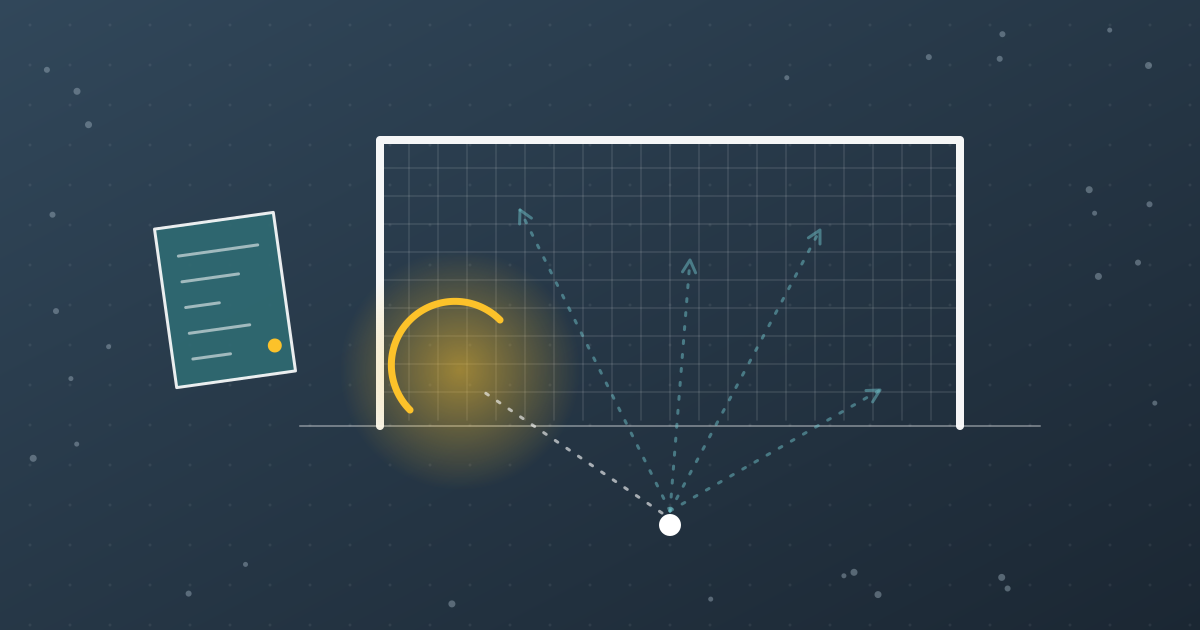
A teal dot stands at the edge of a grid of lines, and short lines of thought run from it across the grid. It travels in an arc to the opposite side, the grid turns with it, and from this view a gold line lights up, the other side’s planned move; back in its own place, it sets a small circle so that the gold line runs into nothing.
Principle #84
Become the Enemy: If you see the situation through your opponent’s eyes – their needs, fears and habits – you recognize their next move before they make it.
4 min read5 sectionsSituationLink to the principle
Contents
A penalty kick is a duel between two minds. The shooter thinks about where the goalkeeper will dive. The goalkeeper thinks about where the shooter will shoot. Whoever better anticipates the other’s thinking wins. On June 30, 2006, a small piece of paper became a symbol of the principle “Become the Enemy”: of putting yourself in your opponent’s place, and of the fact that even the appearance of such knowledge has an effect.
In front of the goal, shot paths run into every corner; a note with jottings lies beside it, and the saved corner glows gold – as with Jens Lehmann.
01
A quarterfinal in Berlin
Situation
At the World Cup on home soil, Germany played Argentina in Berlin’s Olympic Stadium. Roberto Ayala gave Argentina the lead with a header, and Miroslav Klose equalized in the 80th minute. There were no goals in extra time either. The match went to a penalty shootout.
Link to the principle
A penalty shootout is a moment in which preparing for your opponent pays off directly. There is no time to learn during the game. Whatever you know about the other side, you have to know beforehand.
02
A note in the sock
Situation
Before the match, goalkeeping coach Andreas Köpke had gathered information about the Argentine players’ penalty habits and written it on a note. The most important details were written in pencil, which by Lehmann’s own account made them hard to read. Lehmann tucked the note into his sock and pulled it out before the penalties to look things up.
Link to the principle
The note is the principle in condensed form. It contains data not on shot power or technique but on preferences: where does this player shoot when it really counts? With it, the goalkeeper tries to think like the shooter. He takes the shooter’s habit as a clue to his decision.
03
Ayala
Situation
Germany converted all four of its penalties. Lehmann saved the shot from Roberto Ayala, who had scored Argentina’s opening goal.
Link to the principle
This is the direct part of the principle at work. If you know your opponent’s tendency, you can adjust to it. A goalkeeper who knows which corner a shooter prefers no longer dives blindly. He improves his chances, even if he has no certainty.
04
Cambiasso was not on the note
Situation
Lehmann also saved the penalty from Esteban Cambiasso. According to FIFA, Cambiasso was not even in the notes. Lehmann pulled out the note anyway, in full view of the shooter. Germany won the shootout and advanced to the semifinals.
Link to the principle
This is the second, subtler part of the principle. If you put yourself in your opponent’s place, you ask not only what he will do but also what he thinks of you. A shooter who sees the goalkeeper studying a note has to assume that he has been figured out. He doubts his choice, and perhaps he changes it. Whether that was the case with Cambiasso, only he knows. But the note worked on both levels: as knowledge and as a signal.
05
The limits of seeing through others
Situation
The note was later auctioned for charity and is now considered a piece of German soccer history. At the same time, research on penalty kicks shows that experienced shooters often mix up their corners so that they are hard to predict. The economist Ignacio Palacios-Huerta studied this in 2003 using more than 1,400 penalty kicks from European professional leagues.
Link to the principle
If you know you are being watched, you become unpredictable. The principle therefore works most strongly against opponents who are not aware of their habits, and it works all the more the more convinced the opponent is that you know him. So becoming the enemy also means taking away his sense that he is free to choose.
Key takeaways
Key lessons
01
Prepare for people, not just for situations.
02
Pay attention to habits, especially under pressure.
03
Ask yourself what the other side thinks of you.
04
Show that you are prepared; that alone changes the other side.
05
Keep in mind that a smart opponent will break his habits deliberately.
Summary
In the 2006 World Cup quarterfinal, Jens Lehmann saved the shots from Roberto Ayala and Esteban Cambiasso in the penalty shootout against Argentina. A note from goalkeeping coach Andreas Köpke listed the habits of the Argentine penalty takers. The note helped in two ways: as knowledge about the opponents and as a signal to them. Cambiasso was not even on it. The example shows both sides of the principle: anticipating the other’s thinking and shaping your own image in his mind.