Bernard Montgomery, His Trailer and the Principle “Become the Enemy”
During the Second World War, the British general Bernard Montgomery hangs portraits of the opposing generals in his trailer. He studies the face of the man he is fighting in order to anticipate his thinking.
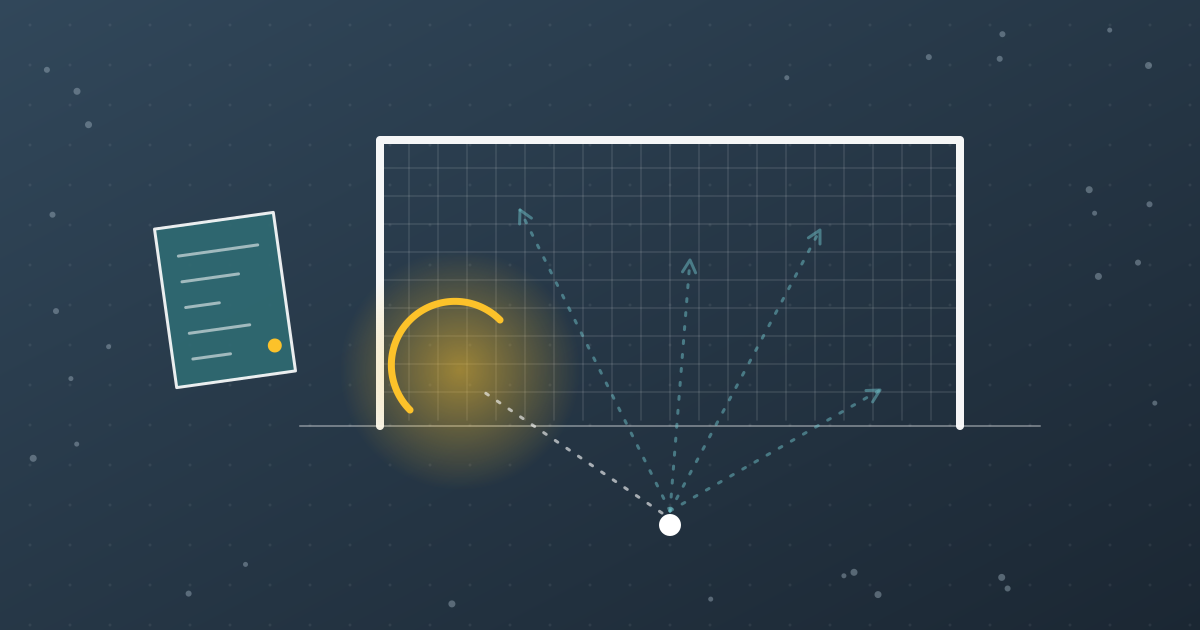
A teal dot stands at the edge of a grid of lines, and short lines of thought run from it across the grid. It travels in an arc to the opposite side, the grid turns with it, and from this view a gold line lights up, the other side’s planned move; back in its own place, it sets a small circle so that the gold line runs into nothing.
Principle #84
Become the Enemy: If you see the situation through your opponent’s eyes – their needs, fears and habits – you recognize their next move before they make it.
4 min read5 sectionsSituationLink to the principle
Contents
In war, opponents rarely meet in person. They see maps, reports and troop movements. Bernard Law Montgomery, later a field marshal, wanted to see more: the human being behind the movements. An inconspicuous detail from his headquarters shows how seriously he took the principle “Become the Enemy.” It also shows that the principle works best when it comes together with hard information.
Two picture frames hang in the trailer; a gaze leads to the map, where the enemy arrow ends at a golden ring – as with Montgomery.
01
A new commander in the desert
Situation
In August 1942, Montgomery took command of the British Eighth Army in North Africa. The army had suffered heavy defeats and had been pushed back into Egypt. Its opponent was the German-Italian army under Erwin Rommel, whose reputation as a bold and unpredictable commander loomed large on the British side too.
Link to the principle
An opponent with such a reputation paralyzes you as long as he seems a riddle. Montgomery wanted to break the spell. If you understand an opponent, you fear him less, because you can gauge what he will do.
02
Trailers as spoils of war
Situation
Montgomery ran his war from trailers that now stand in the Imperial War Museum at Duxford. His office trailer had belonged to the Italian general Annibale Bergonzoli, who had been captured at Beda Fomm in February 1941. The sleeping trailer was taken from the Italian field marshal Giovanni Messe in May 1943. A third trailer, for maps, was added in 1944.
Link to the principle
Even the trailers themselves carried something of the opponent. Montgomery literally lived and worked in vehicles belonging to his enemies. It is a symbol, but one that fits his attitude: keeping the opponent constantly before his eyes.
03
The faces on the wall
Situation
Portraits of opposing generals hung on the walls of his trailer. A press photograph from May 1946 shows Montgomery at work beneath pictures of Rommel, Model and Kesselring. In a 1968 BBC interview, he said he used to look at the photograph of Rommel and ask himself what sort of person Rommel was and what he was likely to do if Montgomery made a particular move. In some curious way, he said, it helped.
Link to the principle
This is the principle in its simplest form. A face turns an abstract quantity into a human being with character, habits and pride. Montgomery asked not only what the opposing army could do but what this one man would do. That question leads to different answers.
04
Alam Halfa: anticipating the attack
Situation
At the end of August 1942, Rommel attacked at Alam Halfa. Montgomery had expected Rommel to try to outflank the British front in the south and had prepared his defense on the Alam Halfa ridge. The attack failed. In addition to his assessment of the opponent, Montgomery was able to draw on decrypted German radio messages that gave clues to Rommel’s plans. In October and November 1942 came the Battle of El Alamein, which marked the turning point in North Africa.
Link to the principle
At Alam Halfa, two sources came together: an understanding of how Rommel thinks and information about what he is planning. The principle does not replace intelligence. But it helps you interpret information correctly. If you know that an opponent likes to attack by surprise around a flank, you read a report about troops in the south differently.
05
Where the picture fails
Situation
Montgomery was not always successful. After El Alamein, he was accused of pursuing Rommel’s army too cautiously. In September 1944, Operation Market Garden in the Netherlands, which he had pushed for, failed, partly because the German forces at Arnhem had been underestimated.
Link to the principle
Becoming the enemy is demanding. It works well against an opponent you have observed for a long time. Against new opponents or in unclear situations, your own picture can deceive you. Then there is a danger that you see not the opponent but what you expect of him.
Key takeaways
Key lessons
01
Give the other side a face, not just a function.
02
Ask what this one person would do, not just what is possible.
03
Combine your picture of the opponent with hard information.
04
Break the spell of larger-than-life opponents by understanding them.
05
Check whether you are seeing the opponent or your expectation.
Summary
Bernard Montgomery hung portraits of the opposing generals in his trailer and studied them in order to get inside their thinking. At Alam Halfa in 1942, he foresaw Rommel’s attack around the southern flank, helped in part by decrypted radio messages. The example shows the power of the principle and its limit: it works best together with information and against opponents you know.