The principle in detail
Three steps through the principle: grasp it, place it, put it to work. Open each topic on its own.
The core messageCore statement and 3 clarifications
People evaluate outcomes as gains or losses relative to a reference point, and losses weigh more heavily.
- It also says
- People who are in the red become risk-seeking. An opponent who can only lose fights desperately.
- It does not say
- That every attachment to the status quo is an error in thinking. Sometimes the old way is simply better.
- It does not say
- That losses always weigh exactly twice as much. The factor varies with the situation and the person, and with small amounts the effect is weaker.
The explanationWhen gains are possible, people are cautious.
Two patterns follow from this.
- When gains are possible, people are cautious.
- When losses loom, they become risk-seeking and would rather go for broke than accept a certain loss.
In families and churches, the same thing shows up with rooms, traditions and routines that everyone is attached to, even though something else would be better.
What do the people you want to win over stand to lose, and have you already said it out loud?
The signs3 signs when you heed it · 3 when you overlook it
- When things change, you openly name what will be lost before you talk about goals.
- Where you don’t have to take something away, you add instead.
- In negotiations, you leave the other side something it can keep.
- Fierce resistance to a change you consider a clear gain takes you by surprise.
- A project in the red keeps getting more money instead of being ended.
- Your concessions seem big to you and small to the other side.
The backgroundTradition T7 Psychology and Decision-Making
- 1979OriginDaniel Kahneman and Amos Tversky
Prospect Theory
- 1990SupplementedDaniel Kahneman, Jack L. Knetsch and Richard H. Thaler
The endowment effect
- Tradition T7TraditionPsychology and Decision-Making
Daniel Kahneman, Robert B. Cialdini
See the tradition on the Origin page
Read more: the full background
From the prospect theory of Daniel Kahneman and Amos Tversky, set out in the article “Prospect Theory: An Analysis of Decision under Risk” in the journal Econometrica (1979). Supplemented by the endowment effect as described by Daniel Kahneman, Jack L. Knetsch and Richard H. Thaler (1990).
The research5 sources: 3 experiments, 1 primary study, 1 review · 1979–2018 · with limitations of the research
- weak
- moderate
- strong
The pattern has been found many times in the lab and in the field, including among professionals with high stakes; its scope and the exact factor are disputed.
- 1979Daniel Kahneman and Amos Tversky
“Prospect Theory”: people evaluate gains and losses, not final wealth; the value function is steeper for losses than for gains.
- 1990Daniel Kahneman, Jack L. Knetsch and Richard H. Thaler
The endowment effect: sellers demand far more for a mug than buyers are willing to pay; the gap persists even in markets with opportunities to learn.
- 1992Amos Tversky and Daniel Kahneman
“Advances in Prospect Theory”: by their estimate, losses weigh about twice as much as gains of the same size.
- 2011Devin G. Pope and Maurice E. Schweitzer
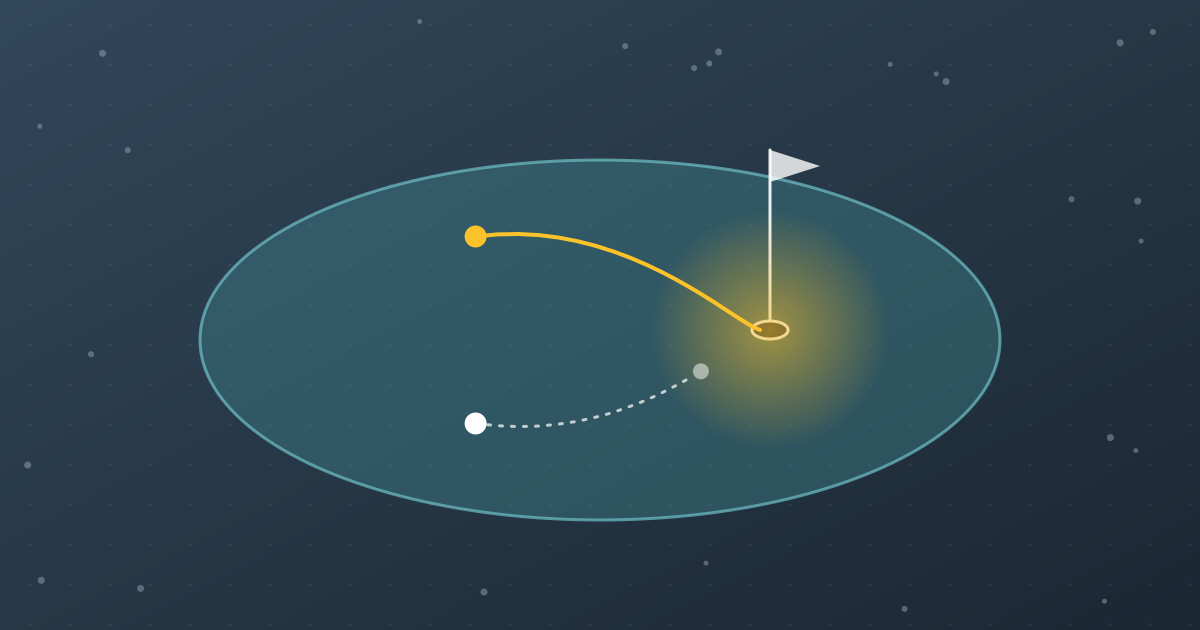
About 2.5 million putts on the PGA Tour: professionals sink birdie putts less often than par putts of the same length.
- 2018David Gal and Derek D. Rucker
“The Loss of Loss Aversion”: loss aversion applies less generally than is often claimed.
- Loss aversion is a strong tendency, not a law of nature.
- It is weaker with small amounts and with things people are not attached to, and the factor varies with the situation and the person.
- Not every attachment to the status quo is an error in thinking.
- The conclusion that people therefore fight harder is drawn from decision tasks; these studies do not measure effort in conflicts.
Read more: what research shows
In 1979, Daniel Kahneman and Amos Tversky used simple decision tasks to show that people evaluate outcomes as gains and losses relative to a reference point. Their value function is steeper for losses than for gains. With sure gains, people are risk-averse; with sure losses, they are risk-seeking. In 1992, the two estimated that losses weigh about twice as much. In 1990, Daniel Kahneman, Jack L. Knetsch and Richard H. Thaler demonstrated the endowment effect: people who own a mug demand far more for it than others are willing to pay for the same mug, even in markets where people can learn. In 2011, using more than 2.5 million putts, Devin G. Pope and Maurice E. Schweitzer showed that professional golfers sink par putts more often than birdie putts of the same length. In 2018, David Gal and Derek D. Rucker questioned whether the effect applies so generally.
The related principles50 Resistance to the New · 52 Golden Bridge · 81 Path Dependence · 85 Death Ground
To go deeper, see 50 Resistance to the New (those who lose from an innovation fight harder than those who gain) and 81 Path Dependence (attachment to what exists makes changes of course expensive)
85 Death Ground shows what happens when someone can only lose
52 Golden Bridge draws the conclusion for dealing with an opponent
Read more: the full text
To go deeper, see 50 Resistance to the New (those who lose from an innovation fight harder than those who gain) and 81 Path Dependence (attachment to what exists makes changes of course expensive). 85 Death Ground shows what happens when someone can only lose; 52 Golden Bridge draws the conclusion for dealing with an opponent.
The action steps5 action steps: Before any change, write down what individual people will lose, and say it out loud.
Before any change, write down what individual people will lose, and say it out loud.
Check whether you can add instead of taking away, for example by offering something new alongside the old until the new one holds up.
- Make gains as concrete as losses are felt anyway: who, what, starting when.
- Pay attention to the reference point. Say early on what to expect, so that nobody experiences a loss measured against a false expectation.
- For projects in the red, decide in advance at what point you will stop, so that the hope of breaking even does not make the decision.
The reflection questions3 questions: What will your team lose in the next change, and have you already said it out loud?
- What will your team lose in the next change, and have you already said it out loud?
- In which project are you raising the stakes because you don’t want to accept a loss?
- From whom are you taking something away right now when you could be adding something instead?
Take your time with one question. Write down your answer – or talk it over with someone you trust.
The picture to rememberThe animation once more, with an explanation
- Two circles of equal size, one with a plus, one with a minus, lie at the ends of a horizontal line balanced on a small triangle, and the line tips clearly toward the circle with the minus
- Then the line becomes a kinked curve, rising gently to the right and falling steeply to the left, and a gold dot as the reference point moves along it and shifts what counts as a gain and what counts as a loss
How the principle shows up in practice
Daniel Kahneman and Amos Tversky (1979)
Using simple betting choices, they show that people are cautious with gains and risk-seeking with losses. Prospect theory grows out of this.
New Coke (1985)
Coca-Cola replaces its original formula with a sweeter one that wins in blind tests. Customers protest against the loss, and after 79 days, the old formula is back.
Pro golfers on the green (2011)
Using 2.5 million putts, Devin G. Pope and Maurice E. Schweitzer show that professionals sink par putts more often than birdie putts of the same length. Par works as a reference point.
What do the others lose?
Get your profile across all 12 groups in about 10 to 15 minutes.
Start the Strategy CheckGroup 10: Psychology and the Irrational
Guiding question: Which forces in the mind steer decisions?
Stage 2 of 5: Understand the situation
- Anchor principle of the group
It is one of the most thoroughly studied biases in human thinking and explains why people hold on, double down or pass up opportunities – the entry point to the psychology of strategy.
The other 5 principles in the group build on it.
- Related principles
Where the 92 principles come from: eight traditions of strategy, from classical war theory to dealing with uncertainty.
More about the originBackground: WEGVISOR’s own selection from the strategy literature · More about the origin