The principle in detail
Three steps through the principle: grasp it, place it, put it to work. Open each topic on its own.
The core messageCore statement and 3 clarifications
A venture reaches only as far as its supply. The question “How does it get there?” belongs right next to the question “What do we want to achieve?” from the very start.
- It does not say
- That good logistics wins on its own. It makes a strategy possible but does not replace it.
- It does not say
- That more material achieves more. Rhythm, routes and responsibilities often matter more than quantity.
- It also says
- If you secure your own supply, you can win with it without being the stronger side.
The explanationLogistics limits how far a venture can go.
- Logistics limits how far a venture can go.
- It is a matter of organization, because rhythm, routes and clear responsibilities matter more than quantity.
- And it can be a strategy in itself.
How does what is needed get to where it is needed?
The signs3 signs when you heed it · 3 when you overlook it
- Before a venture starts, it is clear where the time, people and money will come from.
- Someone is explicitly responsible for supply.
- You only promise what you can actually deliver.
- Projects start with momentum and stall after a few weeks.
- People work on new ventures in their free time because no one has freed them up.
- Customers receive promises the warehouse cannot keep.
The backgroundFrom Martin van Creveld’s “Supplying War: Logistics from Wallenstein to Patton” (1977). · T1 Classical Theory of War
- 1977OriginMartin van Creveld
Supplying War: Logistics from Wallenstein to Patton
- Tradition T1TraditionClassical Theory of War
Carl von Clausewitz, Antoine-Henri Jomini, Helmuth von Moltke the Elder, Frederick William Lanchester
See the tradition on the Origin page
Read more: the full background
From Martin van Creveld’s “Supplying War: Logistics from Wallenstein to Patton” (1977). Supplemented by the concept of logistics, which Antoine-Henri Jomini introduced into military theory in the 19th century.
The research2 sources: 2 classics · 1834–1977 · with limitations of the research
- weak
- moderate
- strong
A broad historical study spanning three centuries supports the statement; nothing is measured, and some of its theses are disputed.
- Good logistics alone wins nothing; it makes a strategy possible but does not replace it.
- If you look only at supply, you become too cautious and miss opportunities that could have been seized with a little risk.
- Some of Martin van Creveld’s theses, for example on the importance of certain supply routes, are disputed among researchers.
- The sources deal with armies; applying them to companies, families and churches is an inference.
Read more: what research shows
In “Supplying War” (1977), the military historian Martin van Creveld examined how armies were supplied from the Thirty Years’ War to the Second World War. He deals with movement, supply, transport and administration, which most histories of war pass over. His thesis: supply shaped what commanders could do more than most accounts admit. He asks, for example, why Napoleon succeeded in 1805 and failed in 1812, and whether the war in Europe could have ended in 1944. Carl von Clausewitz already counts the growing distance from the sources of reinforcement and the need to occupy the territory in the rear among the causes that weaken an attack. Antoine-Henri Jomini introduced the term “logistics” into military theory in the 19th century.
The related principles13 Culminating Point · 14 Overstretch · 18 Friction · 45 Preparation in Peacetime
Supply usually determines where an advance loses its strength, as 13 Culminating Point describes, and, as 14 Overstretch shows, overload often begins where supply does not grow along with the venture
Roads, weather and small mishaps, as 18 Friction describes, hit supplies first, and, as 45 Preparation in Peacetime makes clear, supply systems can be built only before the crisis
Read more: the full text
Supply usually determines where an advance loses its strength, as 13 Culminating Point describes, and, as 14 Overstretch shows, overload often begins where supply does not grow along with the venture. Roads, weather and small mishaps, as 18 Friction describes, hit supplies first, and, as 45 Preparation in Peacetime makes clear, supply systems can be built only before the crisis.
The action steps5 things you can actually do
- For every new venture, ask first: what does it need every week in time, people, materials and money, and where will that come from?
Make someone explicitly responsible for supply, not as a side job.
- Check whether rhythm and routes are right. Often what is missing is not the quantity but the connection.
- Watch for the inconspicuous bottlenecks: the one approval, the one person at the transfer point, the material no one thinks of.
- Only promise what you can actually deliver. When the venture grows, check first whether supply is growing with it.
The reflection questions3 questions: Which venture have you launched without freeing up time and people for it?
- Which venture have you launched without freeing up time and people for it?
- Who is responsible for supply in your area, and do they know it?
- Which promise have you made that you cannot be sure of keeping?
Take your time with one question. Write down your answer – or talk it over with someone you trust.
The picture to rememberThe animation once more, with an explanation
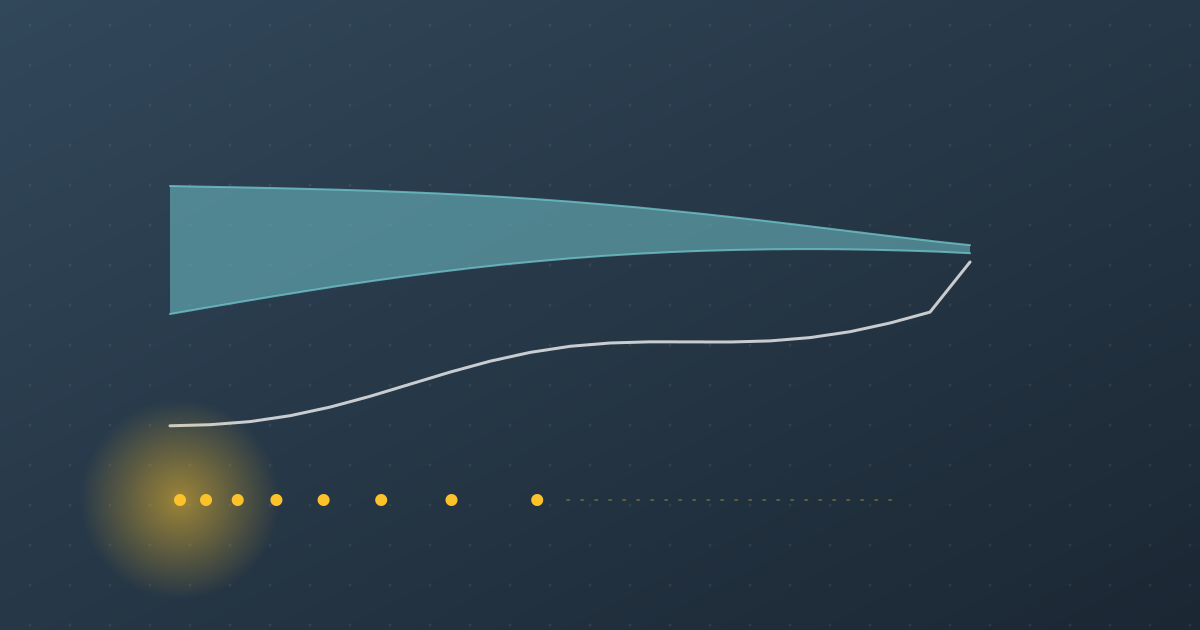
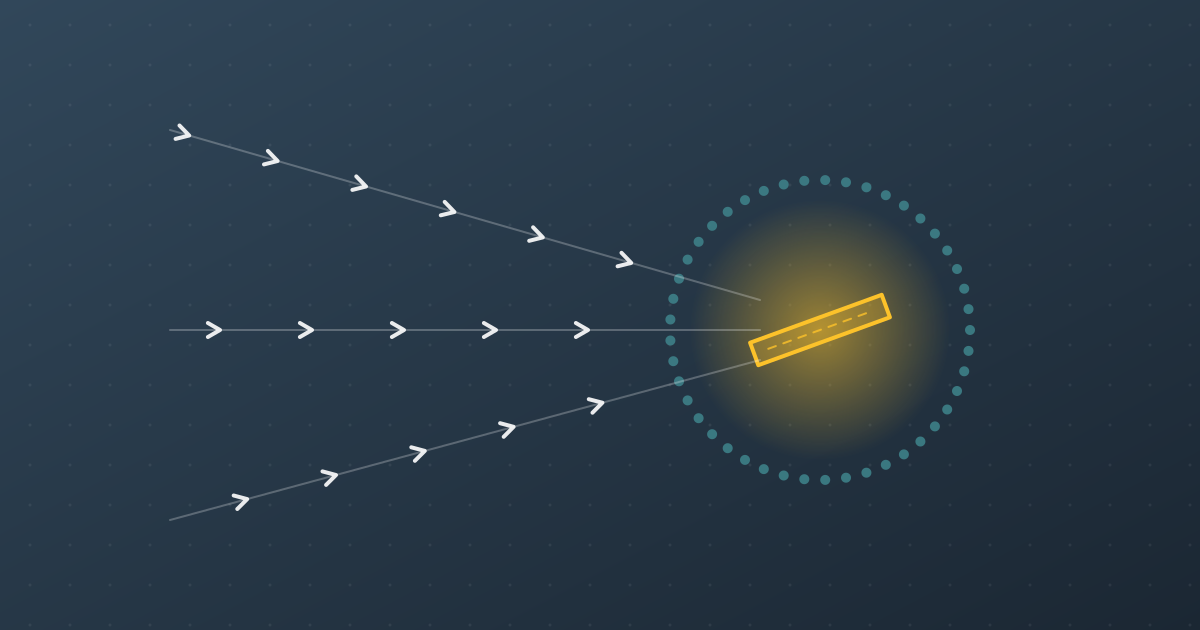
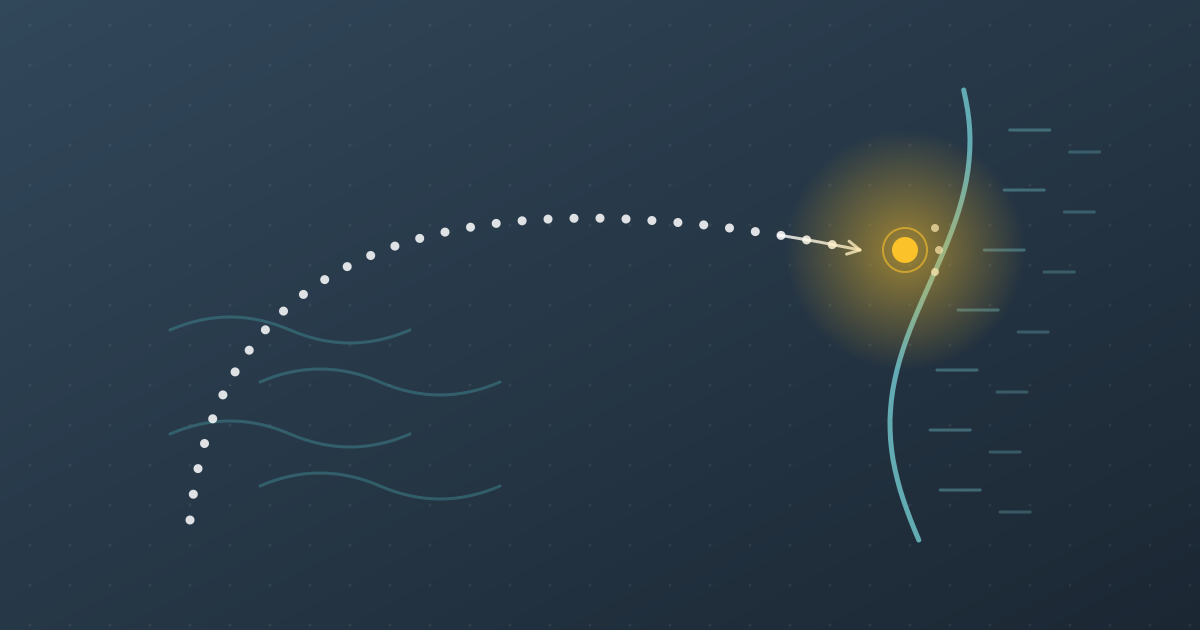
- On the left a teal circle as the depot, on the right a line as the front, and between them a track along which golden dots travel
- The front advances, the track grows longer, the dots arrive less and less often, and the line fades
- Then a mist-blue ring encloses a circle, and golden dots land on it from above at a steady rhythm until the circle shines again and the ring dissolves
How the principle shows up in practice
Napoleon Bonaparte, the Russian campaign
In 1812 tens of thousands of soldiers die before the first major battle because supplies cannot keep up; only a small fraction of the Grande Armée returns.
Nathan Mayer Rothschild, Wellington’s payroll
In 1814 the Rothschild brothers buy up coins across Europe so that Wellington can pay his army, and in doing so lay the foundation for their rise.
The Berlin Airlift
In 1948–49 the Western Allies supply a sealed-off city from the air for almost 11 months and make the blockade ineffective.
How do the necessary things get there?
Get your profile across all 12 groups in about 10 to 15 minutes.
Start the Strategy CheckGroup 2: Forces and Resources
Guiding question: Where do you commit your forces, and how long will they last?
Stage 3 of 5: Choose the path
- TraditionClassical Theory of War
Carl von Clausewitz, Antoine-Henri Jomini, Helmuth von Moltke the Elder, Frederick William Lanchester
- Related principles
Where the 92 principles come from: eight traditions of strategy, from classical war theory to dealing with uncertainty.
More about the originBackground: WEGVISOR’s own selection from the strategy literature · More about the origin