Napoleon Bonaparte, the Russian Campaign and Logistics
In June 1812 Napoleon Bonaparte marches into Russia with hundreds of thousands of soldiers. In the very first weeks, long before the first major battle, tens of thousands die of disease and exhaustion because supplies cannot keep up. In the end, only a small fraction of the Grande Armée returns.
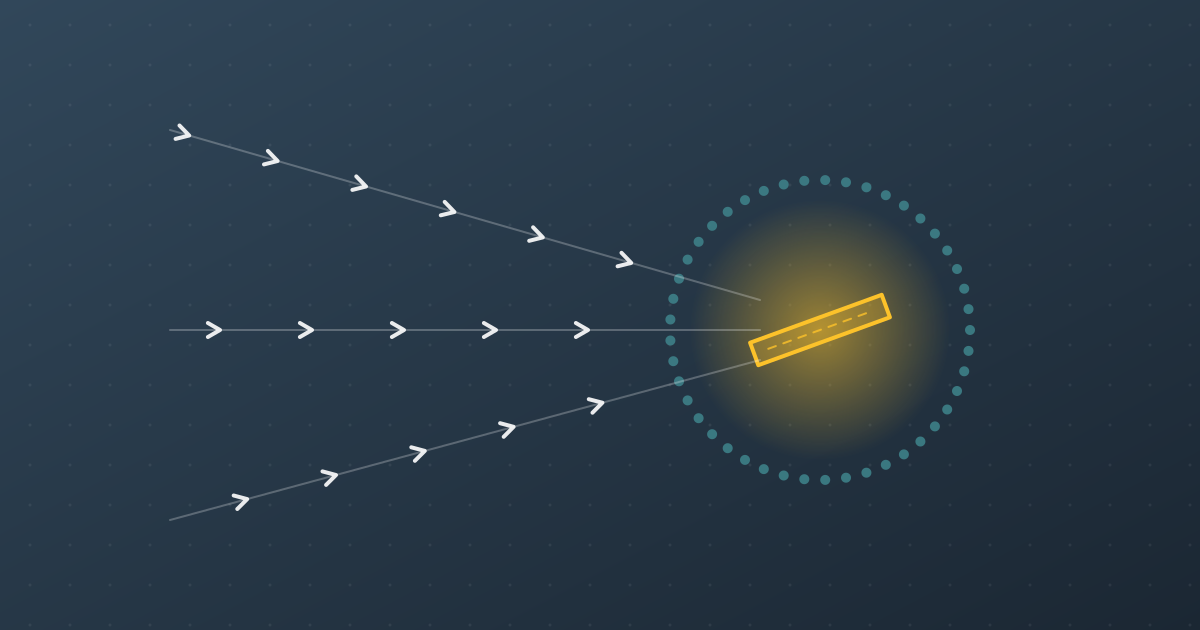
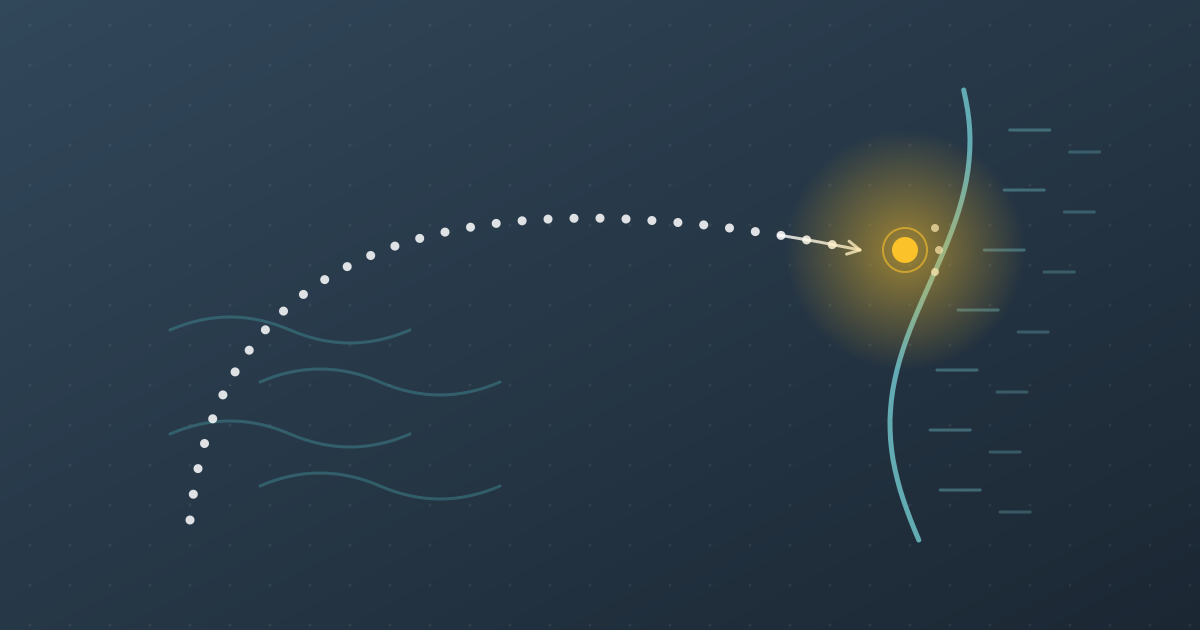
On the left a teal circle as the depot, on the right a line as the front, and between them a track along which golden dots travel; the front advances, the track grows longer, the dots arrive less and less often, and the line fades. Then a mist-blue ring encloses a circle, and golden dots land on it from above at a steady rhythm until the circle shines again and the ring dissolves.
Principle #15
Logistics: What you cannot supply, you cannot sustain; that is why supply sets the limit of every strategy.
3 min read5 sectionsSituationLink to the principle
Contents
In 1977 the Israeli military historian Martin van Creveld wrote a book about how armies are supplied. His basic thesis: what an army can do depends less on plans and the art of command than on whether food, fodder and ammunition arrive where they are needed. The Russian campaign of 1812 is the most famous example of what happens when they do not. It is a counterexample. An example of Logistics.
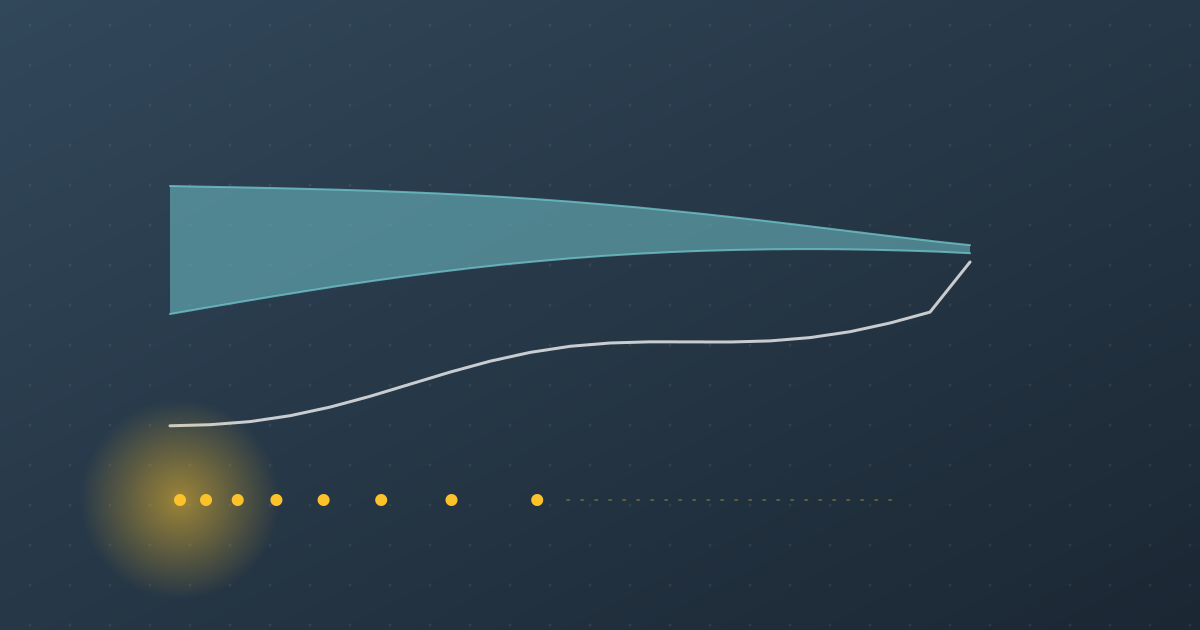
A broad band melts into a thread on its way east, while below it a golden supply line breaks off – as with Napoleon in 1812.
01
The largest army in Europe
Situation
For the campaign against Russia, Napoleon Bonaparte raises an army that numbers about 590,000 men on paper, soldiers from France and from many allied or dependent states of Europe. From June 24 to 26, 1812, depending on the count, between about 300,000 and more than 400,000 soldiers cross the Neman in a first wave, without a declaration of war.
Link to the principle
A large army is not automatically a strong army. The more people and horses, the more have to eat and drink every day. With size, not only fighting power grows but also dependence on supplies.
02
Dying without a battle
Situation
Supplies are inadequate from the start. Horses die in huge numbers: on the way to Vilnius alone, more than 5,000 dead horses are left behind, even though there has not yet been any major fighting. In the first weeks, tens of thousands of soldiers die of dysentery, typhus and exhaustion. The Russian army withdraws and leaves behind a land that has little to offer.
Link to the principle
This is the core of the principle. The army is not losing because the enemy is defeating it but because it cannot sustain itself. Without horses there is no transport, without transport no supply, without supply no healthy soldiers. A logistical shortage sets off a chain reaction that reinforces itself.
03
Borodino and Moscow
Situation
On September 7, 1812, the main armies clash at Borodino. Depending on the source, the battle leaves 70,000 to 80,000 dead and wounded. On September 14 the first French units reach Moscow. The city is set on fire by the Russian side. Napoleon waits in vain for a peace offer from the tsar.
Link to the principle
Moscow is the objective, but it is not a supply base. An army deep in enemy territory must either be able to live off the land or have a secure supply route. Both are missing. Reaching the objective is of no help if you cannot stay there.
04
The retreat
Situation
About a month after entering Moscow, the army, now shrunk to about 100,000 men, leaves the city. The retreat leads through snow and cold, accompanied by hunger, epidemics, frostbite and attacks by Cossacks and peasants. Napoleon himself leaves early for Paris. Of the hundreds of thousands who had set out in the summer, only a small fraction returns.
Link to the principle
Winter is often cited as the main cause. But the army had already shrunk to a fraction of its size before winter. The cold struck a force that had long since ceased to be supplied.
05
What it was not
Situation
Napoleon had prepared more for this campaign than for earlier ones, including large supply depots in the east of his sphere of power. Carl von Clausewitz, who witnessed the 1812 campaign in Russian service, later wrote about it.
Link to the principle
The failure was not due to a lack of planning but to the fact that the planning did not reach reality: distances, roads, weather, fodder for the horses. Logistics is not what you plan but what arrives.
Key takeaways
Key lessons
01
The bigger your venture, the more it depends on supply.
02
Don’t just plan the objective; plan how you can live there, too.
03
Watch for the inconspicuous bottlenecks that set off a chain reaction.
04
Good planning is useless if it doesn’t arrive.
05
Don’t blame a failure on winter if you were already exhausted before it came.
Summary
Napoleon Bonaparte marched into Russia in June 1812 with hundreds of thousands of soldiers. Supplies could not keep up, and horses and soldiers died in the very first weeks, long before the first major battle. Moscow was reached, but it could not feed the army. On the retreat, the Grande Armée was almost completely destroyed. The campaign shows what Martin van Creveld describes as a basic rule: supply limits every strategy.
Martin van Creveld: Supplying War: Logistics from Wallenstein to Patton. Cambridge: Cambridge University Press 1977.
Carl von Clausewitz: Der Feldzug von 1812 in Rußland, der Feldzug von 1813 bis zum Waffenstillstand und der Feldzug von 1814 in Frankreich (Hinterlassene Werke, vol. 7). Berlin: Ferdinand Dümmler 1835 (in German).
Back to the basics
Read what lies behind Logistics: with explanation, animation, video and research.