The principle in detail
Three steps through the principle: grasp it, place it, put it to work. Open each topic on its own.
The core messageCore statement and 3 clarifications
Plans rarely fail because of one big mistake, but because of the sum of many small ones.
- It does not say
- That every failure is friction. If you deliberately set costs too low to push a project through, you are deceiving people.
- It does not say
- That more reserve is always better. Buffers that are too large make you sluggish; the principle calls for a sense of proportion.
- It also says
- After a setback, looking for the one person to blame does little good. You have to understand the sum of the causes.
The explanationThe disruptions don’t just add up; they reinforce one another.
- The disruptions don’t just add up; they reinforce one another.
- One delay uses up reserves that are then missing for the next.
- A misunderstanding at a handover goes unnoticed because everyone assumes the other person checked.
- You cannot abolish friction.
- You can plan room for it, simplify processes and practice.
Where is your plan scheduled so tightly that the very first small disruption will knock it over?
The signs3 signs when you heed it · 3 when you overlook it
- Your schedules contain explicit buffers.
- Processes have few handovers, and whoever hands something over checks that it has arrived.
- After setbacks, you ask which small things came together.
- Plans are scheduled so tightly that there is no room for any disruption.
- Reserves are cut as waste.
- Warnings get lost because they don’t arrive in the prescribed form.
The backgroundTradition T1 Classical Theory of War
- 1832OriginCarl von Clausewitz
On War
- 1979SupplementedDaniel Kahneman and Amos Tversky
Intuitive Prediction: Biases and Corrective Procedures
- 1996SupplementedBarry D. Watts
Clausewitzian Friction and Future War
- 2002SupplementedBent Flyvbjerg, Mette Skamris Holm and Søren Buhl
Underestimating Costs in Public Works Projects: Error or Lie?
- 2003SupplementedBent Flyvbjerg, Nils Bruzelius and Werner Rothengatter
Megaprojects and Risk
- Tradition T1TraditionClassical Theory of War
Carl von Clausewitz, Antoine-Henri Jomini, Helmuth von Moltke the Elder, Frederick William Lanchester
See the tradition on the Origin page
Read more: the full background
From Clausewitz’s “On War” (1832), Book I, Chapter 7, supplemented by Barry D. Watts’s work, Daniel Kahneman and Amos Tversky’s planning fallacy and Bent Flyvbjerg’s research on major projects.
The research5 sources: 2 theories, 1 classic, 1 review, 1 primary study · 1832–2003 · with limitations of the research
- weak
- moderate
- strong
That projects regularly take longer and cost more than planned is well documented; that reserves and simplicity help against this is an inference.
- 1979Daniel Kahneman and Amos Tversky
“Intuitive Prediction: Biases and Corrective Procedures”: Planners regularly underestimate the duration and cost of their projects.
- 1996Barry D. Watts
“Clausewitzian Friction and Future War” (McNair Paper 52): Friction is a built-in feature of combat; new technology does not eliminate it.
- 2002Bent Flyvbjerg, Mette Skamris Holm and Søren Buhl
“Underestimating Costs in Public Works Projects: Error or Lie?”: The costs of public construction projects are often deliberately set too low.
- 2003Bent Flyvbjerg, Nils Bruzelius and Werner Rothengatter
“Megaprojects and Risk”: Major projects worldwide regularly overrun their budgets and schedules.
- Not every failure is friction: where costs are deliberately lowballed to push a project through, that is deception.
- If you call every problem friction, you also excuse avoidable planning errors.
- It is this page, not the research itself, that links Carl von Clausewitz’s friction to the planning fallacy.
Read more: what research shows
Carl von Clausewitz coined the term in the seventh chapter of the first book of “On War.” In war, he writes, everything is very simple, but the simplest thing is difficult; friction is the concept that distinguishes real war from war on paper. In the following chapter, he names habituation to war, meaning experience and practice, as the force that eases it. In 1996, Barry D. Watts showed that modern technology does not eliminate friction either; he describes it as a built-in feature of all combat. In 1979, Daniel Kahneman and Amos Tversky described the planning fallacy: people regularly underestimate how long their projects will take and how much they will cost. Bent Flyvbjerg and his colleagues have documented this for major projects worldwide. That reserves and simple processes absorb friction follows from this, but these studies do not measure it specifically.
The related principles12 Reserve · 19 Fog of Uncertainty · 21 Plan and Adaptation · 24 Simplicity
To go deeper, see 12 Reserve (the buffer that friction eats up) and 24 Simplicity (simple plans give it less to grab onto)
21 Plan and Adaptation shows how you respond when it overtakes the plan
19 Fog of Uncertainty complements it: the fog describes missing knowledge, friction the grinding difficulty of acting
Read more: the full text
To go deeper, see 12 Reserve (the buffer that friction eats up) and 24 Simplicity (simple plans give it less to grab onto); 21 Plan and Adaptation shows how you respond when it overtakes the plan. 19 Fog of Uncertainty complements it: the fog describes missing knowledge, friction the grinding difficulty of acting.
The action steps5 things you can actually do
For every major undertaking, plan a visible reserve of time, money and strength, and justify it instead of hiding it.
- Cut steps and handovers wherever you can: every handover is a point where something can get lost.
Have critical processes rehearsed before it counts.
Set up a simple channel through which warnings reach you, even if they don’t fit any form.
After a setback, don’t ask “Who did it?” but “What came together?” Then change the process.
The reflection questions3 questions: Which of your plans has not a single hour of buffer?
- Which of your plans has not a single hour of buffer?
- At which handover in your area does something regularly get lost?
- When did you last look for someone to blame after a setback instead of the sum of the causes?
Take your time with one question. Write down your answer – or talk it over with someone you trust.
The picture to rememberThe animation once more, with an explanation
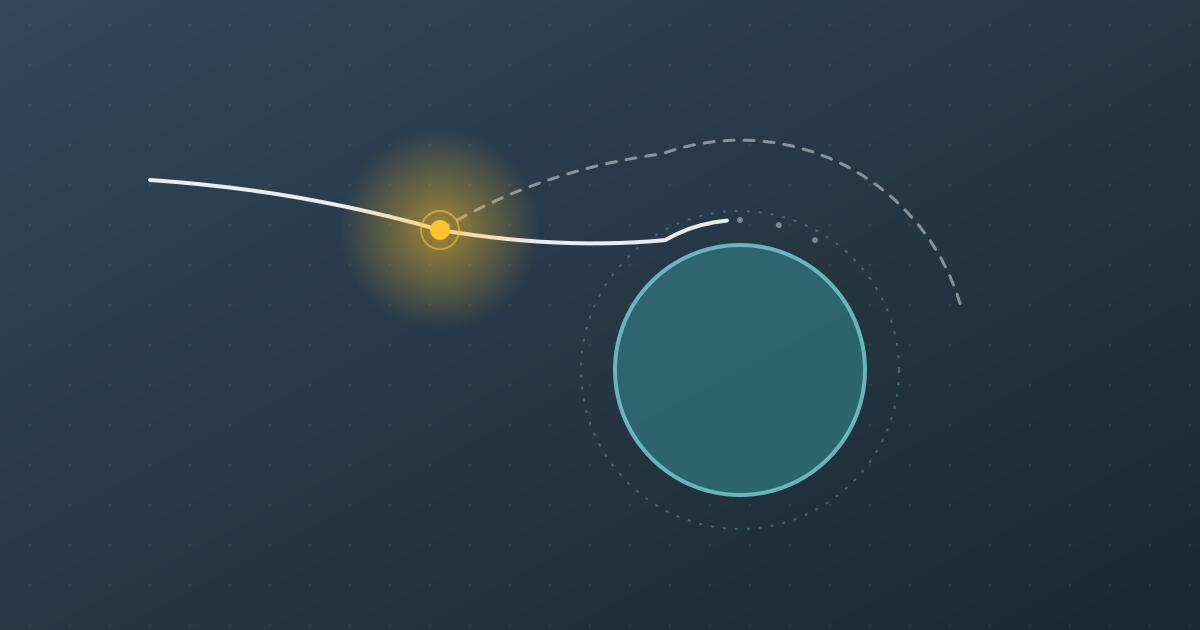
- Golden and teal circles mesh like a chain along a clear line and turn gently
- Then, one after another, small mist-blue dots drop between the circles
- Each slows things down only a little, until the chain almost stops
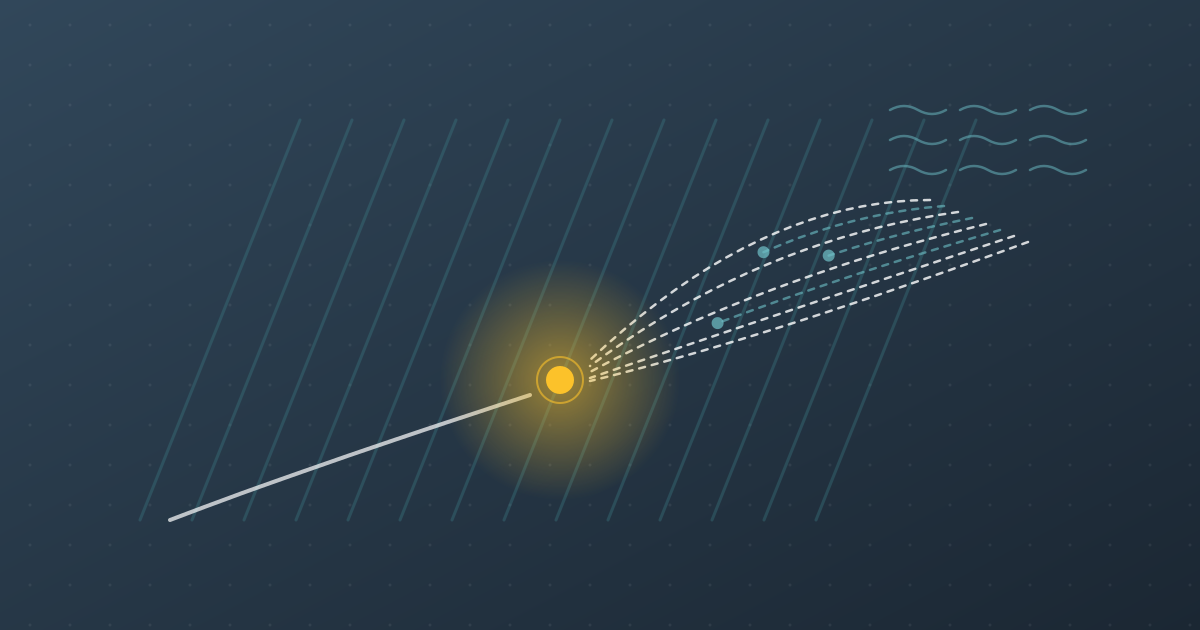
- In the second pass, the chain has fewer circles with more space between them and a golden rim
- The same dots drop, and the circles turn more slowly but keep going
How the principle shows up in practice
Mars Climate Orbiter (1999)
Two teams calculated in different units of measurement, warning signs went unheeded, and the probe came too close to Mars and was lost.
Elbphilharmonie (2007–2017)
Unfinished plans, divided responsibilities and a construction halt led to seven years of delay and many times the original cost.
Operation Eagle Claw (1980)
A sandstorm and technical failures stopped the hostage rescue in Iran, and eight servicemen died during the withdrawal.
Where does your plan lack a buffer?
Get your profile across all 12 groups in about 10 to 15 minutes.
Start the Strategy CheckGroup 3: Knowledge, Uncertainty and Leadership
Guiding question: What do you know, and how do you lead when you don’t know?
Stage 2 of 5: Understand the situation
- TraditionClassical Theory of War
Carl von Clausewitz, Antoine-Henri Jomini, Helmuth von Moltke the Elder, Frederick William Lanchester
- Related principles
Where the 92 principles come from: eight traditions of strategy, from classical war theory to dealing with uncertainty.
More about the originBackground: WEGVISOR’s own selection from the strategy literature · More about the origin