In September 1999, NASA loses its Mars Climate Orbiter probe because two teams calculate in different units of measurement. The error is small, the warning signs are there, and yet no one catches it. This is exactly how Carl von Clausewitz describes friction.
Golden and teal circles mesh like a chain along a clear line and turn gently. Then, one after another, small mist-blue dots drop between the circles; each slows things down only a little, until the chain almost stops. In the second pass, the chain has fewer circles with more space between them and a golden rim; the same dots drop, and the circles turn more slowly but keep going.
Principle #18
Friction: As soon as a plan meets reality, many small disruptions add up to great resistance; that is why wise planners build in reserves of time, money and strength and keep processes as simple as possible.
3 min read5 sectionsSituationLink to the principle
Contents
In “On War,” Carl von Clausewitz writes a sentence that anyone who has ever led a large project will recognize: “Everything in war is very simple, but the simplest thing is difficult.” Many small difficulties pile up until they produce a kind of friction that no one who has not experienced it can imagine. The Mars Climate Orbiter is an almost textbook example from a world famous for its precision.
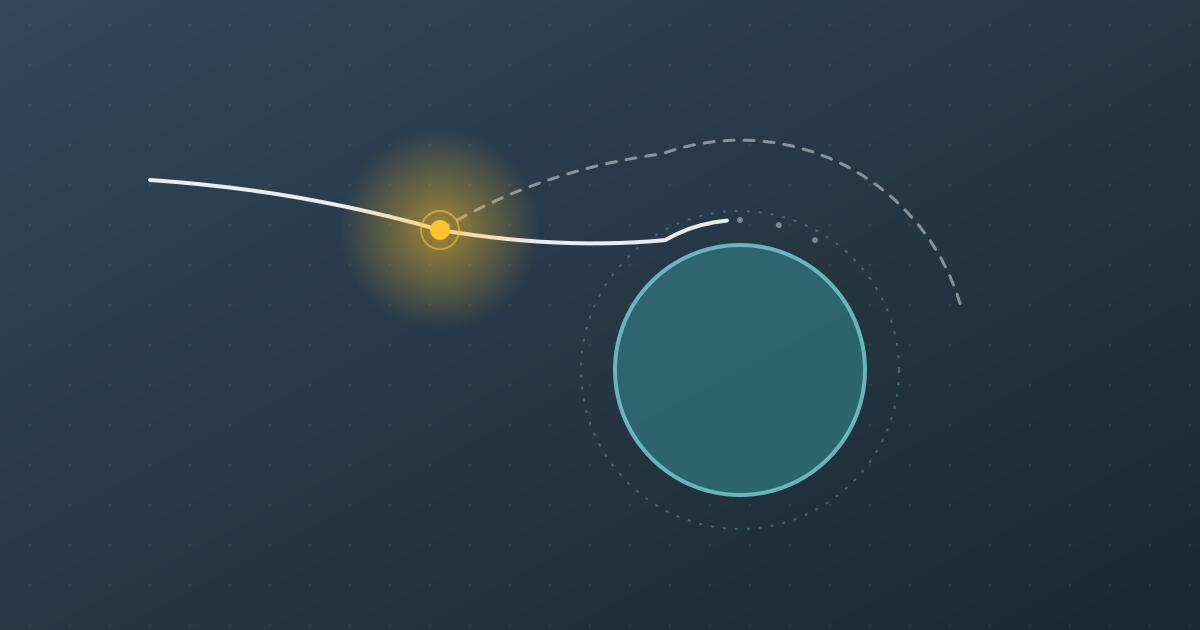
A probe heads for a planet; at a golden point its path veers off and dips too deep – like the Mars Climate Orbiter.
01
A probe for the climate of Mars
Situation
On December 11, 1998, the Mars Climate Orbiter lifts off from Cape Canaveral on a Delta II rocket. The probe, weighing about 638 kilograms, is to study the atmosphere, climate and surface of Mars and relay data from the later Mars Polar Lander to Earth. It was built by Lockheed Martin Astronautics in Colorado; navigation is handled by NASA’s Jet Propulsion Laboratory in California. The mission costs a total of about $327.6 million.
Link to the principle
The division of labor alone carries friction. Two organizations in two locations are working on a system that only functions as a whole. Every interface is a point where something can get lost.
02
Two teams, two systems of measurement
Situation
A piece of ground software from Lockheed Martin calculates the effect of small thruster firings and outputs it in English units, in pound-force seconds. The interface specification calls for metric units, newton-seconds. NASA’s navigation software expects exactly those. The difference is a factor of 4.45.
Link to the principle
The error is trivial. Any engineer would have spotted it at once on paper. In the reality of a project lasting months with many people involved, it goes unnoticed. Friction is rarely a big failure; mostly it is a small thing that gets stuck in the works.
03
Warning signs along the way
Situation
During the nine-month flight, the small errors add up with every thruster firing. At least two navigators notice discrepancies in the probe’s position. Their concerns are not followed up, partly because they are not documented in the prescribed form. An additional course correction agreed on in a meeting is not carried out.
Link to the principle
This shows how friction grows. A single discrepancy is harmless. But when formal requirements and a skipped correction are added, the small things reinforce one another. Clausewitz speaks of movement in a resistant medium, like walking in water.
04
September 23, 1999
Situation
When entering orbit, the probe is supposed to pass Mars at an altitude of about 226 kilometers. The minimum altitude it can survive is considered to be 80 kilometers. Later calculations show that it came as close as about 57 kilometers. Contact is lost on September 23, 1999, and two days later the mission is declared lost.
Link to the principle
The end comes within minutes; the cause lies months back. That is typical of friction: it works quietly and for a long time before it becomes visible. If you only react when something blows up, you have no reserve left.
05
Not the error but the system
Situation
On November 10, 1999, the investigation board presents its first report. In addition to the mix-up of units, it cites, among other things, gaps in reviews and tests, concerns that were ignored and the skipped course correction. Edward Weiler, NASA’s head of space science, explains in essence that the real problem was not the error itself but the failure of NASA’s systems engineering and of the review processes that should have caught it.
Link to the principle
Friction cannot be abolished. Mistakes happen. That is why good leadership builds in reviews, buffers and open channels through which warnings arrive even when they don’t fit the form.
Key takeaways
Key lessons
01
Be prepared for the simple things in particular to go wrong.
02
Double-check every interface between teams.
03
Take warnings seriously, even if they don’t come in the prescribed form.
04
Make sure that agreed corrections are actually carried out.
05
Build in reviews and reserves before you need them.
Summary
The Mars Climate Orbiter was lost because software delivered pound-force seconds where newton-seconds were expected. The error was small, there were warning signs, and yet interfaces, formal requirements and a skipped course correction added up to a total loss. This is exactly what Carl von Clausewitz means by friction: many small things, each harmless on its own, together cause a simple plan to fail.