“Zero Dark Thirty” tells the story of the CIA’s years-long hunt for Osama bin Laden from the point of view of an analyst. The film shows how laboriously foreknowledge is built: from a name, many dead ends and a certainty that in the end is only a probability.
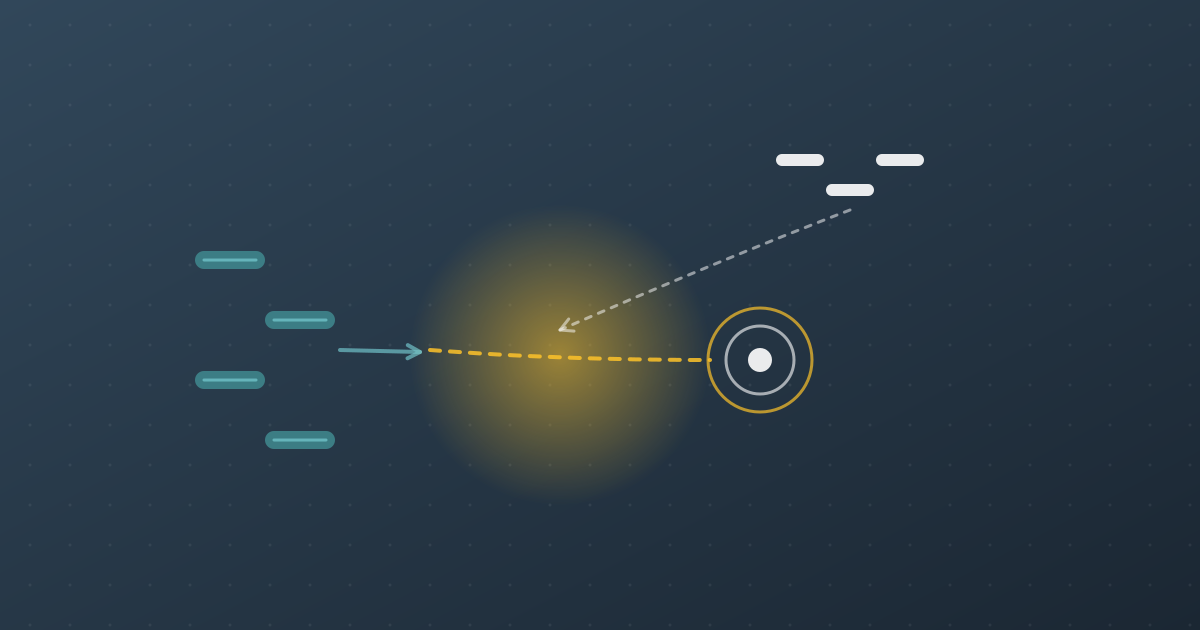
A golden circle draws teal lines around itself on every side like walls and grows paler as it does, while behind a mist-blue frame a dot can only be guessed at as a shadow. A small golden point of light travels across from the other side and points to one spot with an arc; the circle releases the other lines, places a single golden line there, and the shadow dot runs into it at exactly that spot.
Principle #17
Foreknowledge: If you know early and reliably what the other side intends, you can act before it does; that is why good knowledge is often worth more than additional strength.
3 min read5 sectionsSituationLink to the principle
Contents
In spy films, foreknowledge often appears as a sudden flash of insight. “Zero Dark Thirty” shows the opposite: 10 years of painstaking work, errors and disputes over the right interpretation. Kathryn Bigelow directed, and Mark Boal wrote the screenplay. Jessica Chastain plays the lead, the analyst Maya, a fictional character with real-life models. The film opened in U.S. theaters in December 2012 and received five Oscar nominations. It is based on real events but tells them with artistic license.
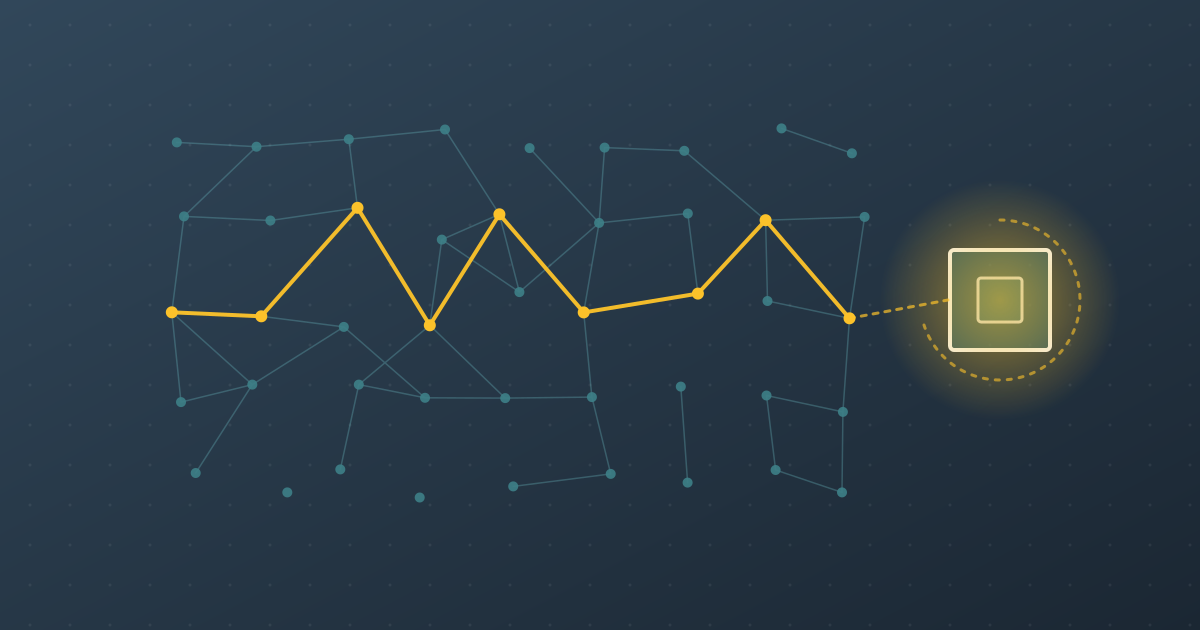
In a web of trails and dead ends, a golden chain leads from point to point to a walled compound – as in “Zero Dark Thirty.”
01
A name as a lead
Situation
The film begins after the attacks of September 11, 2001. In 2003, Maya, a young CIA analyst, takes part in interrogations of prisoners at a secret prison. One prisoner names a courier who is said to work for Osama bin Laden: Abu Ahmed al-Kuwaiti. For Maya, this name becomes the lead she follows for the next several years.
Link to the principle
Sun Tzu says that foreknowledge comes from people who know the other side’s situation. The film follows this logic: the key is not technology but a person close to the enemy. The search for bin Laden becomes a search for the person who sees him every day.
02
Years without a breakthrough
Situation
The trail goes cold. Other leads go nowhere. In 2009, a supposed informant from al-Qaeda’s inner circle turns out to be a suicide bomber and kills several CIA officers, including one of Maya’s colleagues. For a while, the courier is even believed to be dead.
Link to the principle
Foreknowledge is fragile. False sources can be deadly, and if you hope too much for a quick breakthrough, you become vulnerable. The film shows that intelligence work also means scrutinizing sources critically.
03
From the name to the house
Situation
Maya’s team finds out the courier’s real name. They track his phone calls and his car to a large walled compound in Abbottabad, Pakistan.
Link to the principle
This shows how foreknowledge is built up: one small piece of knowledge leads to the next. The name leads to the person, the person to the car, the car to the house. Each step has to be checked before you build on it.
04
Probability instead of certainty
Situation
Whether bin Laden really lives in the house cannot be proven. In a meeting, CIA officers put the probability at between 60% and 80%. Maya says 100%. In the end, the operation is approved. On the night of May 2, 2011, a unit of Navy SEALs storms the compound and kills bin Laden.
Link to the principle
Even the best foreknowledge remains incomplete. At some point someone has to decide whether it is enough. The film shows the tension between the analyst who has followed the trail for years and the superiors who bear the risk. Foreknowledge does not replace the decision; it only makes it easier to justify.
05
A contested picture of the truth
Situation
After the film’s release, journalists and several U.S. senators, including John McCain and Dianne Feinstein, criticize it for creating the impression that torture played a decisive role in finding bin Laden. Michael Morell, then acting director of the CIA, writes to the agency’s staff that the film creates a false impression of the harsh interrogation methods. Bigelow and Boal reject the charge that the film glorifies torture.
Link to the principle
The debate touches on an old question of intelligence work: How reliable is knowledge obtained under coercion? The answer has long been disputed. Foreknowledge is only as good as the way it was obtained.
Key takeaways
Key lessons
01
Be prepared for good knowledge to take years.
02
Check every source, especially the one that seems too good to be true.
03
Build knowledge step by step and check each step.
04
Accept that in the end you decide on the basis of probabilities.
05
Ask how your knowledge was obtained, not just what it says.
Summary
“Zero Dark Thirty” shows foreknowledge as hard work. Over the years, a courier’s name becomes a trail that leads to a house in Abbottabad. Dead ends, false sources and doubt are part of it. In the end there is no certainty, only a probability on which a decision is made. The debate over the torture scenes is a reminder that the origin of knowledge matters, too.