In June 1942, the U.S. Navy is waiting for the Japanese fleet at Midway because its codebreakers have decrypted the attack plan. The numerically inferior American side sinks four Japanese aircraft carriers. Here, foreknowledge makes up for missing strength.
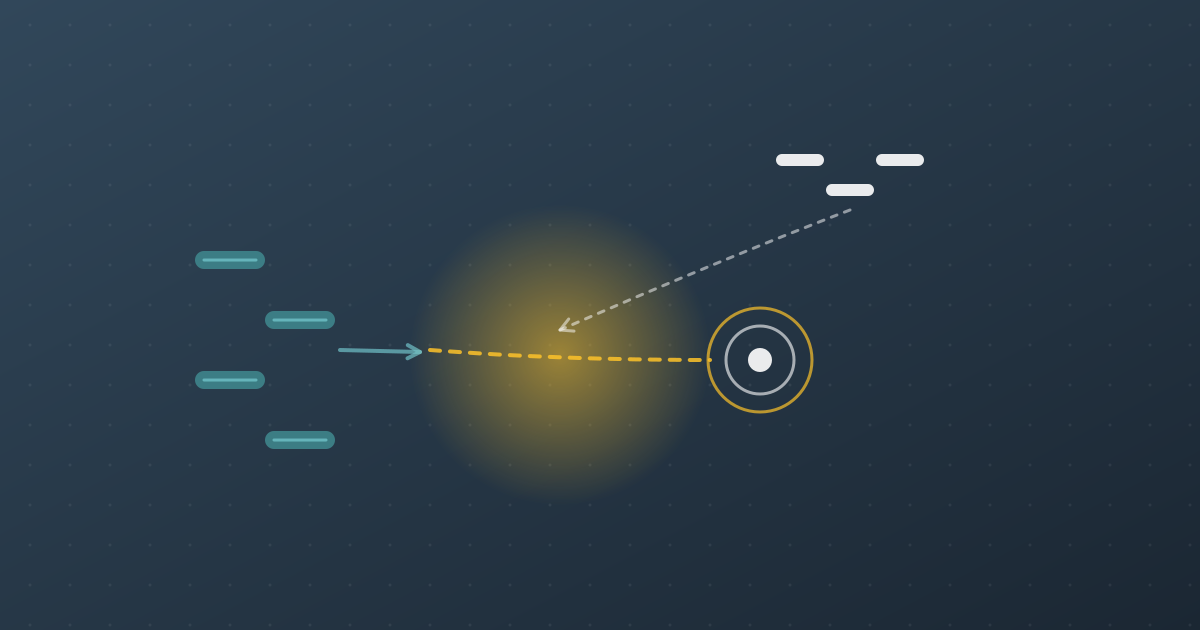
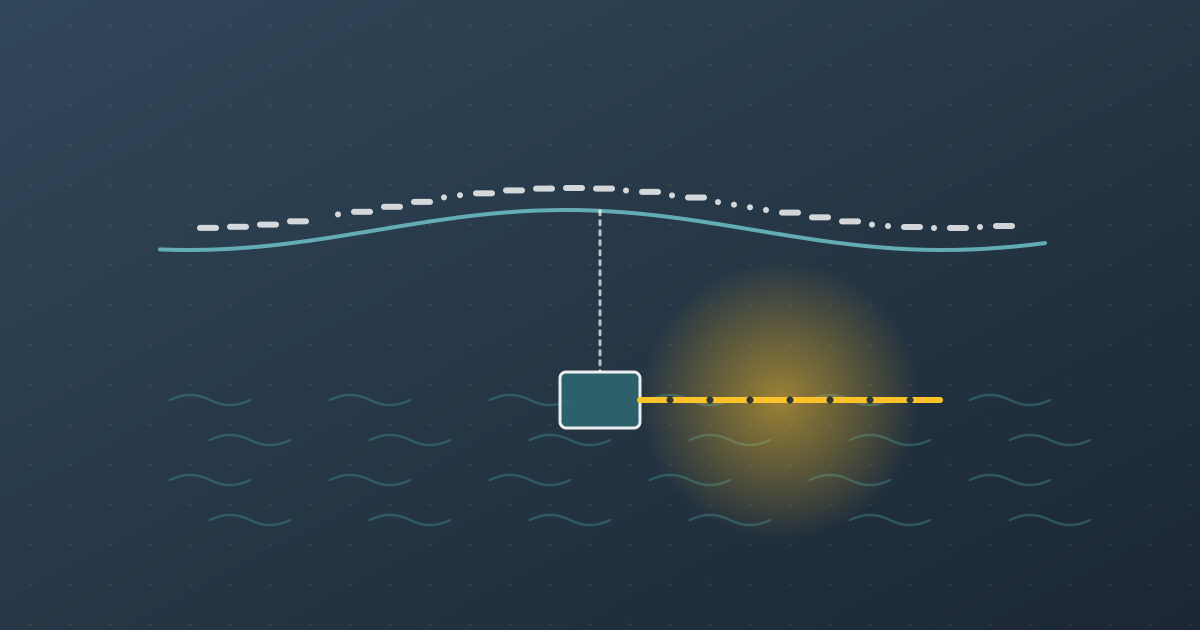
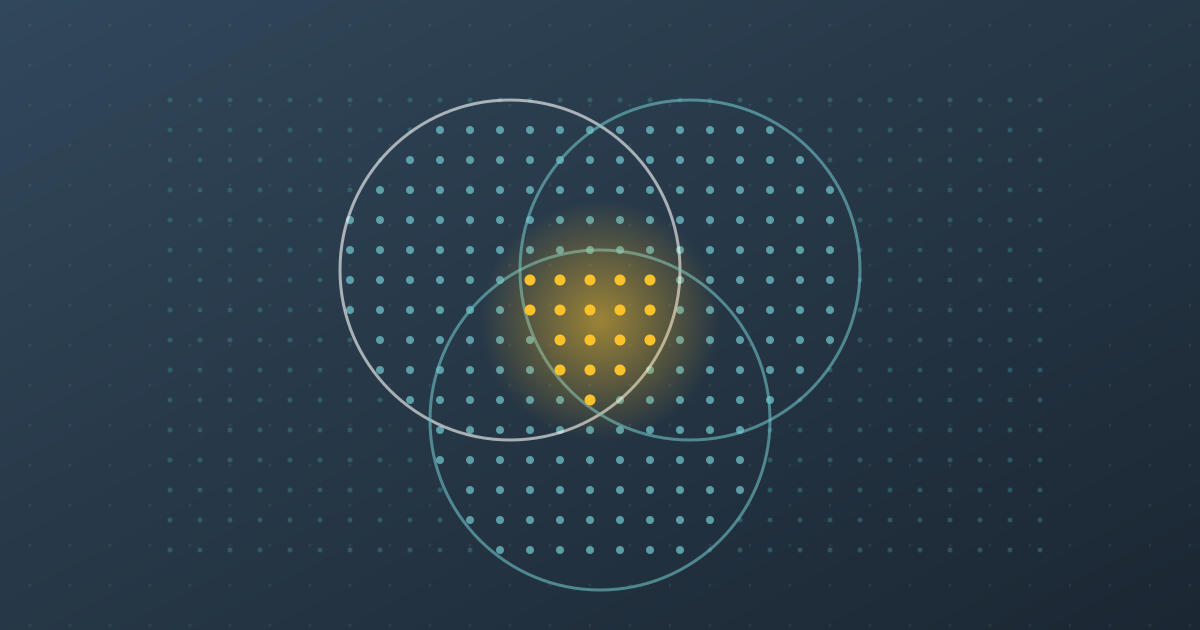
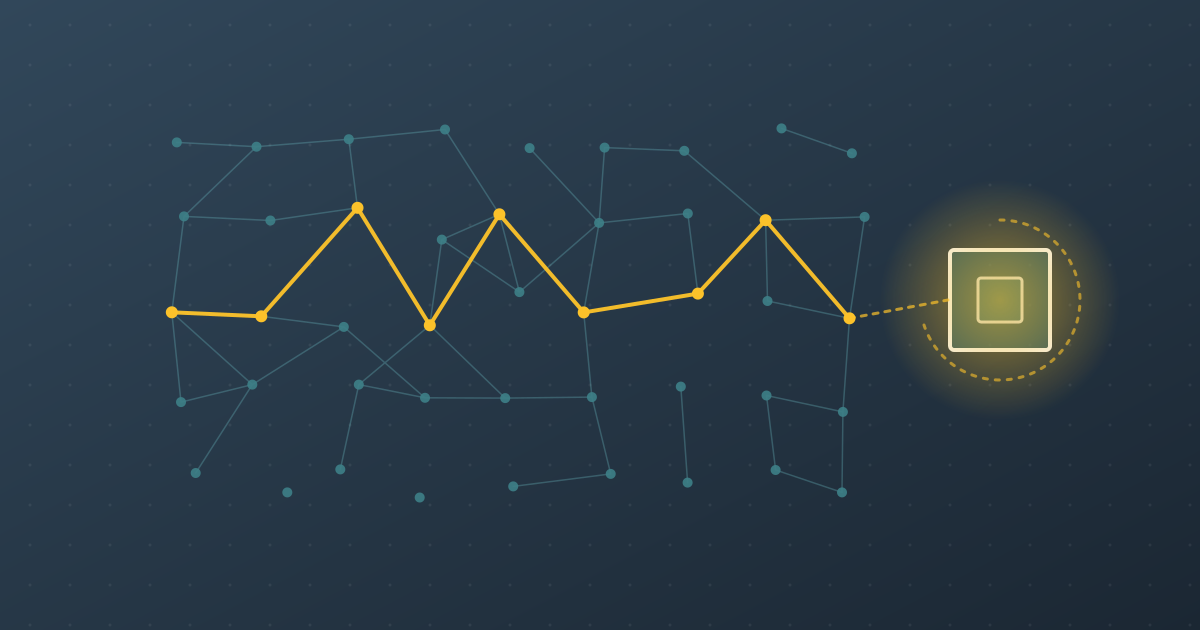
A golden circle draws teal lines around itself on every side like walls and grows paler as it does, while behind a mist-blue frame a dot can only be guessed at as a shadow. A small golden point of light travels across from the other side and points to one spot with an arc; the circle releases the other lines, places a single golden line there, and the shadow dot runs into it at exactly that spot.
Principle #17
Foreknowledge: If you know early and reliably what the other side intends, you can act before it does; that is why good knowledge is often worth more than additional strength.
3 min read5 sectionsSituationLink to the principle
Contents
Half a year after Pearl Harbor, the American Pacific Fleet is weakened. Japan has more aircraft carriers and more experienced pilots. What the United States has is knowledge: its cryptologists can read parts of Japanese radio traffic. The Battle of Midway shows how foreknowledge can put a weaker side in the better position, and how much still depends on luck.
Four large ships head for an island, their course already traced in gold, while a smaller fleet waits on the flank – as at Midway.
01
A broken code
Situation
By spring 1942, U.S. Navy cryptologists have broken the most important Japanese naval code, JN-25, far enough to read fragments of radio traffic. As early as May, the decrypted messages help detect a Japanese thrust into the Coral Sea. The battle there, from May 4 to 8, 1942, slows Japan’s advance toward Australia.
Link to the principle
Foreknowledge grows out of groundwork. The codebreakers worked on fragments for months before their knowledge paid off. Sun Tzu stresses that no expense for good intelligence is too great, because it prevents battles or decides them.
02
Who is AF?
Situation
A target with the code “AF” appears in Japanese radio messages. Commander Joseph Rochefort, head of the radio intelligence unit at Pearl Harbor, suspects it is Midway. To make sure, his team has the garrison on Midway send an unencrypted message in May: the water purification plant has broken down and drinking water is running short. Shortly afterward, the Navy intercepts a Japanese radio message reporting that “AF” is short of water.
Link to the principle
Assumptions are not enough when an entire fleet is at stake. Rochefort tests his assumption with a targeted trial. Good foreknowledge is not only gathered but confirmed.
03
Nimitz bets everything on the knowledge
Situation
Admiral Chester W. Nimitz, Commander in Chief of the Pacific Fleet, reinforces Midway with Marines, anti-aircraft guns and aircraft. He has the carrier Yorktown, damaged in the Coral Sea, patched up in about three days. He sends the task forces under Raymond A. Spruance and Frank Jack Fletcher to a rendezvous point about 325 miles northeast of the atoll to strike the Japanese from the flank.
Link to the principle
Nimitz acts decisively on the basis of his knowledge. He brings his three carriers exactly where they are needed instead of spreading them out to be safe. Foreknowledge only helps those who are prepared to bet on it.
04
June 4, 1942
Situation
On the morning of June 4, Japanese aircraft attack Midway. The Americans strike back from their carriers. The first torpedo bombers suffer heavy losses. Then dive bombers from the Enterprise find the Japanese carriers, partly because they follow a Japanese destroyer. By the next day, the Akagi, Kaga, Soryu and Hiryu have sunk. The United States loses the Yorktown, which sinks on June 7 after a submarine attack, and the destroyer Hammann.
Link to the principle
The knowledge puts the Americans in the right position. The outcome is then decided by courage, sacrifice and chance. Foreknowledge gives you the chance, but not the victory.
05
Brilliant and lucky
Situation
In an article for Naval History magazine, the historian Donald M. Goldstein calls the American victory both brilliant and lucky. Japan, he writes, pursued an overly complicated plan, split up its forces and underestimated its opponent. At the same time, Goldstein highlights the codebreakers: their findings helped confirm Midway as the target and allowed Nimitz to bring his carriers onto Japan’s flank.
Link to the principle
Midway shows both sides of the principle. The United States knew what Japan was planning. Japan did not know that the United States knew, and did not expect American carriers nearby. A lead in knowledge works twice over when the other side feels safe.
Key takeaways
Key lessons
01
Invest in intelligence before you urgently need it.
02
Test an important assumption with a targeted trial.
03
Commit your forces decisively where your knowledge points them.
04
Still expect chance and losses.
05
Strengthen your lead by not revealing to the other side what you know.
Summary
In June 1942, the U.S. Navy in the Pacific was weaker than the Japanese. Because its cryptologists could partly read the JN-25 code and Rochefort used a trick to confirm the target “AF” as Midway, Admiral Nimitz was waiting with three carriers in the right place. Japan lost four aircraft carriers. The victory also depended on luck and a willingness to make sacrifices, but without the foreknowledge this battle would not have happened the way it did.