The principle in detail
Three steps through the principle: grasp it, place it, put it to work. Open each topic on its own.
The core messageCore statement and 3 clarifications
All three forces belong in the calculation. If you consider one of them the only true one, your plans will miss reality.
- It does not say
- That feelings are irrational and should therefore be ignored. They are a force in their own right that you have to reckon with.
- It does not say
- That you should surrender to moods or to fate. You keep the purpose in view.
- It also says
- The three forces cannot be neatly assigned to particular people, for example passion to the workforce and reason to management.
The explanationHow the principle works and what matters
When you plan, it is easy to see only reason. When you are in the middle of a conflict, you often see only passion, and when you look back, you put everything down to good or bad luck. The principle forces you to ask all three questions: What do we want to achieve? What do the people involved feel? What could get in the way?
The signs2 signs when you heed it · 3 when you overlook it
- Alongside numbers and goals, your planning also includes the mood of the people involved and a plan B. Before important steps, you ask who might feel passed over.
- After an outcome, you ask what share intention, emotion and chance had in it.
- You persuade with arguments and are surprised by resistance.
- The unforeseen hits you with no reserve.
- You credit successes to your plan and blame failures on bad luck.
The backgroundTradition T1 Classical Theory of War
- 1832OriginCarl von Clausewitz
On War
- 1992SupplementedAlan D. Beyerchen
Clausewitz, Nonlinearity, and the Unpredictability of War
- 1995SupplementedEdward J. Villacres and Christopher Bassford
Reclaiming the Clausewitzian Trinity
- Tradition T1TraditionClassical Theory of War
Carl von Clausewitz, Antoine-Henri Jomini, Helmuth von Moltke the Elder, Frederick William Lanchester
See the tradition on the Origin page
Read more: the full background
From Clausewitz’s “On War” (1832), Book I, Chapter 1, supplemented by the interpretations of Edward J. Villacres and Christopher Bassford and of Alan D. Beyerchen.
The research4 sources: 3 theories, 1 classic · 1832–1995 · with limitations of the research
- weak
- moderate
- strong
A classical theory and its interpretations, not a measurement; that overlooking one force leads to miscalculation is Carl von Clausewitz’s conclusion and has not been tested.
- 1991Martin van Creveld
“The Transformation of War”: considers the trinity outdated because many wars are no longer fought between states.
- 1992Alan D. Beyerchen
“Clausewitz, Nonlinearity, and the Unpredictability of War”: Balancing between three points of attraction resembles a pendulum between three magnets, whose path cannot be predicted.
- 1995Edward J. Villacres and Christopher Bassford
“Reclaiming the Clausewitzian Trinity”: The trinity consists of passion, chance and reason; the people, the army and the government are a derived level.
In 1991, Martin van Creveld considered the trinity outdated because many conflicts are no longer fought between states with a government, an army and a people; his criticism applies mainly to the derived level, not to the three basic forces. Applying the idea to companies, families or churches is an analogy: there, passion means not hatred but emotion and drive.
Read more: what research shows
The term appears at the end of the first chapter of Book I of “On War,” the only chapter Carl von Clausewitz considered finished. War, he writes, is a paradoxical trinity made up of primordial violence with hatred and enmity, of the play of probabilities and chance, and of its nature as an instrument of policy, which subjects it to reason. A theory that disregarded any one of these sides would immediately conflict with reality. In 1995, Edward J. Villacres and Christopher Bassford offered a new reading: the actual trinity consists of these three forces, while the assignment to the people, the army and the government is only a derived level. Alan D. Beyerchen compared this balancing act between three points of attraction to a pendulum swinging between three magnets, whose path cannot be predicted.
The related principles01 Primacy of Purpose · 19 Fog of Uncertainty · 46 Moral Forces · 86 Unintended Consequences
To go deeper, see 01 Primacy of Purpose (reason ties the conflict to a purpose) and 46 Moral Forces (passion as the source of moral forces)
19 Fog of Uncertainty shows why chance never lets the situation become entirely clear
86 Unintended Consequences takes it further: where the three forces interact, outcomes arise that no one intended
Read more: the full text
To go deeper, see 01 Primacy of Purpose (reason ties the conflict to a purpose) and 46 Moral Forces (passion as the source of moral forces); 19 Fog of Uncertainty shows why chance never lets the situation become entirely clear. 86 Unintended Consequences takes it further: where the three forces interact, outcomes arise that no one intended.
The action steps5 things you can actually do
- For every undertaking, draw three columns on one page: purpose and path, the feelings of those involved, possible incidents.
- Plan for passion as concretely as for the substance: conversations, involvement, time for objections.
Set aside reserves and a plan B for chance, and watch out for the opportunities it offers.
As things unfold, check which force is currently growing stronger, and shift your attention accordingly.
- Evaluate outcomes separately: What was due to the planning, what to the mood, what to chance?
The reflection questions3 questions: Which of the three forces do you most often leave out of your planning?
- Which of the three forces do you most often leave out of your planning?
- When did you last try to persuade with good reasons, and who felt unseen in the process?
- What do you blame your failures on: other people, bad luck or your plan?
Take your time with one question. Write down your answer – or talk it over with someone you trust.
The picture to rememberThe animation once more, with an explanation
- Three dots in teal and mist-blue form the corners of a triangle
- In the middle, a golden circle hangs from a fine line and swings, drawn now toward one corner, now toward another, its path never tracing the same line twice
- Then one corner fades, a straight line shows the planned route, and the golden circle still veers off, because the faded corner keeps pulling
How the principle shows up in practice
The Miracle of Bern, 1954
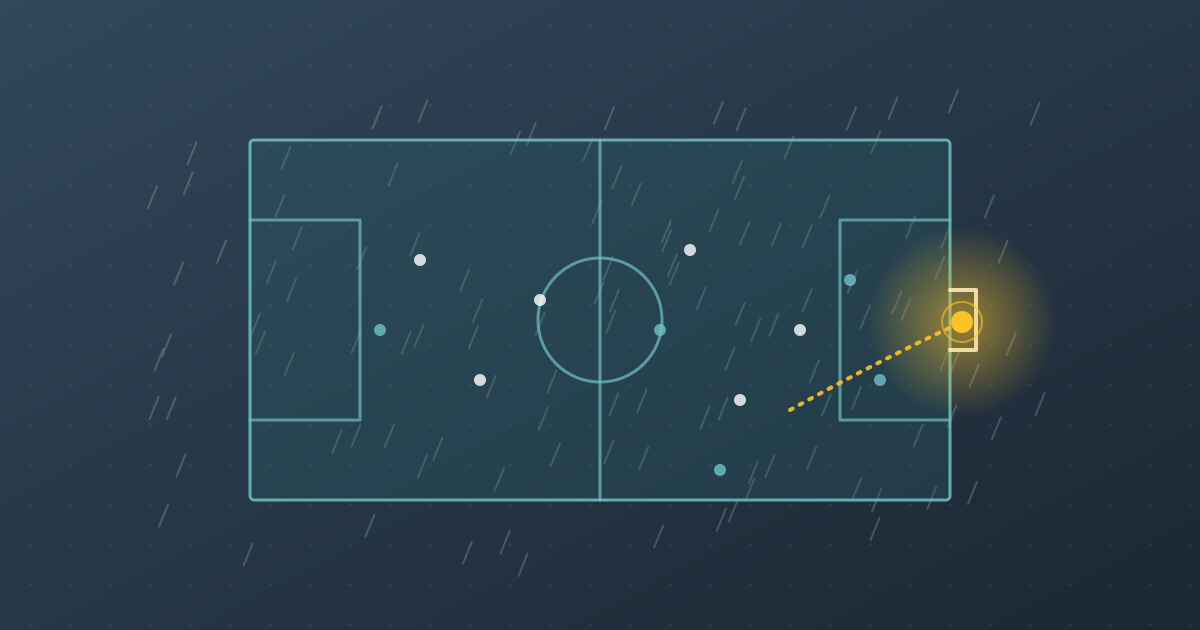
Herberger’s calculation, the rain and the fighting spirit after going 2–0 down together decide the World Cup final against Hungary.
GameStop, 2021
Hedge funds account for reason and overlook the passion of hundreds of thousands of retail investors and the play of probabilities.
Brexit referendum, 2016
David Cameron relies on calculation and economic arguments and underestimates passion and chance.
Which force is missing from your calculation?
Get your profile across all 12 groups in about 10 to 15 minutes.
Start the Strategy CheckGroup 3: Knowledge, Uncertainty and Leadership
Guiding question: What do you know, and how do you lead when you don’t know?
Stage 2 of 5: Understand the situation
- TraditionClassical Theory of War
Carl von Clausewitz, Antoine-Henri Jomini, Helmuth von Moltke the Elder, Frederick William Lanchester
- Related principles
Where the 92 principles come from: eight traditions of strategy, from classical war theory to dealing with uncertainty.
More about the originBackground: WEGVISOR’s own selection from the strategy literature · More about the origin