Contents
In financial markets, reason is considered the highest authority. Analysts value companies, funds calculate risks, and prices are supposed to reflect value. The GameStop case shows what happens when the other two forces of Carl von Clausewitz’s paradoxical trinity suddenly come into play: the passion of many people and the play of chance.
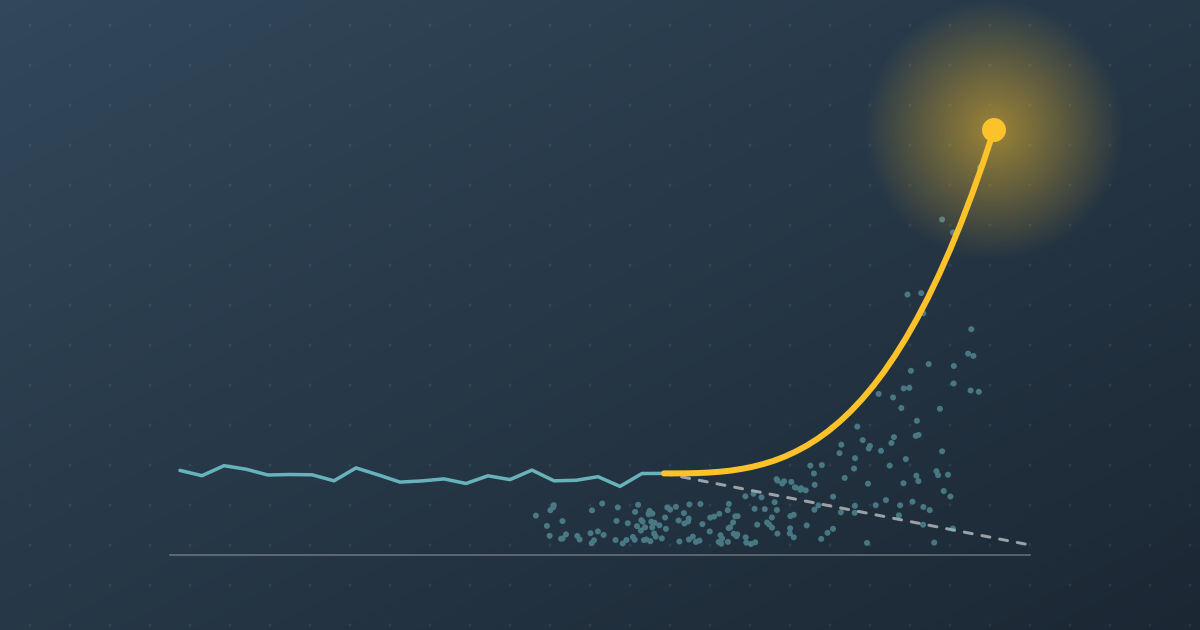
A bet on decline
Situation
GameStop sells video games in brick-and-mortar stores. With the shift to digital downloads, its business comes under pressure. Several hedge funds therefore bet on a falling share price, among them Melvin Capital. They borrow shares, sell them and plan to buy them back later at a lower price. In January 2021, at times around 140% of GameStop’s freely tradable shares are sold short, that is, more shares than are freely traded.
Link to the principle
The bet is a decision of reason. It is based on a sober analysis: the business model is shrinking, so the share price should fall. But it has a weak point. If the price rises, the short sellers have to buy back at a high price, and their buying drives the price up further.
A forum discovers an opportunity
Situation
In the Reddit forum r/wallstreetbets, retail investors exchange ideas. One of them, Keith Gill, who posts there under a pseudonym, has been buying GameStop shares since September 2019 and documenting his position publicly. On January 11, 2021, the entrepreneur Ryan Cohen, who holds about 9% of GameStop, is appointed to the board of directors. Within a few weeks, the forum grows by about half a million to more than 2.5 million members, and by the end of January to around 6 million.
Link to the principle
Now passion comes into play. Many forum members buy not only because they expect a profit. They want to show the big funds, they cheer each other on, and they hold on to their shares demonstratively. This energy cannot be captured in any valuation model. Clausewitz assigns passion to the people; here it is a mass of individuals.
The share price explodes
Situation
On Friday, January 22, 2021, the stock closes at around $65 (all prices before the 2022 stock split). The following Tuesday it is just under $148, and on Wednesday it rises in premarket trading to around $228. On January 28, it briefly reaches almost $483 during the trading session. By January 22, Melvin Capital has already lost almost 30%. The funds Citadel and Point72 inject a combined $2.75 billion.
Link to the principle
Here chance is at work, or, more precisely, the play of probabilities. A short position that has grown too large, a forum that grows at the right moment, public statements by well-known figures that attract additional buyers. None of these factors was decisive on its own. Together they set off a chain reaction that no one could predict precisely.
The brake
Situation
On January 28, several trading platforms, including Robinhood, restrict purchases of GameStop shares. They point to higher collateral requirements they have to meet at their clearinghouses. The share price collapses. In February 2021, a committee of the U.S. Congress looks into the events, hearing among others from Keith Gill and the head of Melvin Capital, Gabe Plotkin.
Link to the principle
Now the third force returns: reason in the form of rules, institutions and politics. It does not stop the movement completely, but it changes it. Those who had looked only at the forum’s passion overlooked this side just as the funds had earlier overlooked the passion.
Who won
Situation
Some early buyers make enormous profits; on January 27, Gill’s position is worth about $48 million. Many who got in late, by contrast, lose money. In May 2022, Melvin Capital announces that it will wind down its funds.
Link to the principle
None of the three forces won on its own. Passion drove the price, chance made the chain reaction possible, and the reason of institutions limited it. If you act in such an environment, you have to keep all three in view.
Key takeaways
Key lessons
- A good model accounts for feelings, too, not just for numbers.
- Check where your position becomes vulnerable if others act differently than expected.
- Don’t underestimate what an enthusiastic group can set off.
- Be prepared for rules and institutions to intervene.
- If you jump on a wave too late, you bear the greatest risk.
Summary
In January 2021, hedge funds used sober reason to bet on GameStop’s decline. They overlooked the passion of hundreds of thousands of retail investors and the play of probabilities that turned an oversized short position into a chain reaction. In the end, rules and institutions intervened. The case shows the paradoxical trinity in a market that thought of itself as purely rational.
Sources
- Carl von Clausewitz: Vom Kriege (in German). Berlin: Ferdinand Dümmler 1832–1834, Book I, Chapter 1.