The principle in detail
Three steps through the principle: grasp it, place it, put it to work. Open each topic on its own.
The core messageCore statement and 3 clarifications
Every targeted action meets people and systems that react. The side effects are part of the action.
- It does not say
- That you are better off doing nothing. Inaction has consequences too, and you are responsible for them as well.
- It does not say
- That every reform achieves the opposite of what it intends. Anyone who claims that across the board is using the principle as a brake.
- It also says
- Side effects can be good. Adam Smith described how self-interested action can unintentionally serve the common good.
The explanationHow the principle works and what matters
Unintended consequences arrive by three routes: as a surprise no one thought of, as a reversal of the purpose, or as a long-term effect that seemed too far off to take seriously. You can estimate them beforehand and measure them afterward.
What does your next step set off besides what you want?
The signs3 signs when you heed it · 3 when you overlook it
- Before introducing a new rule, you ask how the people affected will use it.
- Besides the target figure, you watch what happens alongside it.
- You listen to critics before you start.
- A key figure rises while the thing it stands for gets worse.
- When a measure doesn’t work, you respond by getting tougher.
- Problems crop up in areas no one had thought of.
The backgroundFrom Robert K. Merton’s essay “The Unanticipated Consequences of Purposive Social Action” (1936).
- 1936OriginRobert K. Merton
The Unanticipated Consequences of Purposive Social Action
- 1991SupplementedAlbert O. Hirschman
The Rhetoric of Reaction
- 2001SupplementedHorst Siebert
Der Kobra-Effekt
- Tradition T7TraditionPsychology and Decision-Making
Daniel Kahneman, Robert B. Cialdini
See the tradition on the Origin page
Read more: the full background
From Robert K. Merton’s essay “The Unanticipated Consequences of Purposive Social Action” (1936). Supplemented by Albert O. Hirschman’s “The Rhetoric of Reaction” (1991) and Horst Siebert’s “Der Kobra-Effekt” (“The Cobra Effect,” 2001).
The research4 sources: 2 theories, 1 classic, 1 review · 1936–2001 · with limitations of the research
- weak
- moderate
- strong
The causes of unintended consequences have been described in classic works and are documented by many cases; how often side effects outweigh the intended effect has not been measured.
- 1979Donald T. Campbell
“Assessing the Impact of Planned Social Change”: a key figure used for social decisions comes under pressure and distorts what it is meant to measure.
- 1991Albert O. Hirschman
“The Rhetoric of Reaction”: the claim that a reform makes the ill worse is one of three recurring arguments against change.
- 2001Horst Siebert
“Der Kobra-Effekt” (“The Cobra Effect,” in German): wrong turns in economic policy in which an incentive brings about the opposite of what was intended.
- The principle can be misused: Albert O. Hirschman describes how the appeal to perverse effects has been used for centuries against necessary change.
- Not every side effect is bad, and not every one is foreseeable.
- If you do nothing for fear of the consequences, you are responsible for consequences too.
- The story of the bounty for dead cobras in India, after which Horst Siebert named the effect, is not historically established.
- The claim that side effects often outweigh the intended effect comes from case histories; it is not a measured frequency.
Read more: what research shows
In 1936, Robert K. Merton asked why purposive action so often produces results that no one wanted. He named five causes: ignorance, error, the overriding interest in the immediate result, basic values that prescribe an action, and predictions that themselves change behavior. In 1979, Donald T. Campbell described a common special case: the more a key figure is used for decisions, the more likely it is to be corrupted, and the more it distorts the processes it is meant to monitor. Charles Goodhart had observed something similar for monetary policy. In 1991, Albert O. Hirschman showed the flip side: pointing to perverse effects is an old argument against reform. The evidence for the principle consists mainly of case histories and conceptual work, with hardly any measurement.
The related principles18 Friction · 61 Security Dilemma · 81 Path Dependence · 88 Scenario Thinking
88 Scenario Thinking provides the tool for playing through consequences in advance
81 Path Dependence shows how early decisions have long-lasting effects
61 Security Dilemma describes the special case in which protection increases the threat
With 18 Friction, the principle shares the insight that much in reality turns out differently than on paper
Read more: the full text
88 Scenario Thinking provides the tool for playing through consequences in advance; 81 Path Dependence shows how early decisions have long-lasting effects, and 61 Security Dilemma describes the special case in which protection increases the threat. With 18 Friction, the principle shares the insight that much in reality turns out differently than on paper.
The action steps5 action steps: Before any major measure, ask who is affected and how each of them will react.
- Before any major measure, ask who is affected and how each of them will react. Think through at least three reactions.
Have someone who was not involved in the plan read the new rule and tell you how they would exploit it to their advantage.
Besides the target figure, measure two or three figures that could suffer from it, such as quality, satisfaction or sick leave.
Set a date on which you will look for side effects, including beyond your own area of responsibility.
- If a measure isn’t working, don’t increase the dose first. Check whether it has set off something that is working against it.
The reflection questions3 questions: Which key figure in your area is being met while the thing behind it suffers?
- Which key figure in your area is being met while the thing behind it suffers?
- Which people affected by your next decision have you not yet asked?
- Which measure have you tightened instead of asking why it isn’t working?
Take your time with one question. Write down your answer – or talk it over with someone you trust.
The picture to rememberThe animation once more, with an explanation
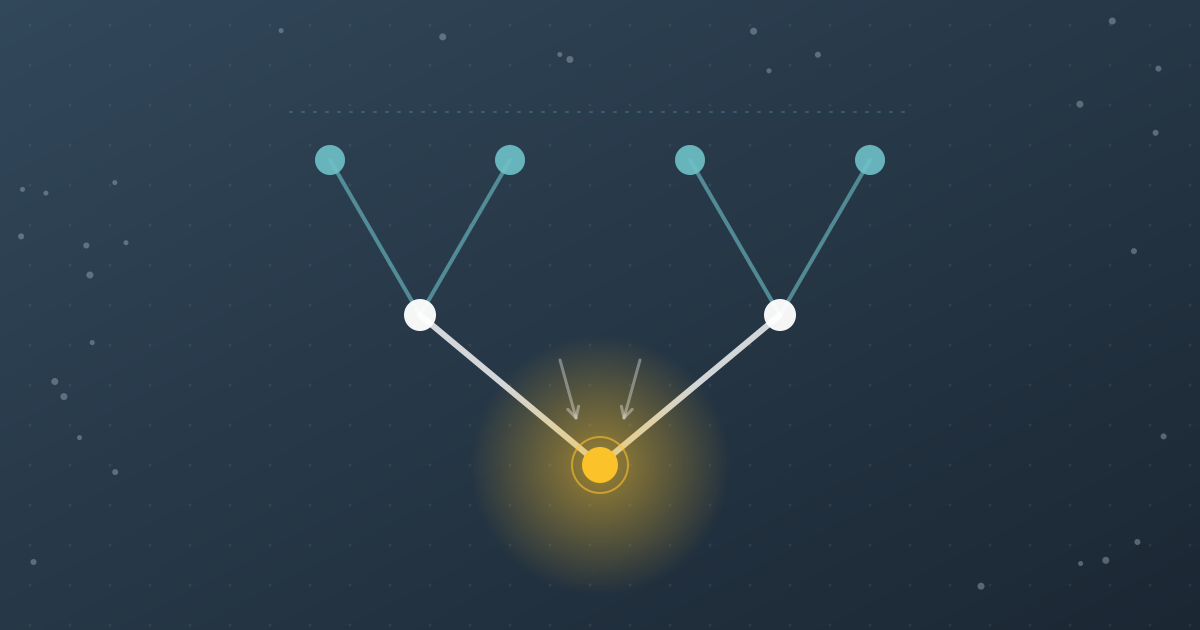
- A gold dot nudges a row of small circles that a line steers toward a gold ring
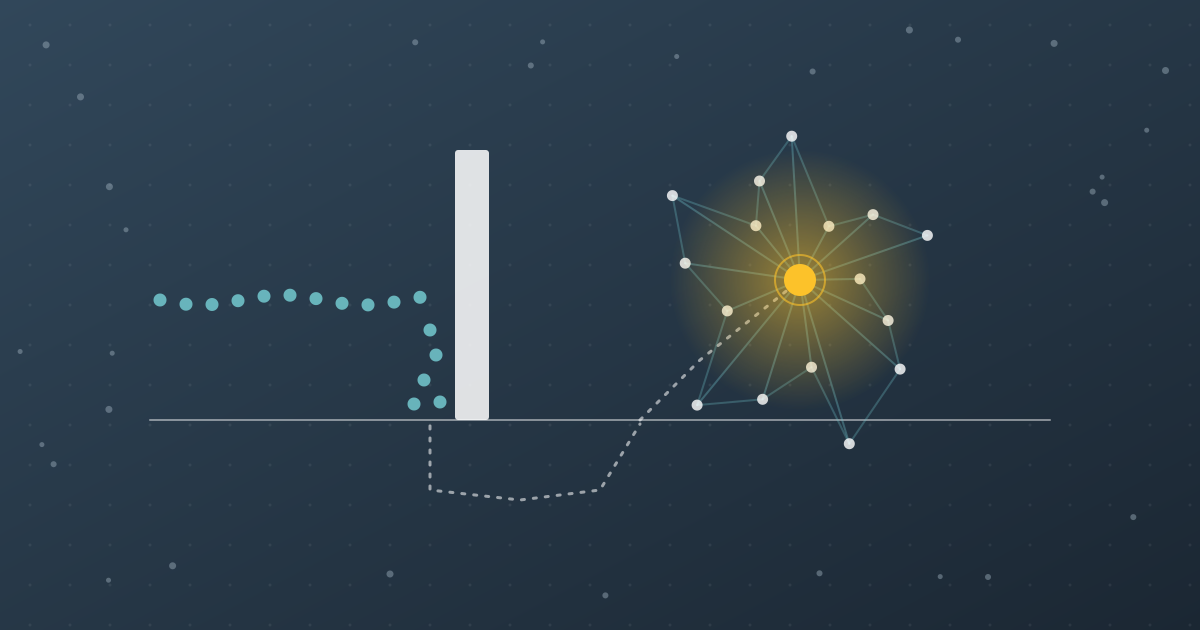
- At the same time, mist-blue side rows run off in other directions, speed up and topple a frame at the edge
- In the second run, an arc of light reveals the whole field, two circles disappear, a teal crossbar slows the side rows, and only the gold line reaches its goal
How the principle shows up in practice
China’s one-child policy, starting in 1980
It slows population growth and leaves behind millions of surplus men and a rapidly aging society. The consequences remain after the rule is gone.
Prohibition in the United States, 1920–1933
The ban on alcohol was meant to strengthen morality and made organized crime rich. A ban shifts demand instead of eliminating it.
Thomas Austin’s rabbits, 1859
Brought over for hunting, 24 animals become the plague of an entire continent. Small interventions in complex systems can reinforce themselves.
What else will your next step set off?
Get your profile across all 12 groups in about 10 to 15 minutes.
Start the Strategy CheckGroup 10: Psychology and the Irrational
Guiding question: Which forces in the mind steer decisions?
Stage 2 of 5: Understand the situation
- Related principles
Where the 92 principles come from: eight traditions of strategy, from classical war theory to dealing with uncertainty.
More about the originBackground: WEGVISOR’s own selection from the strategy literature · More about the origin