A billionaire breeds dinosaurs for a theme park and believes he has everything under control. The film shows how a perfectly planned system fails because of side effects that none of the planners considered.
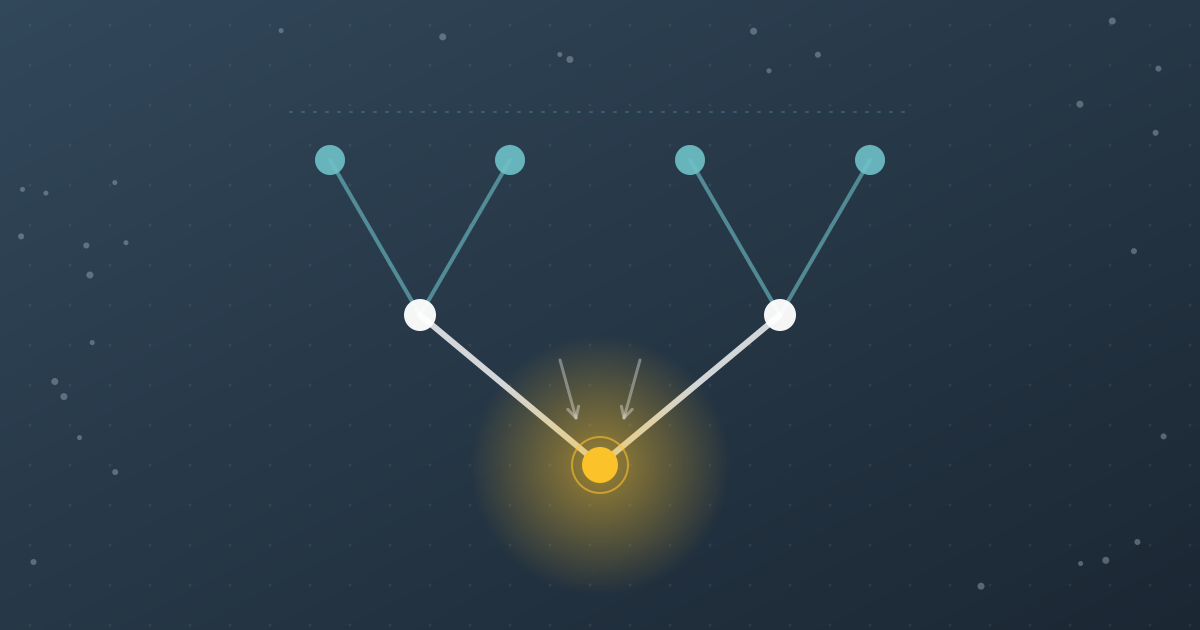
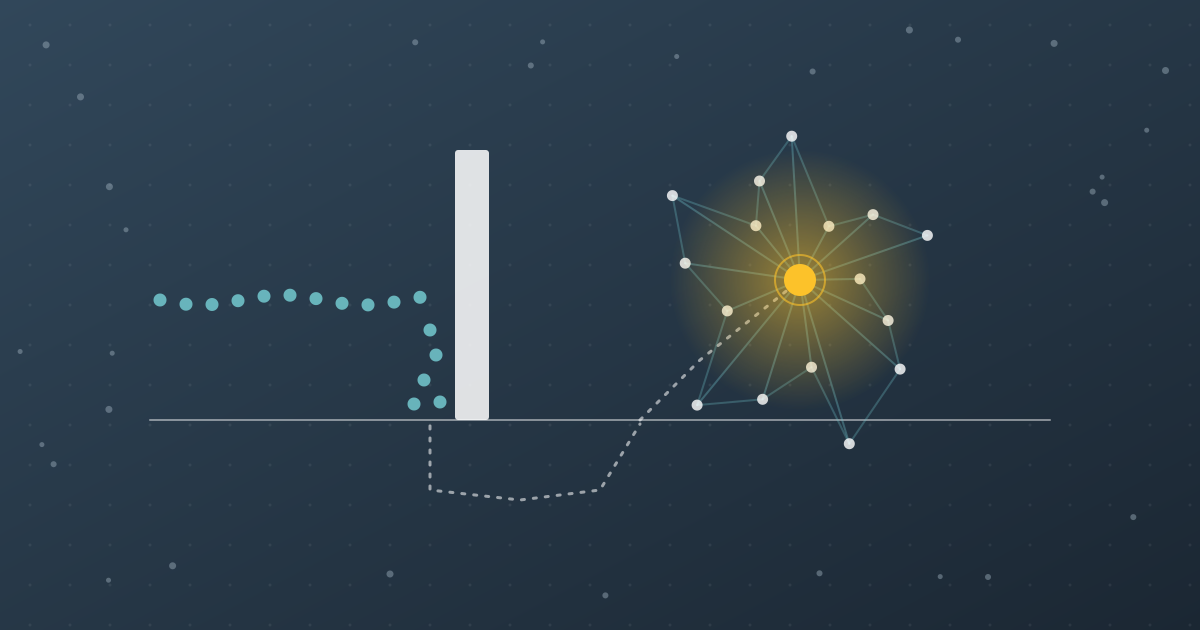
A gold dot nudges a row of small circles that a line steers toward a gold ring; at the same time, mist-blue side rows run off in other directions, speed up and topple a frame at the edge. In the second run, an arc of light reveals the whole field, two circles disappear, a teal crossbar slows the side rows, and only the gold line reaches its goal.
Principle #86
Unintended Consequences: Every targeted action intervenes in a system that responds; if you think only of the intended effect, you will be surprised by the side effects.
3 min read5 sectionsSituationLink to the principle
Contents
Steven Spielberg’s 1993 film “Jurassic Park” is based on Michael Crichton’s 1990 novel. Most people remember the dinosaurs. But the real subject of the film is an error in thinking: the belief that you can plan a living system completely. The film thus tells in pictures what Robert K. Merton described as the unintended consequences of purposive action – the principle of Unintended Consequences.
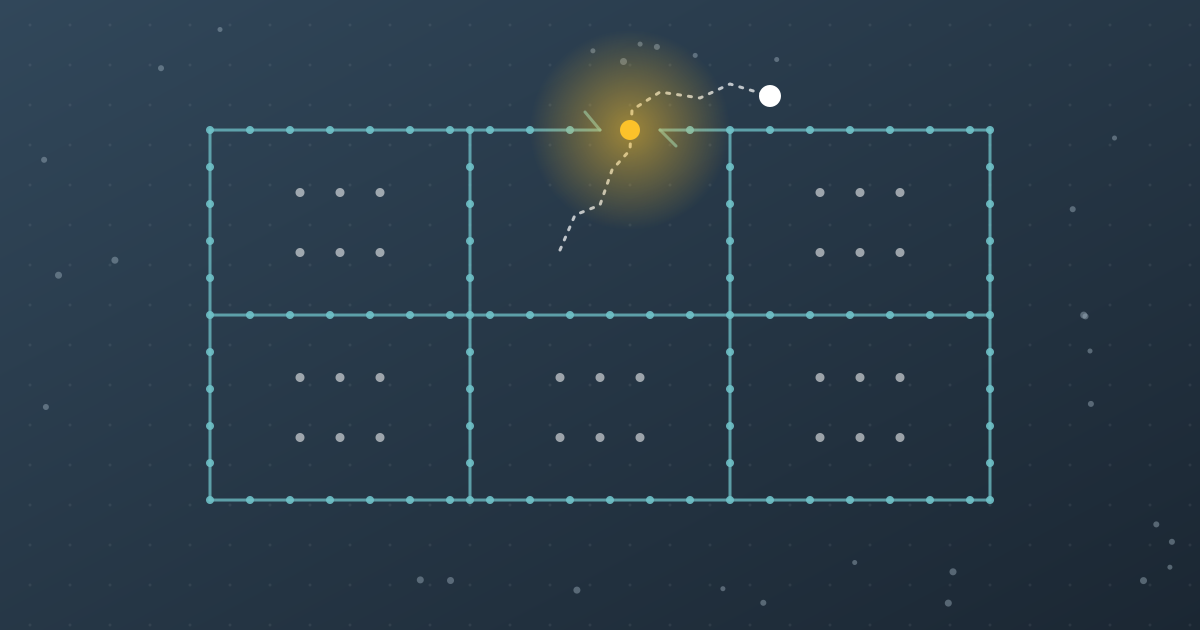
Six neatly fenced enclosures; at one point the fence breaks open in gold, and a dot finds its own way – as in “Jurassic Park.”
01
A park on an island
Situation
The entrepreneur John Hammond, played by Richard Attenborough, has built a theme park on Isla Nublar, an island off Costa Rica. His scientists have bred dinosaurs from ancient DNA taken from mosquitoes trapped in amber. They have filled gaps in the DNA with the DNA of present-day animals, including frogs. Before the opening, Hammond invites experts who are to sign off on the park for the investors.
Link to the principle
Hammond pursues a clear goal: a safe, awe-inspiring park. Every technical decision serves this goal. Patching the DNA with that of other animals is just a means to him. The possibility that a means can have effects of its own does not figure in his planning.
02
Control on paper
Situation
The park is built on control. Electric fences, cameras and a central computer system are meant to monitor every movement. All the dinosaurs have been bred female so that they cannot reproduce.
Link to the principle
The planners have thought of many risks and built in a safeguard for each one. That is exactly what makes them blind. If you believe you have thought of everything, you stop looking for what you have overlooked.
03
The mathematician’s warning
Situation
Among the guests is the mathematician Ian Malcolm, played by Jeff Goldblum. He champions chaos theory and considers the park a disaster waiting to happen. In his view, complex systems cannot be fully predicted. He accuses the scientists of having asked only whether they could do something, not whether they should.
Link to the principle
Malcolm voices what the principle says: in a living system, everything reacts to everything else. The more forcefully you intervene, the more ways there are for the system to react differently than planned. The film gives this voice room but at first lets it be drowned out by enthusiasm and business interests.
04
The human factor
Situation
During a storm, the programmer Dennis Nedry switches off the security systems in order to sell embryos to a competitor. The fences lose their power. The animals break out, and the guests are in mortal danger.
Link to the principle
The sophisticated system has a weak point no one had thought of: a disgruntled employee who believes he is underpaid. Many unintended consequences arise not from technology but from people pursuing their own interests. If you plan systems, you also have to consider the incentives of the people in them.
05
Life finds a way
Situation
While fleeing through the park, the paleontologist Alan Grant, played by Sam Neill, discovers hatched eggs. The dinosaurs are reproducing after all. The frog DNA has enabled some of the animals to change sex. The park’s most important safeguard was thus ineffective from the start.
Link to the principle
This is the heart of the film. One measure that was supposed to close a gap, the frog DNA, undermines another measure, breeding only female animals. Unintended consequences often arise where two decisions meet, each of which was reasonable on its own.
Key takeaways
Key lessons
01
The more you believe you have thought of everything, the more carefully you should look for blind spots.
02
Ask not only whether you can do something but also whether you should.
03
Check how your individual measures affect one another.
04
Consider the interests of the people in your system, not just the technology.
05
Bring critics to the table and really listen to them.
Summary
“Jurassic Park” shows a theme park in which every danger seems to be guarded against. But an employee with interests of his own knocks out the security, and the frog DNA the scientists used to fill gaps allows the animals to reproduce despite all the planning. The film shows that unintended consequences often arise from the interplay of individual decisions that are each reasonable.
Sources
Jurassic Park. Directed by Steven Spielberg. Screenplay by Michael Crichton and David Koepp. U.S. 1993.
Michael Crichton: Jurassic Park. New York: Alfred A. Knopf 1990.
Wikipedia: Jurassic Park (film) (plot)
Back to the basics
Read what lies behind Unintended Consequences: with explanation, animation, video and research.