Contents
The Fog of Uncertainty demands two things. You have to decide amid uncertainty. And you have to name the uncertainty openly so that others can judge for themselves. L’Aquila is an object lesson in the second. Here an uncertain assessment turned into an apparent certainty in public.
Months of tremors
Situation
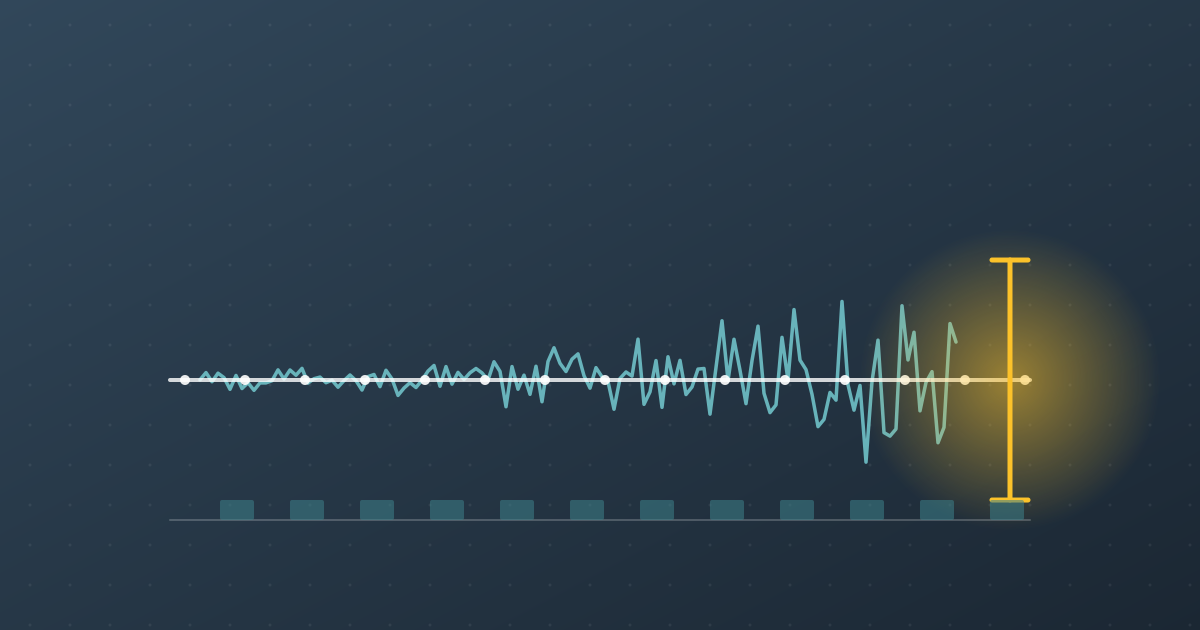
Since December 2008, the ground around L’Aquila has been shaking again and again, mostly weakly, sometimes noticeably. On March 30, 2009, a magnitude 4.1 tremor follows. People are unsettled. A laboratory technician, Giampaolo Giuliani, warns on television of a major earthquake, basing his warning on radon measurements. The head of the Civil Protection Department, Guido Bertolaso, accuses him of scaremongering.
Link to the principle
Earthquakes cannot be predicted. A cluster of small tremors can herald a major quake, but most of the time it does not. In this fog, two false certainties face each other: the technician’s prediction and the authorities’ reassurance.
A meeting and a message
Situation
A few days before the main quake, the Italian government’s Major Risks Commission meets in L’Aquila. Its conclusion, in essence: a major earthquake is unlikely but cannot be ruled out. What reaches the public is mainly the first half. Bernardo De Bernardinis, deputy head of the Civil Protection Department, tells the media there is no danger. The many small tremors, he says, are releasing energy.
Link to the principle
This is the heart of the matter. The experts knew that they did not know. But the message to the public sounded like knowledge. If you translate uncertainty into reassurance, you take away people’s chance to weigh things up for themselves. The prosecution later accused those involved of having contributed to the deaths of 29 of the more than 300 victims.
The night of April 6
Situation
On April 6, 2009, at 3:32 a.m., an earthquake with a moment magnitude of 6.3 strikes. It kills 308 people, injures around 1,500 and leaves about 66,000 homeless. No earthquake in Italy had killed so many people since 1980.
Link to the principle
No one could have prevented the earthquake itself. The question is how to prepare people for something that cannot be calculated. Honestly stated uncertainty would not have saved everyone. But it would have allowed some to make their own decision, for example, to stay outdoors on a restless night.
In court
Situation
In October 2012, a court in L’Aquila sentences six scientists and De Bernardinis to six years in prison each for manslaughter. Researchers around the world protest, and the journal Nature calls the verdict misguided. In November 2014, the appeals court acquits the six scientists. De Bernardinis’s sentence is reduced to two years, suspended. In 2015, Italy’s Supreme Court of Cassation upholds this decision.
Link to the principle
The charge was not that no one had predicted the earthquake. It was about the way the risk had been communicated. The trial shows both dangers of the fog. If you deny uncertainty, you are guilty of creating false security. If you punish experts for uncertainty, you lead them to say nothing at all. Neither helps anyone.
What judgment would have meant here
Situation
What reached the public was mainly the all-clear, not the caveat. The author David Ropeik, who writes about risk perception, called the 2012 verdict not a verdict against science but against a failure of science communication.
Link to the principle
Judgment in the fog does not mean making the right forecast. It means correctly placing your own knowledge and passing it on. “We don’t know; the risk is small but real” is an uncomfortable message. It is still the more honest one.
Key takeaways
Key lessons
- Say openly what you don’t know.
- Don’t turn “unlikely” into “ruled out.”
- Give people enough of your assessment that they can judge for themselves.
- Be wary of explanations that reassure too well.
- Separate what you know from what others want to hear.
Summary
In L’Aquila, the experts knew that earthquakes cannot be predicted. Yet what mainly reached the people was an all-clear. When the earthquake came, 308 people died. The case shows the flip side of the principle: if you are standing in the fog, you have to share the uncertainty honestly instead of replacing it with a comfortable certainty.
Sources
- Carl von Clausewitz: Vom Kriege (in German). Berlin: Ferdinand Dümmler 1832–1834, Book I, Chapter 3.