Henri Guisan, the Réduit and the Principle “First Make Yourself Invincible”
In the summer of 1940, Switzerland is surrounded by the Axis powers. General Henri Guisan withdraws the core of the army into the Alps to make the country so costly for an attacker that an attack would not be worth it.
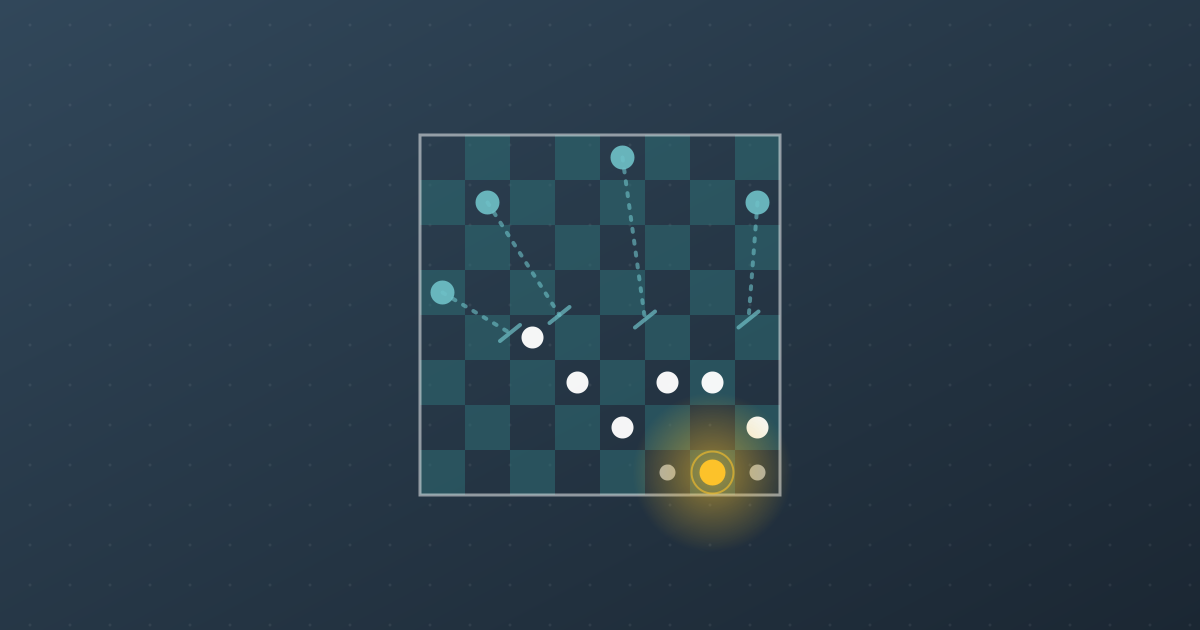
A golden circle stands exposed in the middle, and arrows of teal lines approach from all sides; the picture rewinds, and a ring of dots grows around the circle, its weakest points lighting up first. The arrows bounce off and grow shorter; one overextends and leaves a mist-blue gap behind it, and at that moment a gate opens in the ring and a narrow golden line thrusts straight into the gap.
Principle #39
First Make Yourself Invincible: First secure your own weak points, for whether you lose depends on you, while whether you win depends on the opportunity the other side gives you.
4 min read5 sectionsSituationLink to the principle
Contents
A small country cannot defeat a large neighbor. But it can make sure that the neighbor cannot defeat it cheaply. That is the idea behind the principle “First Make Yourself Invincible.” In the Second World War, Switzerland translated it into a military order that is regarded to this day as a national myth and is at the same time controversial.
A ring of dots encloses the country, and paths lead back into the mountains, with a golden core at their heart – like Guisan’s Réduit.
01
Encircled
Situation
In June 1940, France collapses under the German attack. Switzerland is now almost completely surrounded by Germany, Italy and occupied France. Henri Guisan has been commander in chief of the army since the outbreak of war in 1939. In early June, he first extends the existing defensive line along the Limmat. This turns into an all-round position, but one that can be manned only thinly.
Link to the principle
If you defend everywhere, you defend nowhere properly. A thin line all around invites the opponent to break through at any point it chooses. You do not become invincible by holding everything but by securing what can really be held.
02
The decision for the Alps
Situation
The general staff puts forward different proposals. Colonel Oscar Adolf Germann proposes a réduit, a redoubt, in the Alps; Colonel Hans Frick wants to concentrate the army around the Gotthard. Guisan chooses a middle course. Border troops stay at the border, and forward positions in the Jura and on the Swiss Plateau are meant to delay an attacker. The core of the army, five and later six divisions plus three mountain brigades, moves into the Alpine Réduit. In an emergency, the Federal Council, the Swiss government, would also have withdrawn there.
Link to the principle
The Alps are the terrain on which the small army is strongest. There it can tie down a superior attacker for the longest time. Guisan first builds the position that cannot be taken and aligns everything else with it.
03
The Rütli report
Situation
On July 25, 1940, the regrouping is complete. On the same day, Guisan assembles some 650 senior officers of the army on the Rütli meadow on Lake Lucerne, the place where, according to tradition, the Swiss Confederation was founded. There he explains the new defense plan and the will to resist.
Link to the principle
Invincibility is not just a matter of fortifications. An army that does not believe in its position will not defend it. At a time when many expected Switzerland to accommodate itself to the German Reich, the report was meant to strengthen the will to resist.
04
Deterrence through cost
Situation
An attack on the Réduit would have meant long battles in the mountains and the destruction of the Alpine transit routes, the roads and railways through the Alps such as those at the Gotthard, which mattered to Germany and Italy. That prospect was precisely what was meant to deter. By the end of 1942, the most important fortifications were almost finished, and supplies for the population and the troops were secured for six months.
Link to the principle
Sun Tzu writes that whether you avoid defeat lies in your own hands, while whether you win lies with the opponent. Switzerland could not defeat Germany. But it could drive up the price of a victory over Switzerland so far that an attack became unattractive. One invincible part is enough if it costs the opponent more than it would gain.
05
The limits of the myth
Situation
The Réduit had critics from the start. They objected that the Axis powers could have conquered the populous Swiss Plateau with little effort and starved out the army in the mountains. After the war, the Réduit became a national myth. Only toward the end of the 20th century did historians ask more insistently what role Switzerland’s economic cooperation with Germany and Italy had played in its being spared.
Link to the principle
The principle has its price. If you withdraw to what is invincible, you give up other things: in this case, in an emergency, large parts of the population. And security rarely arises from a single cause. The military position was one factor among several.
Key takeaways
Key lessons
01
Don’t defend everything; defend what can really be held.
02
For your security, choose the terrain on which you are strongest.
03
Don’t make yourself unbeatable; make yourself too costly to beat.
04
Strengthen your people’s will, not just their walls.
05
Be honest about what you give up for your security.
Summary
In 1940, Switzerland was encircled and militarily far inferior. Henri Guisan withdrew the core of the army into the Alpine Réduit, where it could tie down an attacker for the longest time, and so made Switzerland a costly target. That is the principle “First Make Yourself Invincible” in clear form: first make your own defeat unlikely. But the story also shows what this costs and that security rarely has purely military causes.