John F. Kennedy, the Cuban Missile Crisis and Brinkmanship
In October 1962, the United States discovers Soviet nuclear missiles in Cuba. John F. Kennedy chooses neither attack nor inaction but a naval blockade that moves both sides closer to a war nobody wants. After 13 days, Nikita Khrushchev gives way.
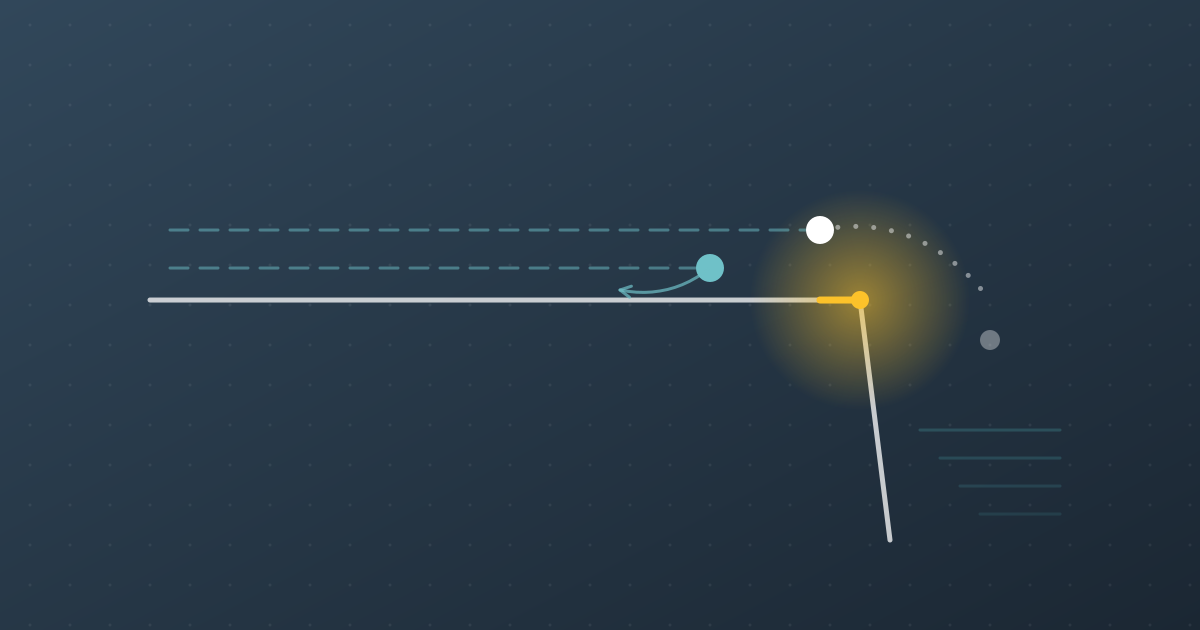
Two dots stand on a narrow teal line above a drop, connected by a taut line; with every pull, dots break away from the gold edge and fall, while an arc fills up like a clock. A wave makes both sway; then one dot releases the line, and both glide back onto firm ground.
Principle #66
Brinkmanship: You deliberately create a risk that affects both sides and that is not fully in your hands, so that the other side gives way before it materializes.
4 min read5 sectionsSituationLink to the principle
Contents
The economist Thomas C. Schelling described how to apply pressure in a conflict without striking at once: you create a situation in which things can get out of control, and you leave it to the other side to end that risk. No event shows this more clearly than the Cuban Missile Crisis, the textbook case of Brinkmanship. To this day, it is considered the moment when the world came closest to nuclear war.
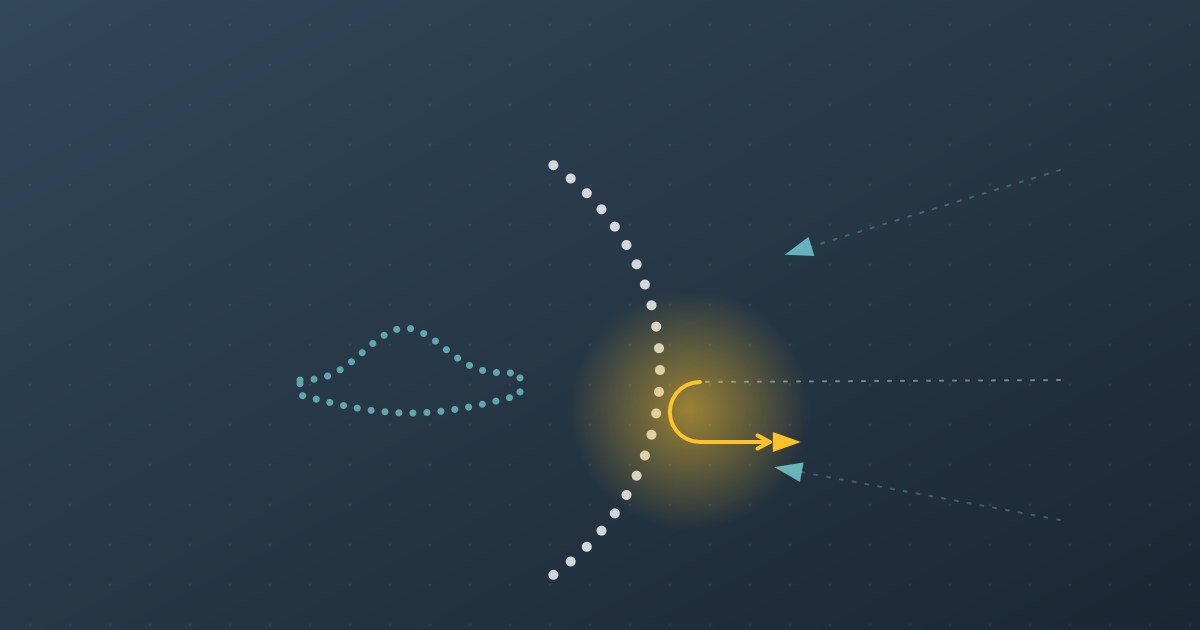
An arc of dots forms a barrier around an island, ships approach, and the one in front turns away in gold – as in the Cuban Missile Crisis.
01
The discovery
Situation
Starting in July 1962, the Soviet party and government leader Nikita Khrushchev has missiles and technicians shipped to Cuba. On October 14, 1962, an American U-2 reconnaissance plane photographs the launch sites. Two days later, the images are on President John F. Kennedy’s desk. He assembles a small circle of advisers, the Executive Committee of the National Security Council.
Link to the principle
The starting point is a challenge that cannot go unanswered. At the same time, any direct attack would be a step that could not be taken back. This is exactly where brinkmanship begins: you need a means that is stronger than words and weaker than war.
02
Choosing the blockade
Situation
The advisers debate for a week. The military presses for air strikes on the sites, some for an invasion. Kennedy opts for a naval blockade, officially called a “quarantine,” because the word “blockade” implies an act of war. On October 22, he announces it on television. Two days later, it takes effect. American warships are to stop Soviet freighters carrying weapons.
Link to the principle
The blockade destroys nothing. But it creates a place where ships of both powers meet. What happens there is no longer fully in the hands of either leader. That is exactly where the pressure comes from: the threat is not Kennedy’s decision to go to war but an incident nobody has decided on.
03
The risk nobody controls
Situation
On October 24, the first Soviet ships turn back before the blockade line. That does not end the crisis. Work on the missile sites continues. On October 27, a U-2 is shot down over Cuba, and the pilot, Rudolf Anderson, is killed. The same day, a second letter from Khrushchev arrives, now also demanding the withdrawal of the American Jupiter missiles from Turkey. Both sides can barely keep track of the situation anymore.
Link to the principle
Schelling calls this a threat that leaves something to chance. Whoever stands at the brink does not threaten to jump. They threaten that both could slip. The shootdown on October 27 shows the flip side: the risk is real. It can take on a life of its own.
04
The way out
Situation
On the evening of October 27, Attorney General Robert F. Kennedy, the president’s brother, meets the Soviet ambassador, Anatoly Dobrynin. The United States pledges not to attack Cuba. It also holds out the prospect of withdrawing its Jupiter missiles from Turkey, without making this public. On October 28, Khrushchev announces on Radio Moscow that the missiles in Cuba will be dismantled. The Jupiter missiles are decommissioned by April 1963 without the public learning of it.
Link to the principle
Brinkmanship needs a way out for the side that is supposed to give way. Kennedy keeps up the pressure and at the same time offers something that makes it easier for Khrushchev to give in. Without this way out, the pressure would only have increased the danger.
05
What it was not
Situation
In public, the crisis was long seen as a pure victory of toughness. Only years later did it become known that there had been a secret concession.
Link to the principle
Brinkmanship is not proof of courage. It is a tool with a high price. It works because it is dangerous, and it ends well because, in the end, somebody negotiates.
Key takeaways
Key lessons
01
Look for a means between talking and striking.
02
The pressure comes from the risk nobody fully controls, not from your willingness to go to extremes.
03
Be aware that this risk can really materialize.
04
Give the other side a way to give in without losing face.
05
Don’t mistake a lucky outcome for a safe method.
Summary
In the Cuban Missile Crisis of 1962, John F. Kennedy relied on a naval blockade. It brought ships of both superpowers into a situation neither fully controlled. This shared risk moved Nikita Khrushchev to withdraw the missiles, made easier by a secret concession on the missiles in Turkey. The crisis shows both the effect and the danger of brinkmanship.