In the fall of 2004, the team owners of the National Hockey League lock out their players. They risk an entire season, and they lose it. In the end, the players accept a salary cap they had rejected for a year.
Two dots stand on a narrow teal line above a drop, connected by a taut line; with every pull, dots break away from the gold edge and fall, while an arc fills up like a clock. A wave makes both sway; then one dot releases the line, and both glide back onto firm ground.
Principle #66
Brinkmanship: You deliberately create a risk that affects both sides and that is not fully in your hands, so that the other side gives way before it materializes.
3 min read5 sectionsSituationLink to the principle
Contents
In sports, you expect the contest to take place on the ice. The NHL’s toughest battle in 2004 and 2005 took place at the bargaining table. Both sides knew that losing the season would hurt everyone: owners, players, fans and broadcasters. That is precisely why the threat of losing it became a means of pressure. The case shows Brinkmanship in a form you know from labor disputes, from companies and sometimes from families.
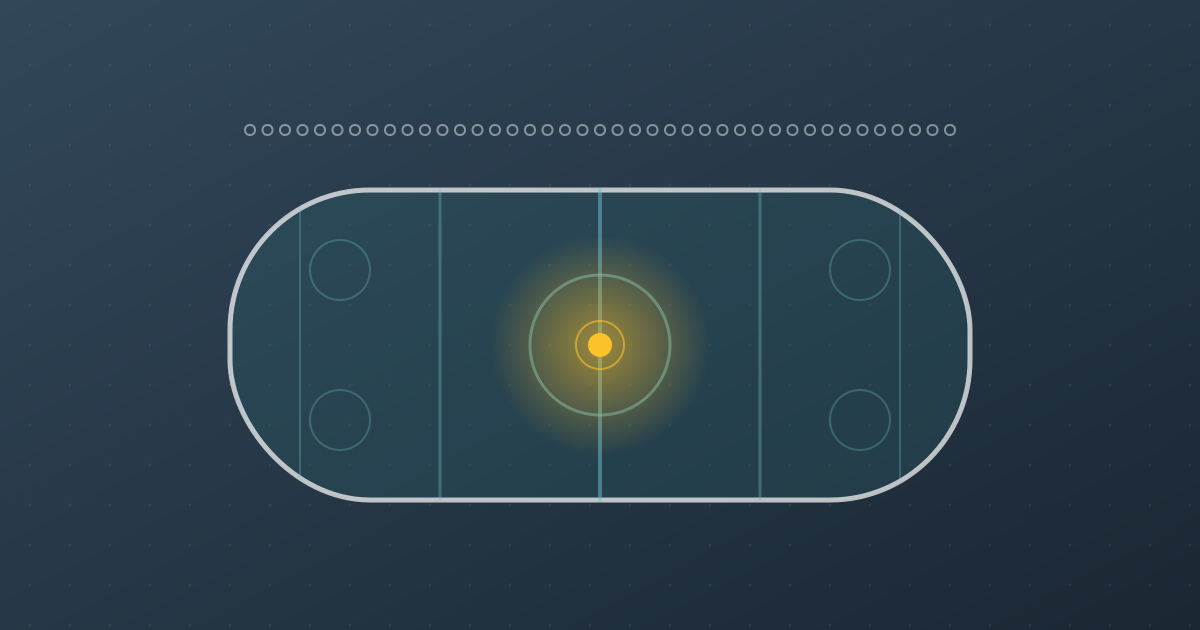
An empty ice rink from above, with a whole row of game days above it left hollow; only the face-off spot glows gold – as in the NHL lockout.
01
The fight over money
Situation
The league under Commissioner Gary Bettman presents a report claiming that the teams spend about 76% of their revenues on player salaries and lost a combined $273 million in the 2002–03 season. The players’ union, the NHLPA, under Bob Goodenow disputes these figures. In November 2004, Forbes magazine estimates the losses at less than half of what the league claims. The owners want a hard salary cap; the players reject it.
Link to the principle
When two sides cannot agree and neither wants to give up, the outcome is often decided by who can endure the shared damage longer. Brinkmanship begins where one side deliberately brings about that damage.
02
The lockout
Situation
On September 15, 2004, the collective bargaining agreement expires. On September 16, the owners lock out the players. There are no games, no salaries, no ticket revenue. In December, the union offers a 24% cut in current salaries, combined with a luxury tax instead of a hard cap. The league refuses.
Link to the principle
The owners lose revenue themselves. But they are betting that the players will find the loss of their salaries harder to bear. Here the shared risk is certain damage that grows every day. Whoever gives in first no longer determines the outcome.
03
The canceled season
Situation
In February 2005, the two positions are close. The league offers a cap of $42.5 million per team; the union names $49 million. No agreement is reached. On February 16, 2005, Gary Bettman cancels the entire season. In all, 1,230 games are lost. For the first time since 1919, the Stanley Cup is not awarded. Never before had a major professional league in North America canceled an entire season because of a labor dispute.
Link to the principle
This is where the danger of brinkmanship shows. The abyss is no longer a metaphor. Both sides have fallen in. The owners accept a total loss to make their demand credible. For the future, this makes their threats stronger; for this season, the damage is final.
04
Giving way
Situation
On July 13, 2005, the league and the union reach an agreement in principle. The players approve it on July 21 with 87% of the vote, the owners unanimously on July 22. The new agreement brings a salary cap of $39 million in the first year, less than the league itself had offered in February. Union chief Bob Goodenow resigns a few days later.
Link to the principle
The side with the greater staying power prevailed. After losing a season, the players got a worse result than they could have had before. That is the logic of brinkmanship: if you give way after the damage has been done, you pay twice.
05
What it cost
Situation
Fans lost a year of hockey, broadcasters a year of programming, arenas a year of revenue. Many observers wondered whether the league would ever fully recover from the damage.
Link to the principle
Brinkmanship always hits third parties too. If you start it, you should know whom you are putting at the edge with you.
Key takeaways
Key lessons
01
Ask yourself who can endure the shared damage longer, you or the other side.
02
Be prepared for the fall to really happen.
03
If you have to give way, do it early, not after the damage.
04
Check whom your conflict affects besides the two of you.
05
A power struggle you win can still cost a great deal.
Summary
In the 2004–05 NHL lockout, the team owners used the loss of the season as a means of pressure. Both sides lost an entire year, and in the end the players accepted a salary cap lower than the last offer before the cancellation. The case shows that in brinkmanship, the side that can bear the damage longer often wins, and that the price for this is high.