Contents
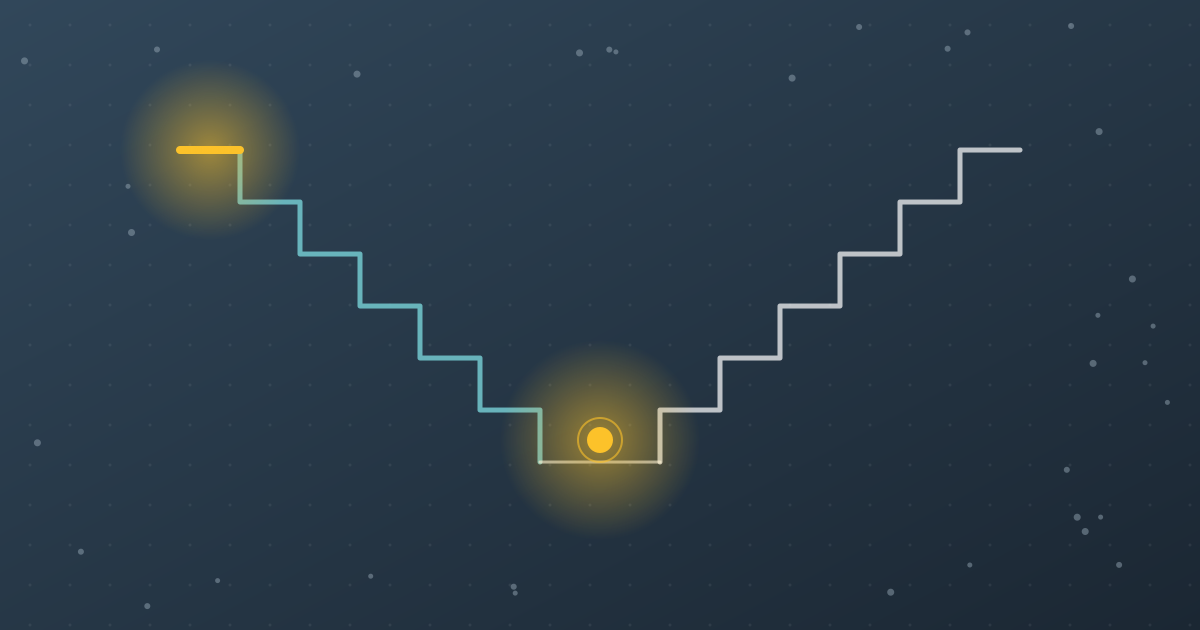
Tit for Tat describes not only how to respond to betrayal. It also describes how to find a way out of hostility: one side takes a friendly step, and the other reciprocates. In the summer of 1963, half a year after the Cuban Missile Crisis, the two superpowers tried exactly that.
After the abyss
Situation
In October 1962, during the Cuban Missile Crisis, the United States and the Soviet Union are on the brink of nuclear war. Even in the letters exchanged at the end of the crisis, Nikita Khrushchev and John F. Kennedy talk about further steps toward easing tensions. In December 1962, Khrushchev writes that it is time to end nuclear tests once and for all. Kennedy replies in agreement. Even so, the negotiations make only slow progress.
Link to the principle
After a shared experience of danger, the willingness to cooperate is there, but neither side wants to give way first. Both fear being exploited. What is needed here is a first move that shows friendliness without giving up one’s own security.
The first step
Situation
On June 10, 1963, Kennedy gives a commencement address at American University in Washington, known as the “Strategy of Peace” speech. He makes the case for not seeing the Soviet Union only as an enemy and announces that the United States will conduct no more nuclear tests in the atmosphere as long as other states refrain as well. He also commits to talks on a test ban.
Link to the principle
This is the friendly first move. It is unilateral but not unconditional: it holds as long as the other side follows suit. That is exactly how Tit for Tat begins. Shortly before, the psychologist Charles E. Osgood had proposed a method for reducing tensions gradually through small, unilateral and reversible steps.
Moscow’s response
Situation
Khrushchev has the speech printed in full in the newspapers Pravda and Izvestia, which is unprecedented at the time. When the speech is rebroadcast on the radio, the Soviet Union does not jam Voice of America. In early July 1963, Khrushchev declares publicly that the Soviet Union is ready to ban tests in the atmosphere, in outer space and under water.
Link to the principle
Friendliness is answered with friendliness. Each side shows visibly that it has understood the other’s step. This creates what Axelrod describes: cooperation through reciprocity, without trust having to exist beforehand.
The treaty
Situation
An American delegation led by Averell Harriman travels to Moscow. The negotiations take only 12 days and end on July 25, 1963. On August 5, 1963, the Soviet Union, Britain and the United States sign the Treaty Banning Nuclear Weapon Tests in the Atmosphere, in Outer Space and Under Water in Moscow. The U.S. Senate approves it 80 to 19 on September 24, and the treaty enters into force on October 10, 1963.
Link to the principle
A unilateral step and a response turn into an agreement. The treaty holds not because the opponents suddenly trust each other but because each sees what the other is doing and can respond to it.
What the approach does not achieve
Situation
The treaty does not ban underground tests. The arms race continues. Kennedy is assassinated in November 1963, and Khrushchev is ousted a year later.
Link to the principle
Tit for Tat does not resolve a fundamental conflict. It creates islands of cooperation on which you can build further. And it depends on people who are willing to take the first step.
Key takeaways
Key lessons
- Take a friendly first step, but tie it to the other side’s response.
- Choose a step that doesn’t leave you defenseless.
- Show visibly that you have understood the other side’s gesture.
- Build an agreement step by step out of small reciprocal moves.
- Don’t expect a good beginning to resolve the whole conflict.
Summary
In June 1963, after the Cuban Missile Crisis, John F. Kennedy unilaterally announced a halt to nuclear tests in the atmosphere, as long as others followed suit. Nikita Khrushchev had the speech published and gave way on the question of testing. In August 1963, the treaty was signed. This shows the friendly side of Tit for Tat: a first step that is reciprocated can lead opponents to cooperate.
Sources
- Charles E. Osgood: An Alternative to War or Surrender. Urbana: University of Illinois Press 1962.
- Robert Axelrod: The Evolution of Cooperation. New York: Basic Books 1984.