Contents
When Clayton M. Christensen wanted to explain what Disruption is, he often told the story of steel. No Silicon Valley, no software, just blast furnace versus scrap furnace. The story of Nucor shows why smart managers at large corporations let an attacker win without making a single obvious mistake.
A supplier that becomes too expensive
Situation
F. Kenneth Iverson, known as Ken, is a metallurgist. He works for Vulcraft, a maker of steel joists that the Nuclear Corporation of America buys in 1962. In 1965, he takes charge of the struggling parent company and rebuilds it around the profitable joist business. In the late 1960s, Vulcraft depends on a single steel supplier that keeps raising its prices.
Link to the principle
Disruption often begins not with a big idea but with a practical problem. Iverson does not want to revolutionize the steel industry. He wants cheaper steel for his own joists.
The minimill
Situation
At the time, most U.S. steel companies make steel in huge integrated mills with blast furnaces, from iron ore and coke. Iverson chooses a different process: a small mill with an electric arc furnace that melts down scrap steel. This technology is more widespread in Europe than in the United States. Nucor’s first mill of this kind is built in 1968 in Darlington, South Carolina, and starts operating in 1969. Skeptics doubt that such mills can deliver large quantities or anything more than simple steel products.
Link to the principle
This is the classic entry from below. The scrap-based steel of the early minimills is of lower quality. But it is good enough for simple products such as rebar, the reinforcing steel in concrete. And it is much cheaper to produce.
Why the big players are glad to retreat
Situation
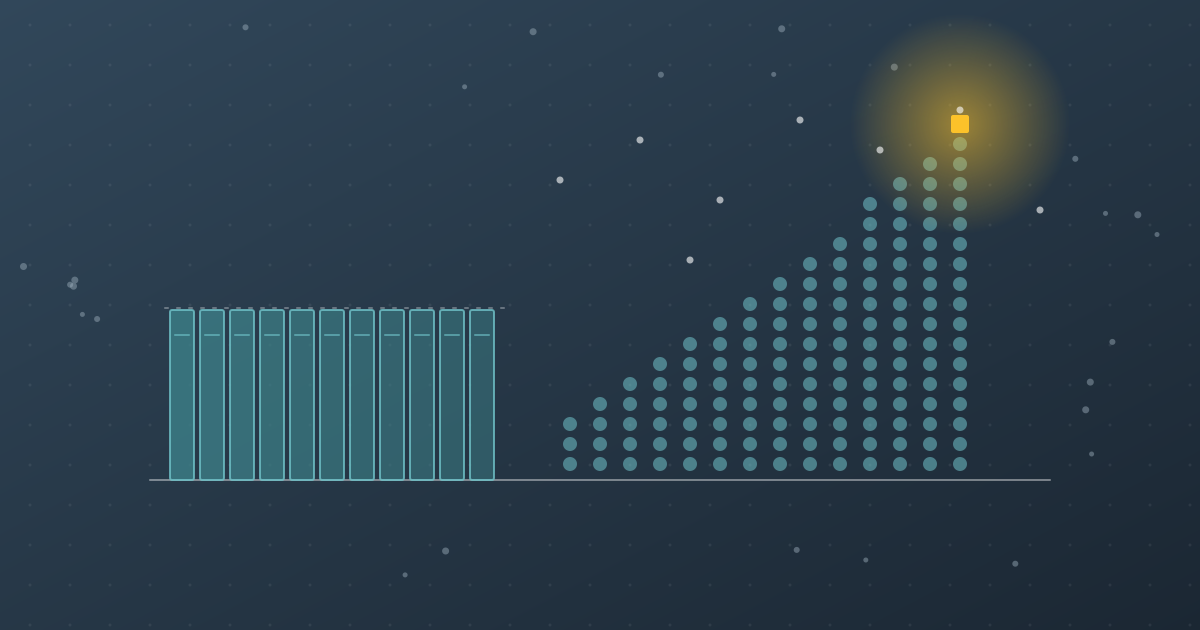
In “The Innovator’s Dilemma” (1997), Christensen describes how the minimills as an industry, Nucor included, first conquer the rebar market. For the integrated mills, this was the segment with the lowest margins. They withdraw and concentrate on higher-value products. Their profits per ton even rise. Then the game repeats itself: the minimills get better and advance into bar steel, then into structural shapes and beams.
Link to the principle
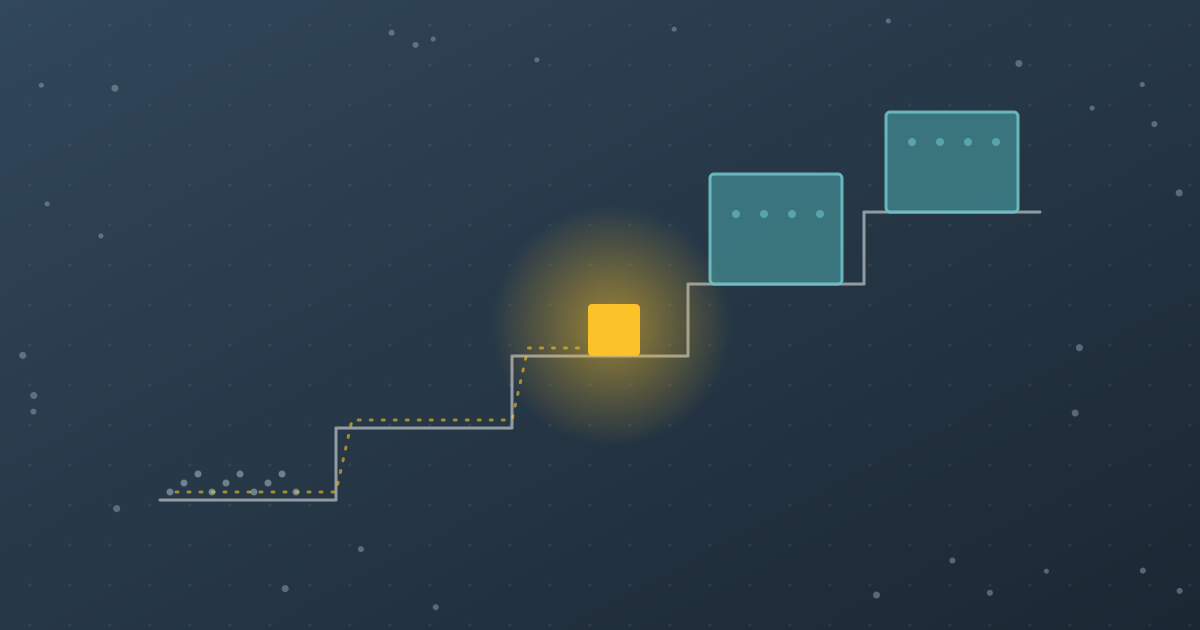
This is the heart of the principle. For the incumbent, it is reasonable at every stage to give up the bottom segment. It earns little, and the best customers want something else. Only taken together do these steps add up to a retreat that leaves the incumbent with nothing but the narrow top of the market.
The attack on the core business
Situation
For a long time, flat-rolled steel, such as sheet for cars and household appliances, was considered the domain of the big integrated mills. In 1989, Nucor opens the world’s first minimill to produce flat-rolled steel using thin-slab casting, in Crawfordsville, Indiana. Today, Nucor is the largest steel producer in the United States and the largest recycler in North America.
Link to the principle
The disruptor does not stay in the low-price segment. It uses its cost advantage, improves the technology and attacks where the incumbents make their money. By then it is often too late to fight back because their cost structure is built on the old technology.
An organization that fits the model
Situation
Until 1996, Iverson runs Nucor as a lean organization. There are only a few levels of management between the workers and the CEO. The employees are called “teammates,” are not unionized and receive weekly bonuses based on production output. In downturns, their pay falls instead of people being laid off. Iverson describes this in his 1998 book “Plain Talk.” He dies in 2002.
Link to the principle
Disruption is more than a cheaper product. It needs a business model that can live with small margins. Nucor’s flat organization was built for that. The corporations with their hierarchies could not simply have copied the model.
Key takeaways
Key lessons
- Watch who takes over your least attractive business, and what they plan to do next.
- Each retreat upmarket can be reasonable on its own and still be dangerous taken together.
- Rising margins can be a warning sign if your market is shrinking at the same time.
- A cost advantage works fully only when your organization fits it.
- Distinguish between “worse” and “good enough for this purpose.”
Summary
Nucor began in 1969 with a small furnace that melted scrap, because Ken Iverson needed cheaper steel for his joists. The big integrated mills left the newcomer first rebar, then further segments, because each individual decision made economic sense. In 1989, Nucor entered flat-rolled steel; today it is the largest steel producer in the United States. Clayton M. Christensen made the minimills one of his textbook examples of disruption.
Sources
- Clayton M. Christensen: The Innovator’s Dilemma. Boston: Harvard Business School Press 1997.
- Ken Iverson: Plain Talk: Lessons from a Business Maverick. New York: John Wiley & Sons 1998.