In “Hidden Figures” (2016), the mathematician Dorothy Vaughan realizes that NASA’s new IBM mainframe is sitting unused because no one can program it. She learns Fortran, teaches it to her entire group and turns the bottleneck into an opportunity for everyone.
Five teal frames stand in a row, open to different widths, and mist-blue dots flow from left to right until they pile up in front of the narrowest frame. Two other frames widen to no effect; only when the narrow frame widens in gold do the dots flow through, and right away another frame lights up as the new narrow point.
Principle #11
Bottleneck Focus: The performance of the whole depends on its narrowest point, so put your effort where it relieves the bottleneck.
3 min read5 sectionsSituationLink to the principle
Contents
“Hidden Figures” tells the story of three African American mathematicians at the Langley Research Center in Virginia in the early 1960s. It was directed by Theodore Melfi. Taraji P. Henson plays Katherine Johnson, Janelle Monáe plays Mary Jackson and Octavia Spencer plays Dorothy Vaughan. The storyline around Vaughan is a clear example of Bottleneck Focus: she recognizes which skill will limit everything in the future and puts all her effort exactly there.
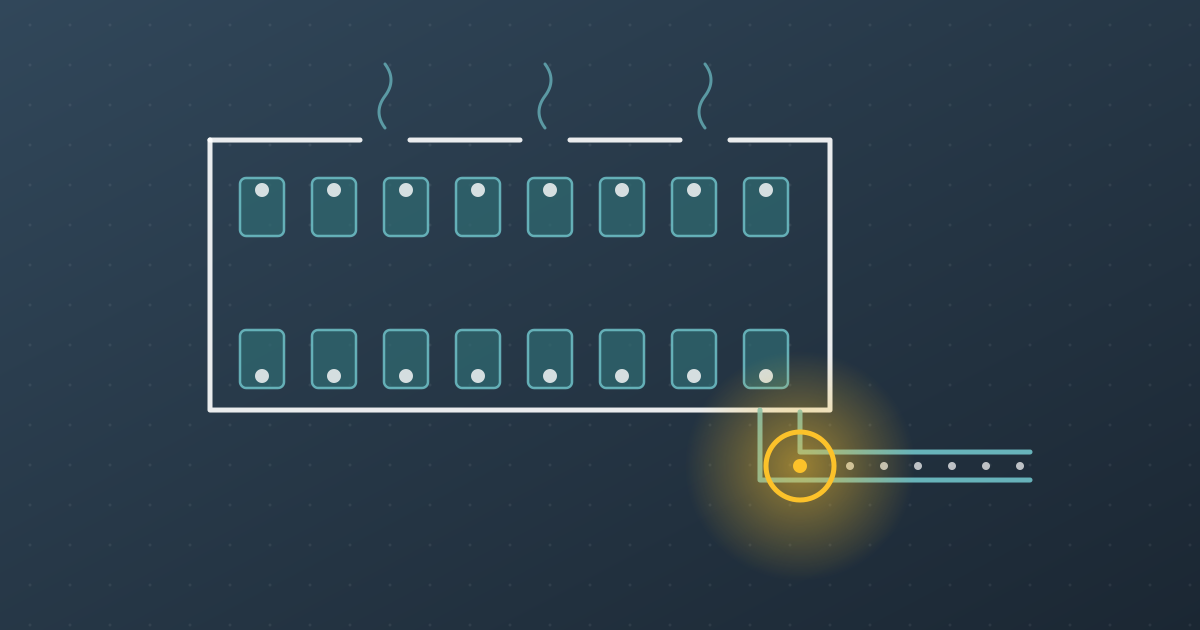
A golden punch card slides into a large, dark machine whose lamps light up, while a group waits beside it – as in “Hidden Figures.”
01
Human computers in the space race
Situation
The United States is behind the Soviet Union in the space race. At NASA, women calculate by hand the trajectories and readings that the engineers need. The Black computers work separately in the West Area Computing unit. Dorothy Vaughan effectively leads the group, but there is no provision for a permanent supervisor for the Black group.
Link to the principle
For now, computing power is the bottleneck, and the women are the solution. But Vaughan knows that bottlenecks shift. If you only look at today’s bottleneck, you will be caught off guard by the next one.
02
The machine no one can get running
Situation
NASA installs an IBM mainframe that is supposed to calculate faster than any group of people. Vaughan sees two things at once: her group’s work will soon be obsolete. And the real bottleneck is no longer calculating but programming.
Link to the principle
An expensive computer without people who can operate it achieves nothing. The performance of the whole depends on its narrowest point, and that now lies in knowledge of the new machine. Vaughan recognizes this sooner than her superiors.
03
A book from the wrong section
Situation
Vaughan goes to a public library to find a book on the Fortran programming language. The librarian reprimands her for entering the whites-only section. Vaughan takes the book anyway and teaches herself the language. Later, she goes into the computer room and gets the machine running.
Link to the principle
She does not spread her strength across many fronts. She does not learn everything that might be useful but only the one skill on which everything will depend in the future. The obstacles that segregation puts in her way make the path longer, but not impossible.
04
The whole group comes along
Situation
Vaughan teaches Fortran not only to herself but to her colleagues as well. When NASA wants to make her head of the new programming department, she insists that her group come with her. Around 30 women move with her.
Link to the principle
Here, relieving one bottleneck becomes a strategy for many. Vaughan protects her group not by defending the old ways but by leading everyone to the new narrow point. If you occupy the bottleneck, you become indispensable. That applies to individuals as much as to teams and companies.
05
What the film heightens
Situation
The film condenses the story. The real Dorothy Vaughan took over as head of West Area Computing as early as 1949, initially on an acting basis, as the first Black supervisor at NASA’s predecessor agency, NACA. When NASA was founded in 1958, the segregated facilities were abolished, years before the period in which the film is set. Vaughan moved with many former colleagues into an integrated analysis and computation division, taught herself Fortran and passed it on to others.
Link to the principle
The dramatization does not change the lesson. Historically, too, Vaughan was among those who recognized early that programming would become the new key skill, and who concentrated on it.
Key takeaways
Key lessons
01
Look not only at today’s bottleneck but at the next one.
02
A new technology is only as good as the people who master it.
03
Deliberately learn the one skill on which everything will depend in the future.
04
Take your team with you to the new narrow point.
05
If you occupy the bottleneck, you become indispensable.
Summary
In “Hidden Figures,” Dorothy Vaughan realizes that the IBM mainframe is creating a new bottleneck: no longer calculating but programming. Against all resistance, she learns Fortran, gets the machine running and trains her entire group. In this way, the threat to her work becomes an opportunity for everyone. The film shows Bottleneck Focus as a forward-looking attitude: putting your strength where the whole will depend on it tomorrow.