Martin Luther, the September Testament and Bottleneck Focus
At the beginning of the 16th century, most people cannot read the Bible for themselves because the authoritative version is in Latin. At the Wartburg, Martin Luther translates the New Testament into German in 11 weeks. In September 1522, it appears in an edition of 3,000 to 5,000 copies and quickly sells out.
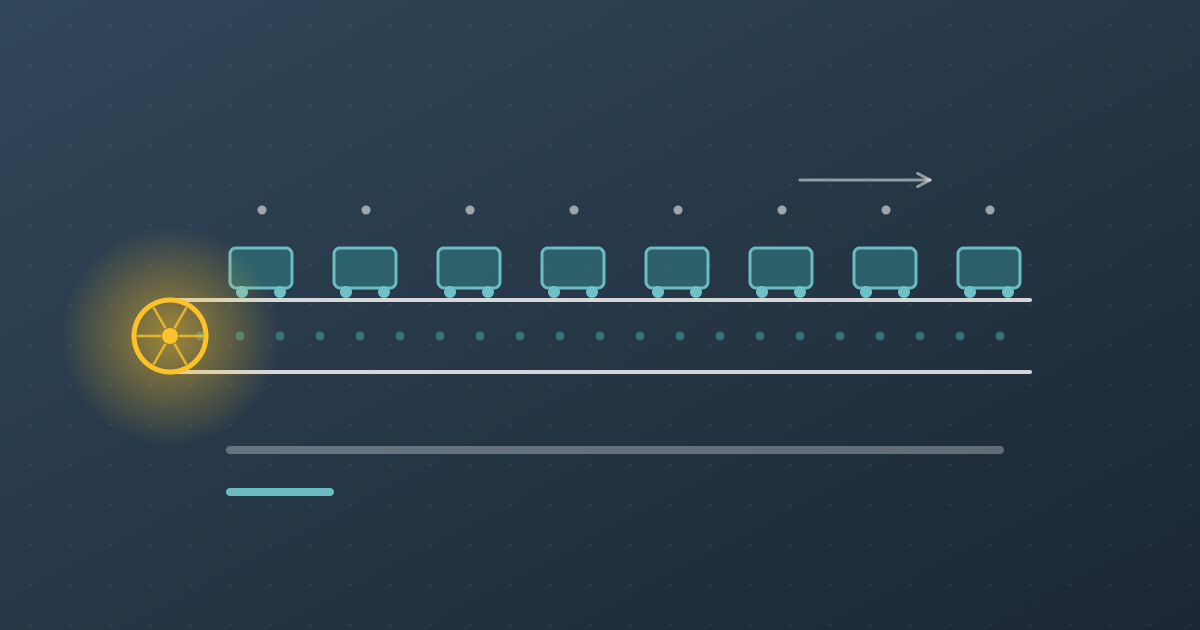
Five teal frames stand in a row, open to different widths, and mist-blue dots flow from left to right until they pile up in front of the narrowest frame. Two other frames widen to no effect; only when the narrow frame widens in gold do the dots flow through, and right away another frame lights up as the new narrow point.
Principle #11
Bottleneck Focus: The performance of the whole depends on its narrowest point, so put your effort where it relieves the bottleneck.
3 min read5 sectionsSituationLink to the principle
Contents
The Reformation had many levers: sermons, pamphlets, public disputations, the support of princes. At the Wartburg, Luther targeted the one point that limited all the others. If you cannot read the Bible, you depend on what others say about it. In Wolfgang Mewes’s bottleneck-focused strategy, the basis of Bottleneck Focus, this is called a target group’s most acutely felt need.
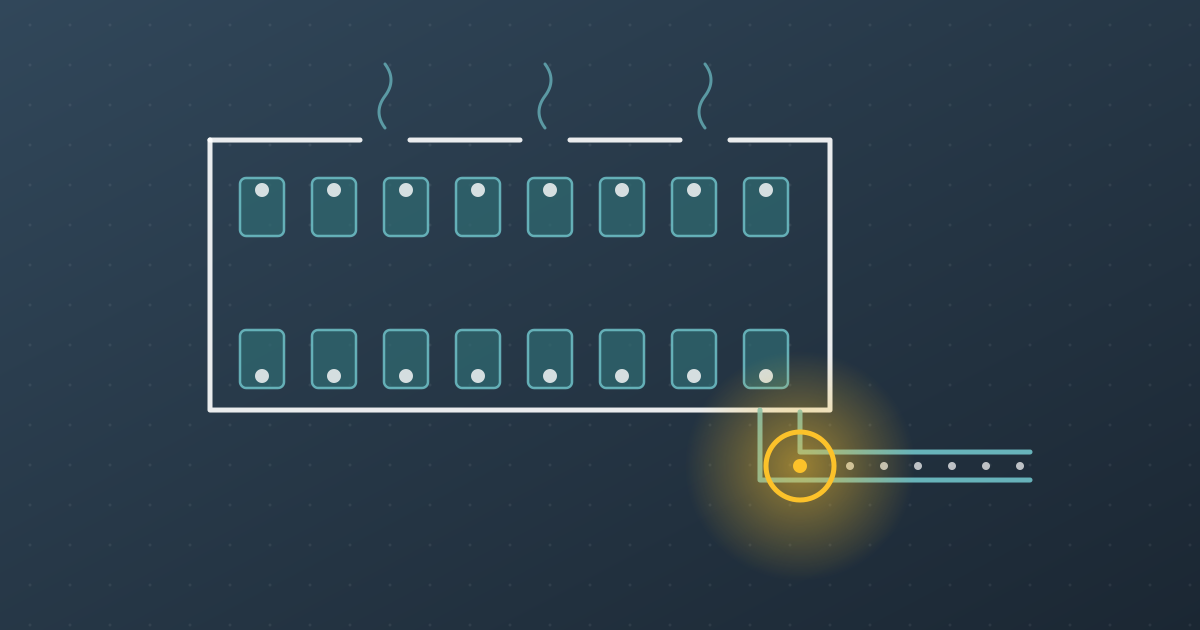
Copies fly out of an open golden book in ever wider arcs across the land – like Luther’s September Testament.
01
A text behind a language barrier
Situation
The Church’s authoritative Bible is the Latin Vulgate. Clergy and scholars read Latin; most people do not. There are already printed German Bibles – between 1466 and 1522, 14 editions appear in Upper German and 4 in Low German. But their translations are considered clumsy and, in part, linguistically outdated. In 1516, the humanist Erasmus of Rotterdam publishes an edition of the Greek New Testament.
Link to the principle
Luther’s central demand is that faith should be guided by Scripture. As long as Scripture lies behind a language barrier, this demand reaches only a few. The bottleneck is not the argument but access.
02
Eleven weeks at the Wartburg
Situation
After the Diet of Worms in 1521, Luther is under the imperial ban. Elector Frederick the Wise has him taken to the Wartburg near Eisenach for his protection. There he has time on his hands, not by choice. During a secret visit to Wittenberg in December 1521, Philip Melanchthon urges him to translate the New Testament. Luther manages it in 11 weeks, about three chapters a day on average. He translates from the Greek, with the help of Erasmus’s edition.
Link to the principle
Luther had many tasks: writings, letters, conflicts. At the Wartburg, he directs his strength at the one task that would multiply all the others. Eleven weeks of concentrated work at the bottleneck achieve more than years of scattered effort.
03
German that people understand
Situation
Luther wants German the way ordinary people speak it. In his 1530 “On Translating: An Open Letter,” he later describes how you have to ask the mother in the home, the children in the street and the common man in the marketplace, and watch their mouths to see how they speak. Back in Wittenberg, he goes through the manuscript critically with Melanchthon, the expert in Greek.
Link to the principle
A translation alone does not relieve the bottleneck if it is just as hard to understand. The older German Bibles had shown that. Luther aims at the real bottleneck: not German as such, but German that people can understand.
04
The book sells out immediately
Situation
In September 1522, the New Testament appears in Wittenberg; named after the month, it becomes known as the September Testament. The print run is 3,000 to 5,000 copies. It sells out quickly, and a second edition follows as early as December 1522. By 1534, the German Bible Society counts 87 printings. That year, the complete Luther Bible appears.
Link to the principle
The demand shows that the bottleneck was real. As soon as it is opened, much else begins to flow: reading in families, preaching from the text, teaching. The printing press had long existed. What had been missing was the right text.
05
The next bottleneck
Situation
Books were expensive, and many people could not read at all. Most experienced the Bible through reading aloud and preaching. In 1524, in his treatise “To the Councilmen of All Cities in Germany,” Luther calls on city councils to establish and maintain Christian schools.
Link to the principle
Once a bottleneck is resolved, the next one appears. After language, it was literacy. The Reformation responded with schools and catechisms. If you stop after your first success, you let the new bottleneck determine how far you get.
Key takeaways
Key lessons
01
Ask what is keeping your message from getting through.
02
Often the bottleneck lies in access, not in content.
03
Use times of enforced quiet for the one important task.
04
Relieve the bottleneck completely: make it understandable, not just translated.
05
Watch for the next bottleneck as soon as the first one falls.
Summary
In Luther’s time, the Bible lay behind a language barrier for most people. At the Wartburg, Martin Luther concentrated his strength on this one point and, in 11 weeks, translated the New Testament into German that people could understand. The September Testament of 1522 sold out immediately and opened the way for much else. After that, the next bottleneck came into view: literacy, to which Luther responded with his call for schools.