Contents
Christopher Nolan’s second Batman movie became famous above all for Heath Ledger’s Joker. Ledger received a posthumous Oscar for the role. For strategists, one scene toward the end of the movie is particularly revealing – a scene about Strategic Interdependence. It is often described as a cinematic version of the prisoner’s dilemma. But it also shows where the model reaches its limits.
A city in a state of emergency
Situation
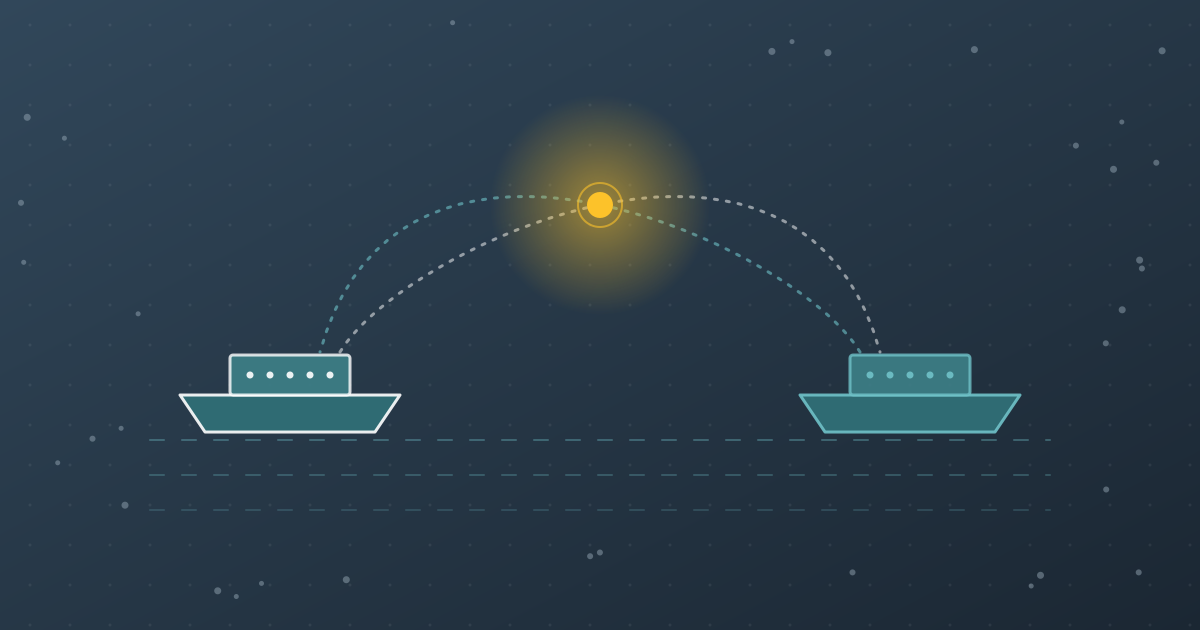
Gotham City is being terrorized by the Joker. He wants to prove that the citizens’ morality is only a thin veneer that cracks under pressure. The city evacuates people by ferry. On one ferry are ordinary citizens. On the other, prisoners are being transported under police guard.
Link to the principle
The Joker understands strategic interdependence better than any other character. He constructs a situation in which each group’s fate lies in the hands of the other. His weapon is not just explosives but the dependence itself.
Two ferries, two detonators
Situation
In the middle of the water, the engines fail. The Joker makes contact: both ships are loaded with explosives. Each ferry has a detonator, but not for its own bomb: it sets off the one on the other ship. Whoever presses first survives. If nobody presses by midnight, the Joker will blow up both ferries.
Link to the principle
Each group now has to consider not only what it wants itself but what the other will do. If we wait and the others press, we are dead. If everyone waits, everyone is dead. Every thought of their own survival has to pass through a thought about the others.
The hesitation
Situation
On the citizens’ ferry, people argue about whether to blow up the other ferry. Fear runs high, and time is running out. But in the end, nobody presses the button.
Link to the principle
The argument shows the logic of the dilemma: in theory, pressing is the safe move. The plot shows what the theory doesn’t capture: conscience, shame and the thought of having to live with such an act. These, too, are among the forces that determine what people do when they depend on each other.
The detonator in the water
Situation
There is a detonator on the prisoners’ ferry as well. One prisoner throws it into the water. In doing so, he takes away his ferry’s ability to destroy the other one.
Link to the principle
The prisoner makes what game theory calls a commitment. He visibly gives up an option. For the other ferry, that changes nothing, because it cannot see it. But it shows that sometimes the strongest move in a situation of dependence is to take away your own ability to betray.
What the Joker miscalculates
Situation
Midnight passes, and neither ferry has pressed. The Joker wants to blow up both, but Batman stops him. His experiment has failed.
Link to the principle
The Joker built the dependence correctly but misjudged the people. He assumed that each side would think only of itself. Strategic interdependence requires you to truly understand the other side, not just a model of it. If you think worse of others than they are, you miscalculate.
Key takeaways
Key lessons
- Whoever builds the dependence between others has great power over them.
- In every situation, ask yourself: what will the other side do if we wait?
- Factor in not only interests but also conscience and shame.
- Sometimes it strengthens you to give up an option visibly.
- Don’t underestimate others. Too dark a picture of the other side is also a miscalculation.
Summary
In “The Dark Knight,” the Joker forces two ferries into a deadly game of mutual dependence. Each can save itself by sacrificing the other. In the end, neither presses. The scene shows the principle in all its harshness and, at the same time, its limit: if you count on other people’s dependence, you also have to factor in their values.
Sources
- The Dark Knight. Directed by Christopher Nolan. U.S./United Kingdom: Warner Bros. 2008.