Paul Julius Reuter, the Carrier Pigeons and Terrain
In 1850, there is a gap in the European telegraph network between Aachen and Brussels. Paul Julius Reuter bridges it with carrier pigeons, laying a cornerstone of one of the world’s first news agencies.
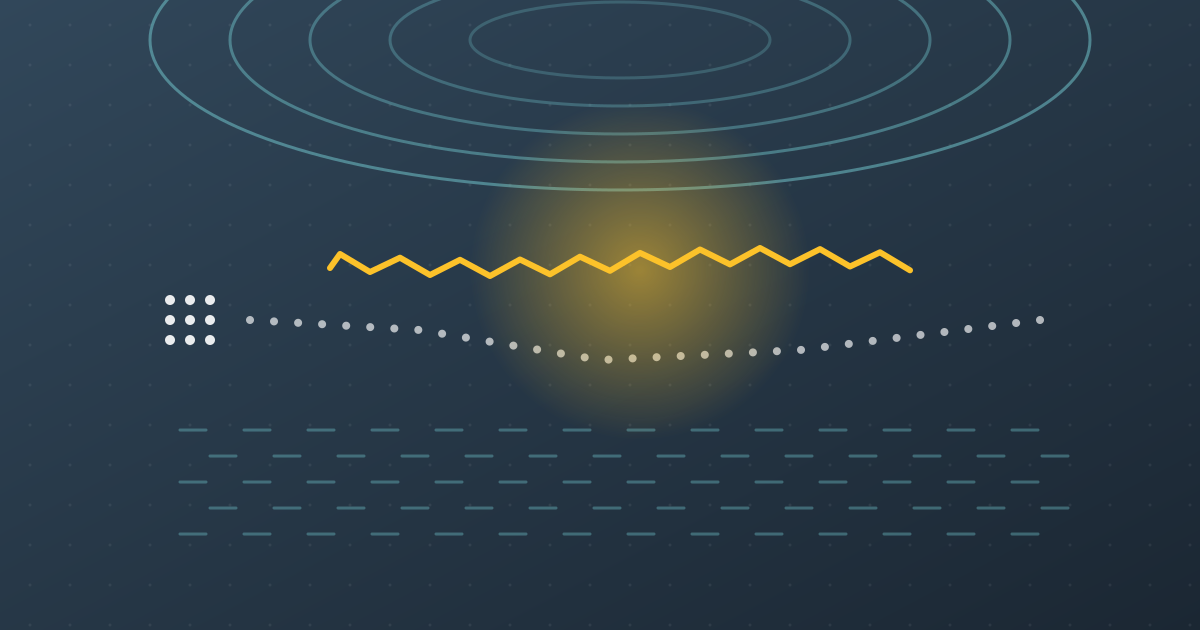
A solid block of many teal dots moves across an open surface, and small mist-blue dots bounce off it. Then arcs and wavy lines narrow the path into a bottleneck; the block becomes a thin line and loses its order, and golden dots break away from the terrain on both sides.
Principle #35
Terrain: If you know the terrain better than your opponent and use its features, you fight where your own strengths count and your opponent’s come to nothing.
4 min read5 sectionsSituationLink to the principle
Contents
Terrain does not have to consist of mountains and rivers. A network has terrain, too: nodes, lines, gaps. If you know where a gap lies and are the first to find a way through it, you have a head start. In the mid-19th century, Paul Julius Reuter showed how the principle of Terrain works in a network, with a means that already seemed old-fashioned at the time.
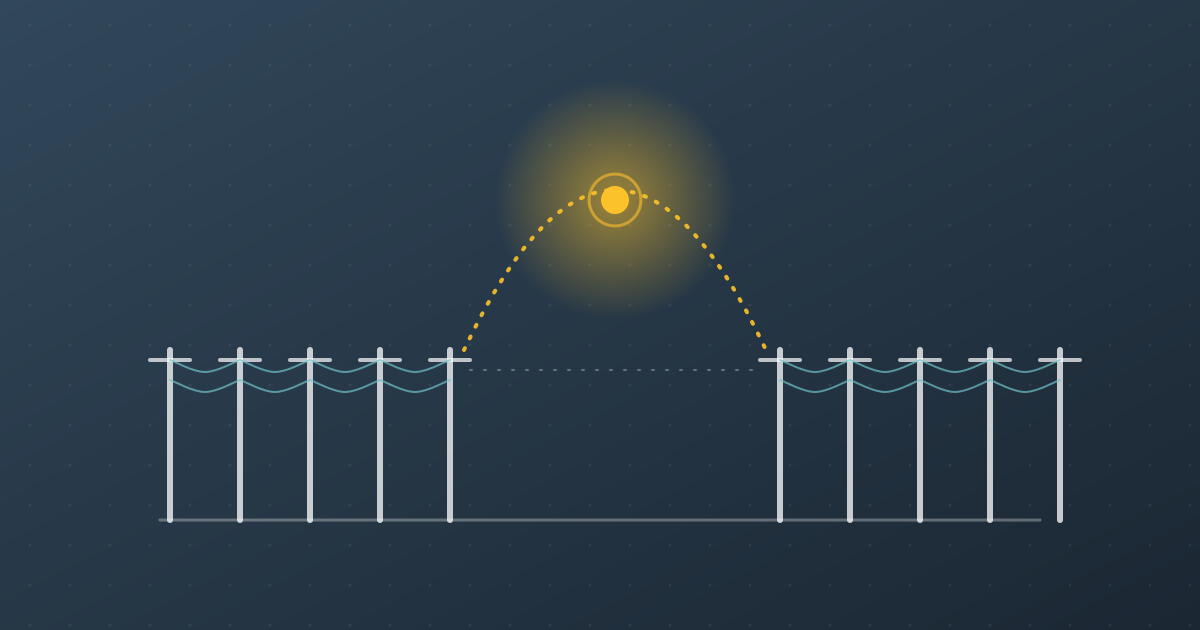
A telegraph line breaks off between two poles, and a golden arc of dots leaps across the gap – like Reuter’s carrier pigeons in 1850.
01
A man between networks
Situation
Reuter was born Israel Beer Josaphat in Kassel in 1816. As a young man, he worked in his uncle’s bank in Göttingen, where, according to the Encyclopaedia Britannica, he met the mathematician Carl Friedrich Gauss, who was experimenting with the electric telegraph. Reuter later became a publisher in Berlin and then a translator for newspapers in Paris. When he was baptized, he took the name Reuter.
Link to the principle
Reuter knew the new terrain early on. He understood that the telegraph carried news across borders in minutes, but only where lines had been laid. If you know the map of the lines, you also know their gaps.
02
The gap between Aachen and Brussels
Situation
In 1850, the Prussian telegraph line ended in Aachen, the Belgian-French line in Brussels. In between, there was no line. On this stretch, stock prices and news between Paris, Brussels, Berlin and Vienna had to travel on by mail or rail. Reuter set up an office in Aachen for prices and news.
Link to the principle
The gap was a feature of the terrain that anyone could have seen. Reuter saw it not as a shortcoming but as the place where knowledge was worth the most. Where information stalled, his business lay.
03
Pigeons instead of cables
Situation
On April 24, 1850, Reuter agreed with Heinrich Geller, a brewer, baker and pigeon breeder in Aachen, on the delivery of 45 trained carrier pigeons. Some of the pigeons were kept ready in Brussels; every day the birds came back by train so they could fly again the next day. In July, Geller made all of his more than 200 pigeons available for Reuter’s service.
Link to the principle
Reuter did not build his own line, nor did he wait for the state. He chose a means that suited the terrain: a short distance, fast birds, the railway for the return journey. He went in exactly where the head start was greatest and the effort smallest.
04
When the terrain changes
Situation
On October 2, 1850, the telegraph line from Aachen to Verviers went into operation. By March 1851, the Belgian and Prussian networks had been connected, and Reuter closed his Aachen office. In 1851, he opened an office near the London Stock Exchange and used the new submarine cable between Dover and Calais for prices and news between London and Paris. In 1859, he had his first major success when he transmitted the text of a speech by Napoleon III to London.
Link to the principle
An advantage drawn from the terrain lasts only as long as the terrain does. Reuter did not cling to his pigeons. He moved on to the next node in the network, to where the gaps and opportunities now lay: the point where the submarine cable linked England with the Continent.
05
What remains
Situation
The London office grew into the news agency that bears Reuter’s name to this day. With submarine cables, it expanded to other continents. In 1871, Reuter was made a baron by the Duke of Saxe-Coburg and Gotha; he withdrew from the management in 1878 and died in Nice in 1899.
Link to the principle
The carrier pigeons are a brief episode. But they show the pattern: if you know the terrain more precisely than others, you find paths where others see only obstacles. And you recognize in time when the terrain is changing.
Key takeaways
Key lessons
01
Draw the map of your field: where do things flow, and where do they stall?
02
Look for the gap; that is where your contribution is worth the most.
03
Choose the means that suits the terrain, not the most modern one.
04
Expect the terrain to change, and move on in time.
05
Don’t cling to a tool once the gap has closed.
Summary
In 1850, a stretch of telegraph line was missing between Aachen and Brussels. Paul Julius Reuter recognized this as a feature of the terrain and bridged it with carrier pigeons. When the line was completed, he moved to London, to the next important node: the submarine cable to France. From this grew one of the great news agencies. The principle of Terrain also applies to networks and markets: if you know their gaps, you have a head start.