The principle in detail
Three steps through the principle: grasp it, place it, put it to work. Open each topic on its own.
The core messageCore statement and 3 clarifications
Strength is never absolute; it depends on the place. If you know the terrain, you choose the place so that your own strength takes effect.
- It also says
- Terrain is more than landscape. Markets, organizations and networks have features that strengthen some forces and paralyze others.
- It does not say
- That a terrain advantage will last. Technology, infrastructure and markets change the ground.
- It does not say
- That every success can be explained by the place. Leadership, morale, faith and chance count just as much.
The explanationTerrain is more than landscape.
Terrain is more than landscape.
A market has terrain: customers’ habits, hurdles to buying, the channels through which trust develops. An organization has terrain: official and unofficial channels, bottlenecks in decision-making, points where information gets stuck.
Terrain advantages don’t last forever. Technology, markets and people change the ground, and yesterday’s advantage can be worthless tomorrow.
On what ground does your strength work, and where are you currently carrying it into terrain you don’t know?
The signs3 signs when you heed it · 3 when you overlook it
- Before an initiative, you scout the ground: habits, channels, bottlenecks.
- You deliberately choose the place and setting for a difficult conversation.
- You check whether an old advantage still holds.
- You carry an approach that worked elsewhere unchanged into a new area.
- You follow the path others recommend without knowing the terrain yourself.
- You cling to an advantage that the ground stopped providing long ago.
The backgroundFrom Sun Tzu’s “The Art of War” (probably 5th century BC), chapters 10 and 11. · T2 Eastern Strategy
- 5th c. BCOriginSun Tzu
The Art of War
- 1832SupplementedCarl von Clausewitz
S chapter on terrain in
- Tradition T2TraditionEastern Strategy
Sun Tzu, Kautilya, the Thirty-Six Stratagems, the Tao Te Ching, Miyamoto Musashi, François Jullien
See the tradition on the Origin page
Read more: the full background
From Sun Tzu’s “The Art of War” (probably 5th century BC), chapters 10 and 11. Supplemented by Carl von Clausewitz’s chapter on terrain in “On War” (1832) and by Stephen Hymer’s and Srilata Zaheer’s research on the liability of foreignness.
The research3 sources: 1 classic, 1 theory, 1 primary study · 1976–1995 · with limitations of the research
- weak
- moderate
- strong
For companies in a foreign market, the liability of foreignness is empirically supported; the general statement about terrain comes from a classical teaching without measurement.
- 1976Stephen Hymer
“The International Operations of National Firms” (dissertation, 1960): foreign companies are at a disadvantage because they lack knowledge of markets, customers and institutions.
- 1995Srilata Zaheer
“Overcoming the Liability of Foreignness”: 24 foreign exchange trading rooms in New York and Tokyo; the findings support the liability of foreignness, and other companies’ practices are hard to copy.
- Terrain advantages are not permanent.
- Technology, infrastructure and markets change the ground, and yesterday’s advantage can be worthless tomorrow.
- Not every success can be explained by the terrain; if you look only at the place, you underestimate leadership, morale, faith and chance.
- Srilata Zaheer’s study concerns companies abroad; applying it to organizations, conversations and families is an inference.
Read more: what research shows
The principle goes back to Sun Tzu. In “The Art of War,” probably from the 5th century BC, chapter 10 distinguishes six kinds of terrain, among them accessible ground, narrow passes, precipitous heights and positions at a great distance from the enemy; chapter 11 describes nine situations, from dispersive ground in your own country to death ground. Sun Tzu calls the natural formation of the country the soldier’s best ally, but links it to knowledge of the enemy. Business research offers a related finding. In 1960, Stephen Hymer described how foreign companies are at a disadvantage compared with local ones because they lack knowledge of markets, customers and institutions. In 1995, Srilata Zaheer confirmed this liability of foreignness in a study of 24 foreign exchange trading rooms of Western and Japanese banks in New York and Tokyo.
The related principles16 Know the Enemy and Yourself · 70 Positioning · 85 Death Ground · 91 Potential of the Situation
Knowledge of the terrain becomes effective only together with 16 Know the Enemy and Yourself
85 Death Ground is Sun Tzu’s most extreme kind of terrain, from which there is no way back
70 Positioning transfers the choice of terrain to the market
91 Potential of the Situation shows that the situation itself carries force
Read more: the full text
Knowledge of the terrain becomes effective only together with 16 Know the Enemy and Yourself. 85 Death Ground is Sun Tzu’s most extreme kind of terrain, from which there is no way back; 70 Positioning transfers the choice of terrain to the market, and 91 Potential of the Situation shows that the situation itself carries force.
The action steps5 things you can actually do
- Before an initiative, map the terrain: who really decides, where does information get stuck, which habits carry weight?
Don’t just ask who is stronger; ask where your strength takes effect and where it comes to nothing.
When you are new to an area, bring people who know the ground to your side before you act.
- Choose the place for difficult conversations deliberately: one-on-one, at the kitchen table or in the group.
Once a year, check which of your advantages depend on the ground and whether that ground has changed.
The reflection questions3 questions: On what ground does your greatest strength take effect, and where does it come to nothing?
- On what ground does your greatest strength take effect, and where does it come to nothing?
- Which approach did you last carry unchanged into an area you hardly knew?
- Which of your advantages depends on ground that is changing right now?
Take your time with one question. Write down your answer – or talk it over with someone you trust.
The picture to rememberThe animation once more, with an explanation
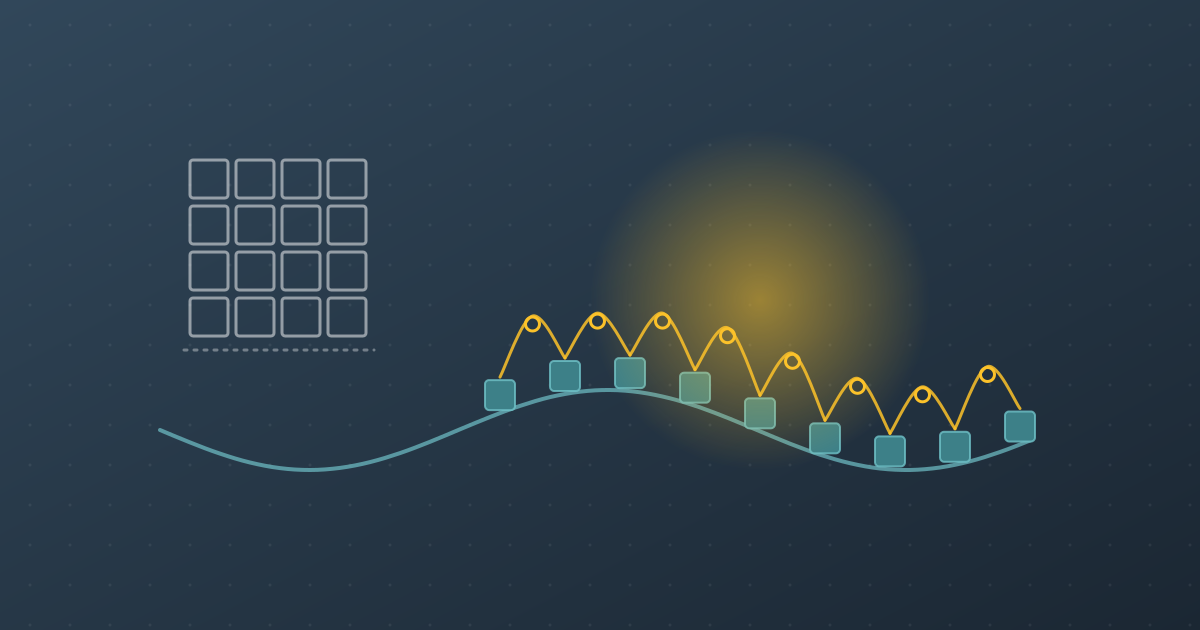
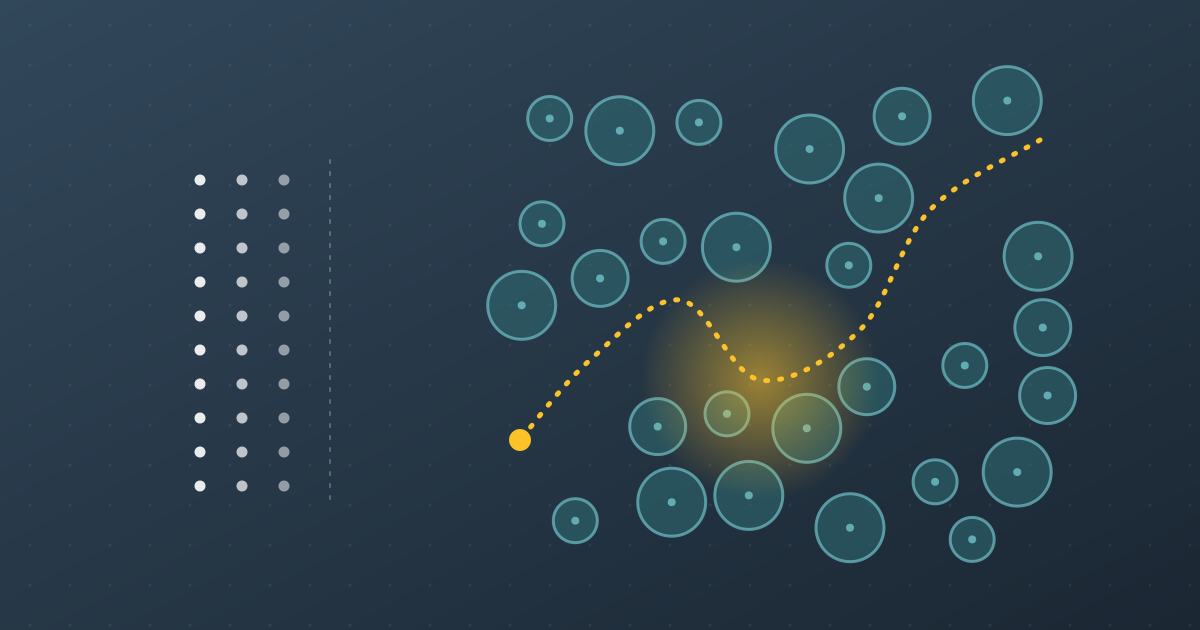
- A solid block of many teal dots moves across an open surface, and small mist-blue dots bounce off it
- Then arcs and wavy lines narrow the path into a bottleneck
- The block becomes a thin line and loses its order, and golden dots break away from the terrain on both sides
How the principle shows up in practice
Arminius, the Teutoburg Forest
In AD 9, Arminius lures three Roman legions into forest, bog and a narrow pass, where their close formation falls apart. The choice of place beats the stronger army.
Jack Ma, Taobao
Starting in 2003, Taobao uses free listings, escrow payment and direct chat to make the most of the features of the Chinese market. eBay sticks with its global model and shuts down its Chinese site at the end of 2006.
Paul Julius Reuter, the carrier pigeons
In 1850, Reuter bridges the gap in the telegraph network between Aachen and Brussels with carrier pigeons. Once the gap is closed, he moves to London, to the next node.
Where does your strength take effect?
Get your profile across all 12 groups in about 10 to 15 minutes.
Start the Strategy CheckGroup 5: Position and Space
Guiding question: Where do you stand, and how much room do you have to move?
Stage 2 of 5: Understand the situation
- TraditionEastern Strategy
Sun Tzu, Kautilya, the Thirty-Six Stratagems, the Tao Te Ching, Miyamoto Musashi, François Jullien
Where the 92 principles come from: eight traditions of strategy, from classical war theory to dealing with uncertainty.
More about the originBackground: WEGVISOR’s own selection from the strategy literature · More about the origin