Zara brings new fashions from design to store in a few weeks, while the rest of the industry needs months. Its lead lies not in any single idea but in how design, purchasing, production, logistics and store work together.
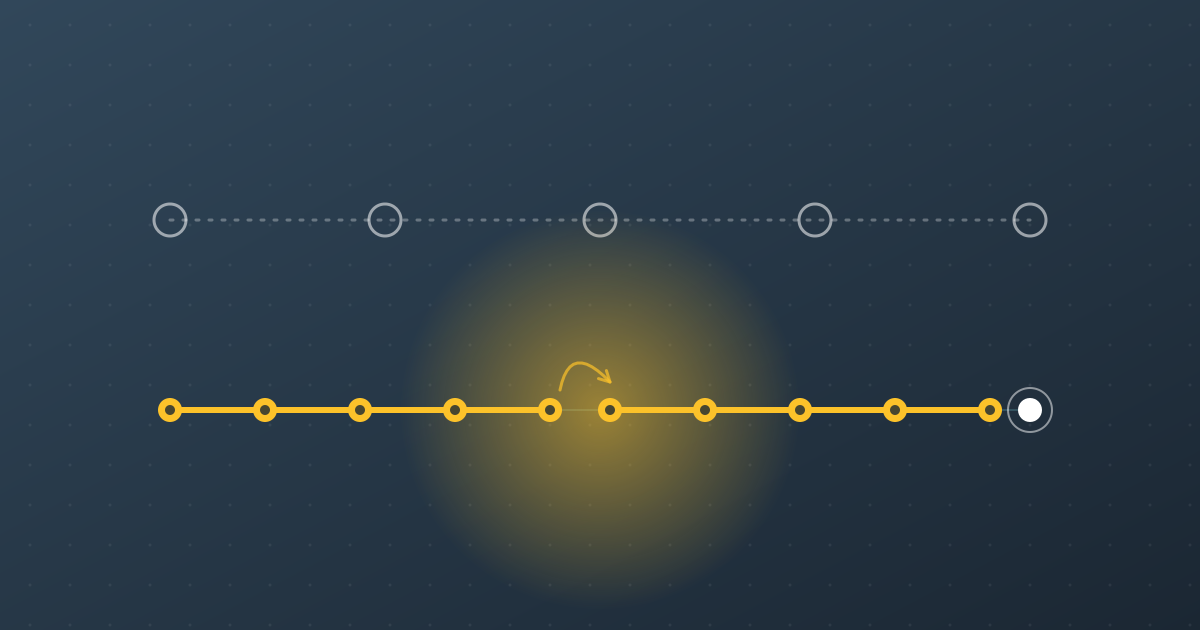
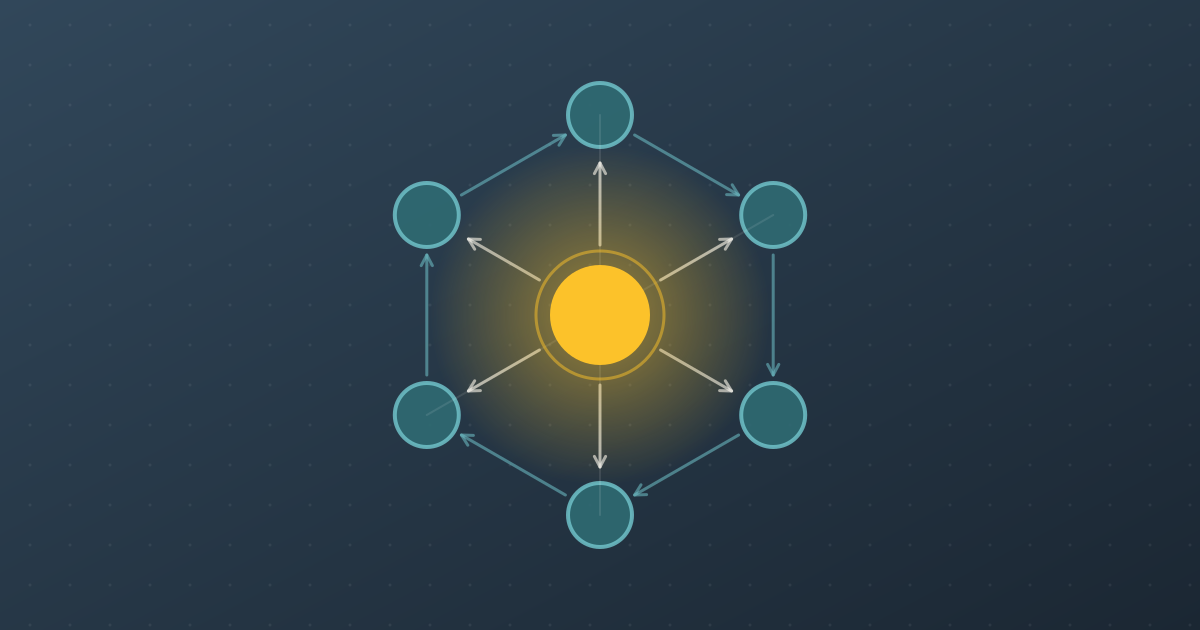
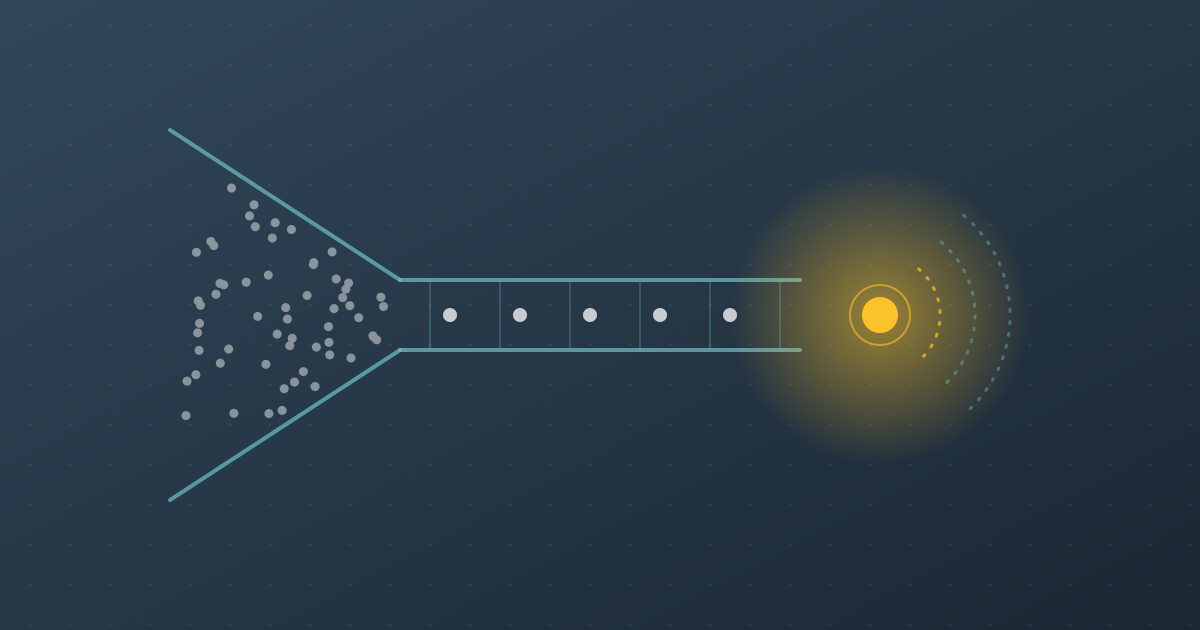
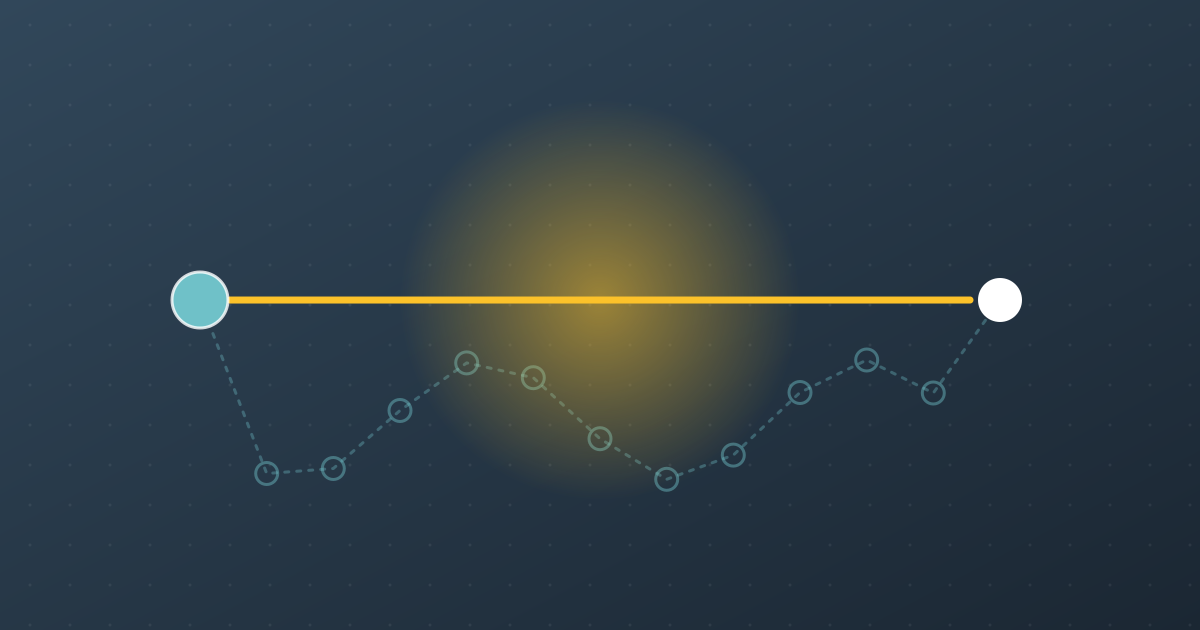
Five teal circles stand in a row with four mist-blue lines below them as supports; a gold dot travels from left to right and grows a little at each circle. At the turning point, fine gold lines stretch between the circles, a dot runs back on an arc from the last circle to the first, and in the final image the dot travels twice as fast and arrives clearly larger.
Principle #71
Value Chain: Your advantage lies not in the company as a whole but in individual activities and in how well they fit together.
4 min read5 sectionsSituationLink to the principle
Contents
In “Competitive Advantage” (1985), Michael E. Porter proposed looking at a company not as a single block but as a chain of activities. The primary activities include inbound logistics, operations, outbound logistics, marketing and sales, and service. In addition, there are support activities such as procurement, technology, human resources and management. Advantages arise in individual links and, above all, in their linkages. Hardly any company shows the Value Chain at work as clearly as Zara.
At the top, a long chain with wide gaps; below it, a short gold chain of five stations runs through twice – as with Zara.
01
The whole chain, step by step
Situation
Amancio Ortega, born in 1936, founds the company Confecciones Goa in Galicia in 1963; it designs and manufactures clothing. In 1975, he opens the first Zara store in the center of A Coruña, adding distribution and retail. The company is later run under the umbrella of the holding company Inditex.
Link to the principle
Ortega does not build the chain in one go but link by link. First manufacturing, then retail, then the connection between the two. If you are both manufacturer and retailer, you can send information and goods through the chain faster than someone who controls only part of it.
02
What stays in-house
Situation
According to a case study in business history, Inditex carries out the capital-intensive and value-intensive steps itself: buying fabrics, design, cutting, dyeing, quality control, ironing, packing, labeling, distribution and logistics. The sewing goes to a network of more than 400 cooperatives and workshops, mainly around A Coruña and in northern Portugal.
Link to the principle
The value chain forces you to ask which activity carries your advantage. Zara keeps the steps that determine speed and quality and contracts out the labor-intensive ones. But even these stay close by, so that the chain remains fast.
03
Closer rather than cheaper
Situation
In 2004, according to the case study, 52% of production takes place in Spain, Portugal and Morocco, and only 13% in China. Executives explain it this way: to shorten lead times, you have to produce closer, not cheaper. Goods reach stores in Europe by truck in less than 24 hours and other countries by plane in 48 hours.
Link to the principle
This is where the heart of the principle shows. Looked at in isolation, manufacturing in Europe is more expensive. For the chain as a whole, it is cheaper, because Zara has to produce less for stock. If you optimize each link on its own, you can weaken the chain as a whole.
04
The store as a sensor
Situation
The stores send their daily sales figures to headquarters, and store managers place orders twice a week. That way, headquarters quickly sees what is selling. According to the case study, about five weeks pass from design to store, compared with five to six months elsewhere in the industry. Repeat orders or small changes take two weeks.
Link to the principle
Porter calls the connections between the links “linkages.” At Zara, sales is directly linked to design. What happens in the store changes within a few days what is drawn and sewn. This backflow is hard to copy because it sits not in one department but between all of them.
05
What falls away as a result
Situation
According to the case study, Inditex spends only about 0.3% of sales on advertising, compared with about 3.5% in the industry. With fast-fashion retailers like Zara, only about 15% of goods end up on clearance, compared with 49% in the apparel industry as a whole. Inventories amount to 7% of sales, compared with 13% at competitors. The figures describe the business around 2005, not its current state.
Link to the principle
A good linkage saves money in places you might not think of at first. Because the collection changes constantly, customers come more often, and less advertising is needed. Because less is produced on speculation, less has to be marked down. The advantage lies in the interplay.
Key takeaways
Key lessons
01
Break your work down into individual activities, and for each one ask whether it carries your advantage.
02
Keep control of the links that determine speed and quality.
03
Don’t optimize each link on its own. Look at the whole chain.
04
Link the end of the chain to the beginning. Feedback is an advantage.
05
Watch for savings that arise only from the interplay.
Summary
Zara shows what Michael E. Porter means by the value chain. Step by step, Amancio Ortega built design, manufacturing, logistics and retail into one system. The lead lies not in any single link but in the speed with which information and goods move through the whole chain. That is precisely what makes it hard to copy.
Sources
Michael E. Porter: Competitive Advantage: Creating and Sustaining Superior Performance. New York: Free Press 1985.
Stephanie O. Crofton, Luis G. Dopico: Zara-Inditex and the Growth of Fast Fashion. In: Essays in Economic & Business History 25 (2007), pp. 41–54. Link
Back to the basics
Read what lies behind the Value Chain: with explanation, animation, video and research.